Motorola Edge 30 Neo vs Motorola Razr 40 Ultra

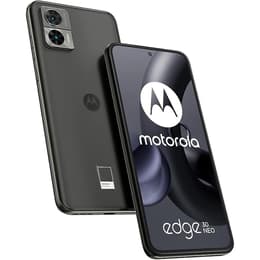
Motorola Edge 30 Neo
Starting at

Refurbished price:A$307.00

Versus A$414.00 new

See options
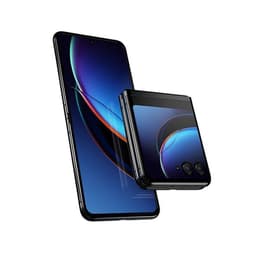
Motorola Razr 40 Ultra
See options

The Motorola Edge 30 Neo, released in September 2022, is a compact smartphone designed for everyday use, while the Motorola Razr 40 Ultra, launched in June 2023, offers a unique foldable design with a focus on a large external display and enhanced performance. Both devices operate on the Android platform, but they cater to different user preferences through their form factors and core capabilities.

Scores

Durability

The longevity of a smartphone is influenced by its release timeline, software support, and physical durability.

  • Release Timeline: The Motorola Edge 30 Neo was released in September 2022, making it an earlier model compared to the Motorola Razr 40 Ultra, which launched in June 2023. This difference in release dates means the Razr 40 Ultra inherently has a longer potential support window ahead.
  • Software Support: The Edge 30 Neo launched with Android 12 and is expected to receive major OS updates up to Android 14. The Razr 40 Ultra, starting with Android 13, is likely to receive updates for a longer period due to its newer release. Users of the Razr 40 Ultra have reported that the device receives frequent updates, contributing to a smooth Android experience.
  • Durability and Repairability: The Edge 30 Neo features a plastic build with a polished metal frame and an IP52 rating for dust and splash resistance. The Razr 40 Ultra, with its foldable design, incorporates a glass cover, an aluminum frame, and an option for a vegan leather finish, also carrying an IP52 rating for water and dust resistance. The Razr 40 Ultra's cover display is protected by Gorilla Glass Victus. While both offer some protection against elements, the foldable nature of the Razr 40 Ultra introduces a hinge mechanism, which some users monitor for long-term resilience.

Release year

2022

2023

Compatible with latest Update

Yes

Yes

Operating system

Android

Android

Foldable

No

Yes

Performance

Performance is a key differentiator, impacting how smoothly applications run and how responsive the device feels during daily use.

  • Processing Power: The Motorola Edge 30 Neo is equipped with a processor that handles everyday tasks and general navigation smoothly. However, for more demanding applications or graphically intensive games, users might experience less fluid performance. The Motorola Razr 40 Ultra features a more powerful processor, enabling smooth operation for demanding apps, multitasking, and high-end gaming.
  • Multitasking and Responsiveness: Both devices offer sufficient RAM for typical multitasking. The Edge 30 Neo provides a responsive experience for common applications. The Razr 40 Ultra, with its more capable internal components, maintains a very responsive and fluid user experience even when switching between multiple applications or running complex tasks.
  • Storage Options: The Edge 30 Neo typically comes with 128GB or 256GB of internal storage. The Razr 40 Ultra offers 256GB or 512GB storage options, providing more space for applications, media, and files.

Memory (GB)

8 GB

8 GB

Screen quality

The display is a primary interface for user interaction, and both devices offer distinct visual experiences.

  • Display Technology and Clarity: The Motorola Edge 30 Neo features a 6.28-inch pOLED display with a 1080 x 2400 pixel resolution, providing clear and vibrant visuals for media consumption and daily tasks. The Motorola Razr 40 Ultra boasts a 6.9-inch foldable pOLED main display with a 1080 x 2640 pixel resolution, offering a larger and immersive viewing area.
  • Refresh Rate and Smoothness: The Edge 30 Neo's display has a 120 Hz refresh rate, contributing to smooth scrolling and a fluid user interface. The Razr 40 Ultra's main display features an even higher 165 Hz refresh rate, which can result in exceptionally smooth motion, particularly noticeable in fast-paced content or gaming.
  • Brightness and External Display: The Edge 30 Neo offers high brightness levels, making it suitable for outdoor visibility. A significant feature of the Razr 40 Ultra is its 3.6-inch external pOLED display, which has a 144 Hz refresh rate and is highly functional, allowing users to interact with apps, notifications, and widgets without opening the phone. This external screen is a major convenience for quick glances and specific tasks.

Resolution

1080 x 2400

1080 x 2640

Screen type

P-OLED

Foldable LTPO AMOLED

Audiovisual

Camera capabilities are often a deciding factor for many users, and these devices offer different photographic strengths.

  • Rear Camera Systems: The Motorola Edge 30 Neo features a dual-camera setup with a 64MP main sensor with optical image stabilization (OIS) and a 13MP ultrawide lens that also handles macro shots. The Motorola Razr 40 Ultra also has a dual rear camera system, comprising a 12MP main sensor with a wide f/1.5 aperture and OIS, alongside a 13MP ultrawide lens that doubles as a macro camera with autofocus.
  • Photography Performance: In well-lit conditions, the Edge 30 Neo captures images with good detail and accurate colors. However, its low-light performance and video quality are considered less impressive, with video recording limited to 1080p. The Razr 40 Ultra generally produces good images in bright environments, with its wider aperture main lens improving low-light photography compared to some predecessors. Its ultrawide camera's autofocus is beneficial for close-up shots.
  • Video Recording and Front Camera: The Edge 30 Neo records video at up to 1080p resolution. The Razr 40 Ultra offers more advanced video capabilities, supporting 4K recording at 30 or 60 frames per second. Both devices feature a 32MP front-facing camera for selfies and video calls.

Main camera

64 megapixels

12 megapixels

Front camera

32 megapixels

32 megapixels

Miscellaneous

Beyond core features, several practical elements contribute to the overall user experience.

  • Connectivity and Ports: Both smartphones support 5G connectivity. The Edge 30 Neo includes Wi-Fi 5 and Bluetooth 5.1, while the Razr 40 Ultra features newer standards like Wi-Fi 6E and Bluetooth 5.3. Both devices utilize a USB-C port for charging and data transfer and lack a traditional 3.5mm headphone jack.
  • Biometric Security: The Edge 30 Neo incorporates an in-display fingerprint sensor and supports face recognition for unlocking. The Razr 40 Ultra features a side-mounted fingerprint sensor, integrated into the power button, and also offers face recognition.
  • Design and Handling: The Edge 30 Neo is noted for its compact size and light weight (155g), making it comfortable for one-handed use. The Razr 40 Ultra, as a foldable phone, offers a unique form factor that is compact when closed (88.42 x 73.95 x 15.1 mm) and expands to a larger screen when open (170.83 x 73.95 x 6.99 mm), weighing around 184.5g to 188.5g. Its design allows for a large screen experience in a portable package.

Weight

155 oz

1 oz

Screen size (in)

6.28

6.9

Network

5G

5G

SIM card

Dual Physical SIM

Dual Physical SIM

Carrier compatibility

Unlocked

Unlocked

The Motorola Edge 30 Neo and Motorola Razr 40 Ultra cater to different user needs, each with its own set of strengths and considerations. User feedback for the Edge 30 Neo often praises its vibrant display, efficient fast charging, and comfortable, compact design. Many appreciate its clean Android software experience. However, common criticisms point to its performance being less robust for demanding applications and its camera system, particularly in low light and video recording, being considered average compared to some competitors. The software update policy, while providing two major OS updates, is also noted as being shorter than some other brands.

For the Motorola Razr 40 Ultra, users frequently highlight its striking and highly functional external display as a standout feature, offering significant utility without needing to open the phone. Its smooth performance for various tasks and clean Android interface are also well-regarded. The design, particularly its thin profile when unfolded, receives positive attention. On the other hand, some users note that while its camera system is capable, it may not match the photographic prowess of top-tier slab smartphones. The battery capacity, while often lasting a full day with smart use of the external screen, is smaller than some traditional phones, and charging speeds are not the fastest available.

Users prioritizing a compact, lightweight device with a good display and fast charging for everyday tasks and moderate use may find the Motorola Edge 30 Neo well-suited to their needs. Those who value a unique, foldable design with a large, interactive external screen, strong performance for demanding applications, and a premium build will likely lean towards the Motorola Razr 40 Ultra. Both devices offer a quality-assured refurbished option, providing an eco-friendly alternative for consumers seeking these features.


See all articles

Our recent comparisons