
iPhone SE (2020) vs Motorola Edge 30 Pro

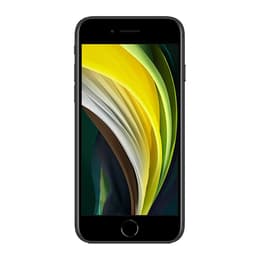
iPhone SE (2020)
iPhone SE (2020)
Starting at

Refurbished price:A$108.00

Versus A$529.00 new

See options
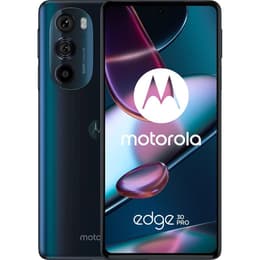
Motorola Edge 30 Pro
Starting at

Refurbished price:A$291.72

Versus A$2,709.00 new

See options

The iPhone SE 2020 and the Motorola Edge 30 Pro are smartphones released in different years, offering distinct experiences based on their operating systems and hardware philosophies. The iPhone SE 2020, launched in April 2020, runs on Apple's iOS, while the Motorola Edge 30 Pro, released in March 2022, operates on Android. These devices primarily differ in their display technology, camera capabilities, and overall performance, catering to users with varying preferences for size, ecosystem, and features.

Scores

Durability

When considering the long-term usability of a smartphone, factors like software support and physical resilience are key.

  • Release Timeline: The iPhone SE 2020 was released in April 2020, making it an older device compared to the Motorola Edge 30 Pro, which launched in March 2022. This two-year difference impacts their respective software support cycles.
  • Software Longevity: Apple is known for extended software support, with the iPhone SE 2020 expected to receive major iOS updates for 5-7 years from its release, potentially until 2027-2029, and security updates beyond that. The Motorola Edge 30 Pro, on the other hand, was guaranteed two major Android OS upgrades (up to Android 14) and three years of security updates.
  • Physical Durability: The iPhone SE 2020 features an aluminum frame and glass front and back, with an IP67 rating for dust and water resistance, meaning it can withstand immersion in up to 1 meter of water for 30 minutes. The Motorola Edge 30 Pro has a plastic frame with a glass front (Gorilla Glass 3) and back (Gorilla Glass 5) and an IP52 rating, indicating splash resistance but not full water immersion protection.

Release year

2020

2022

Compatible with latest Update

Yes

Yes

Operating system

iOS

Android

Foldable

No

No

Performance

The performance of a smartphone is largely determined by its internal components, influencing how smoothly apps run and how efficiently it handles daily tasks.

  • Processing Power: The iPhone SE 2020 is equipped with a powerful processor that allows it to handle demanding applications and multitasking effectively. The Motorola Edge 30 Pro features a more recent, high-end processor, providing excellent performance for intensive gaming and complex applications, often outperforming other devices in its class.
  • Multitasking and Storage: The iPhone SE 2020 comes with 3GB of RAM, which is sufficient for typical daily usage and app switching. The Motorola Edge 30 Pro offers more RAM options, typically 8GB or 12GB, contributing to smoother multitasking and better handling of numerous open applications. Both devices offer various internal storage capacities, but neither supports expandable storage.
  • Battery Behavior: The iPhone SE 2020 has a smaller battery capacity, and users often report that it may require more frequent charging, especially with heavy use. The Motorola Edge 30 Pro, with its larger battery, generally offers good battery life, often lasting a full day even with intensive use, and some users report it can extend to two days with moderate usage.

Memory (GB)

3 GB

8 GB

Screen quality

The display is a primary interface for any smartphone, and differences in technology and specifications can significantly impact the visual experience.

  • Display Technology and Clarity: The iPhone SE 2020 features a 4.7-inch IPS LCD display, known for accurate color reproduction and good viewing angles. The Motorola Edge 30 Pro boasts a larger 6.7-inch pOLED display, which offers deeper blacks, higher contrast, and more vibrant colors due to its organic light-emitting diode technology. Both provide clear visuals, with the Edge 30 Pro offering a higher resolution (FHD+) compared to the iPhone SE 2020's Retina HD display.
  • Brightness and Smoothness: The iPhone SE 2020's display has a typical maximum brightness of 625 nits, providing good visibility in most indoor and outdoor conditions. The Motorola Edge 30 Pro's display typically reaches 500 nits, with a peak brightness of around 650-700 nits in auto mode, which can be a bit challenging to view in direct sunlight. A significant difference is the refresh rate: the iPhone SE 2020 has a standard 60Hz refresh rate, while the Edge 30 Pro features a high 144Hz refresh rate, resulting in noticeably smoother scrolling and more fluid animations.
  • Screen Size and Experience: The iPhone SE 2020 offers a compact 4.7-inch screen, ideal for one-handed use and those who prefer a smaller device. The Motorola Edge 30 Pro's larger 6.7-inch display provides a more expansive viewing area, enhancing the experience for media consumption and gaming.

Resolution

750 x 1334

1080 x 2400

Screen type

Retina IPS LCD

OLED

Audiovisual

Camera performance is a key consideration for many users, encompassing both still photography and video recording capabilities.

  • Rear Camera System: The iPhone SE 2020 features a single 12MP rear camera with optical image stabilization (OIS) and an f/1.8 aperture. It excels in good lighting conditions, producing sharp images with accurate colors and impressive dynamic range. The Motorola Edge 30 Pro offers a versatile triple-camera setup, including a 50MP main sensor with OIS, a 50MP ultrawide sensor that also functions for macro shots, and a 2MP depth sensor.
  • Low-Light and Special Features: While the iPhone SE 2020 performs well in adequate light, its low-light performance is less impressive due to the absence of a dedicated Night Mode. The Edge 30 Pro's main camera uses pixel binning technology to improve low-light performance, though some users note that its overall camera quality, especially in low light and without a telephoto lens, is not on par with top-tier flagships. The iPhone SE 2020 supports Portrait Mode for people, but not for objects.
  • Video Recording and Front Camera: Both phones are capable of high-quality video recording. The iPhone SE 2020 can record 4K video at up to 60 frames per second (fps) with OIS on its main camera and 1080p on its 7MP front camera. The Motorola Edge 30 Pro can record 8K video at 30fps and 4K at 30/60fps, and features a high-resolution 60MP front camera capable of 4K video recording at 30fps.

Main camera

12 megapixels

50 megapixels

Front camera

7 megapixels

60 megapixels

Miscellaneous

Beyond core performance and camera, several other features contribute to the overall user experience and practical utility of a smartphone.

  • Connectivity and Ports: The iPhone SE 2020 supports 4G LTE, Wi-Fi 6, and Bluetooth 5.0, utilizing Apple's proprietary Lightning port for charging and data transfer. The Motorola Edge 30 Pro offers more advanced connectivity with 5G support, Wi-Fi 6E, and Bluetooth 5.2, and uses the more universal USB-C port. Neither device includes a 3.5mm headphone jack.
  • Biometrics and Sensors: The iPhone SE 2020 features a front-mounted fingerprint sensor (Touch ID) integrated into its home button for secure unlocking and authentication. The Motorola Edge 30 Pro incorporates a fingerprint sensor built into its power button. Both devices include standard sensors like accelerometers, gyroscopes, and proximity sensors.
  • Design and Handling: The iPhone SE 2020 is a compact and lightweight device, weighing 148g with dimensions of 138.4 x 67.3 x 7.3 mm, making it easy for one-handed use. The Motorola Edge 30 Pro is larger and heavier at 196g and measures 163.06 x 75.95 x 8.8 mm, offering a more substantial feel. The Edge 30 Pro's plastic frame has been noted by some users as feeling less premium compared to devices with metal frames.

Weight

148 oz

196 oz

Screen size (in)

4.7

6,7

Network

4G

5G

SIM card

Physical SIM + eSIM

Dual Physical SIM

Carrier compatibility

Unlocked

Unlocked

The iPhone SE 2020 and Motorola Edge 30 Pro cater to different user priorities, reflecting their distinct ecosystems and design philosophies. Users often praise the iPhone SE 2020 for its compact size, robust performance for its class, and Apple's long-term software support, ensuring it remains functional and secure for many years. However, common criticisms include its smaller battery capacity, which may not last a full day for heavy users, and its camera's limited low-light performance due to the lack of a dedicated Night Mode.

The Motorola Edge 30 Pro is frequently lauded for its powerful processing capabilities, smooth 144Hz OLED display, and fast charging speeds. Its larger screen and versatile camera system are also often highlighted. Conversely, some users have expressed concerns about its camera performance not matching top-tier flagships, particularly in challenging lighting conditions, and its IP52 splash resistance being less robust than some competitors. Reports of battery drain and heating issues, especially after certain software updates, have also been noted by some users.

Users prioritizing a compact device with a familiar iOS experience and extended software longevity may find the iPhone SE 2020 well-suited to their needs. Those who value a large, high-refresh-rate display, cutting-edge performance for demanding tasks, and faster charging, along with the flexibility of the Android ecosystem, may lean toward the Motorola Edge 30 Pro. Both devices offer compelling features, and considering a quality-assured refurbished option can be an eco-friendly alternative for either model.

See all articles

Our recent comparisons