
iPhone 16e vs Motorola Moto G53

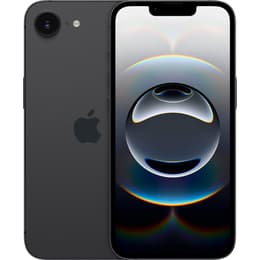
iPhone 16e
iPhone 16e
Starting at

Refurbished price:A$794.00

Versus A$999.00 new

See options
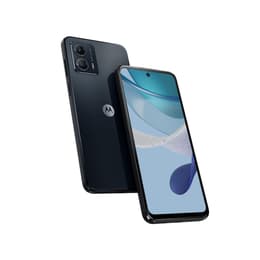
Motorola Moto G53
Motorola Moto G53
See options

The iPhone 16E (released in February 2025) and the Motorola Moto G53 (released in December 2022) are smartphones designed for different user priorities and budgets. While the iPhone 16E offers a more advanced operating system and a focus on high-end features, the Moto G53 provides a functional Android experience with a strong emphasis on battery longevity. This comparison will explore their core differences to help users determine which device aligns best with their needs.

Scores

Durability

The expected practical lifespan of a smartphone is significantly influenced by its release timeline, software support, and physical resilience.

  • Release Timeline & Software Longevity: The iPhone 16E, launched in early 2025, benefits from Apple's extended software support policy, typically receiving major iOS updates for at least five years from its release, and security patches beyond that. In contrast, the Motorola Moto G53, released in late 2022, launched with Android 13 and has received an update to Android 14. Motorola's update policy for its budget and mid-range devices generally provides fewer major OS upgrades compared to Apple's offerings, meaning the Moto G53 will likely reach its end-of-life for major software updates sooner.
  • Physical Durability: The iPhone 16E features a Ceramic Shield front, designed to offer enhanced drop protection, and boasts an IP68 rating for significant dust and water resistance, allowing submersion up to 6 meters for 30 minutes. The Moto G53 has a water-repellent design, which provides protection against splashes and light rain but is not rated for submersion. Both devices are constructed with durable materials, though the iPhone 16E's build offers a higher degree of protection against environmental elements.

Release year

2025

2022

Operating system

iOS

Android

Foldable

No

No

Performance

Performance is a key differentiator, impacting how smoothly applications run and how efficiently the device handles daily tasks and demanding operations.

  • Processing Power: The iPhone 16E is equipped with Apple's A18 chip, featuring a 6-core CPU, a 4-core GPU, and a 16-core Neural Engine. This hardware configuration allows it to handle demanding applications, complex multitasking, and graphically intensive games with fluidity. It also supports advanced AI features, enhancing user interactions and computational tasks. The Motorola Moto G53 is powered by a Qualcomm Snapdragon 480+ 5G processor. This processor is designed for everyday use, such as web browsing, social media, and light gaming, but may show limitations when running multiple demanding applications simultaneously or playing high-fidelity games.
  • Memory and Storage: The iPhone 16E comes with 8 GB of RAM and offers storage options starting from 128 GB, extending to 256 GB and 512 GB. This ample memory supports efficient multitasking and ensures applications remain responsive. The Moto G53 is available with 4GB, 6GB, or 8GB of RAM, and 64GB or 128GB of internal storage, which can be expanded via a microSDXC card. While the expandable storage is a practical feature for users needing more space for media and files, the base RAM configurations may offer a less seamless experience during heavy multitasking compared to the iPhone 16E.

Memory (GB)

8 GB

4 GB

Screen quality

The visual experience on a smartphone is largely defined by its display technology, resolution, and overall clarity.

  • Display Technology and Resolution: The iPhone 16E features a 6.1-inch Super Retina XDR OLED display with a resolution of 2532x1170 pixels, resulting in a sharp 460 pixels per inch (ppi). This OLED technology provides deep blacks, high contrast, and vibrant colors, enhancing the viewing experience for photos, videos, and general content. The Motorola Moto G53 sports a larger 6.5-inch IPS LCD panel with a lower HD+ resolution of 720x1600 pixels, translating to approximately 270 ppi. While the larger screen offers more viewing area, the lower resolution means less sharpness and detail compared to the iPhone 16E's display.
  • Brightness and Refresh Rate: The iPhone 16E's display offers a typical brightness of 800 nits, peaking at 1200 nits for HDR content, ensuring good visibility even in bright outdoor conditions. It operates at a standard 60Hz refresh rate. The Moto G53, while having a lower overall brightness, compensates with a 120Hz refresh rate. This higher refresh rate contributes to smoother scrolling and a more responsive feel during navigation and certain gaming scenarios, though the underlying display quality is not as refined as the iPhone 16E's OLED panel.

Resolution

2532x1170

720x1600

Audiovisual

Camera capabilities are a significant factor for many users, influencing the quality of photos and videos captured in various conditions.

  • Rear Camera System: The iPhone 16E is equipped with a 48 MP main camera with an f/1.6 aperture, offering 2x optical zoom options through sensor cropping. This system is designed for capturing detailed images with improved low-light performance, Smart HDR 5, and features like Portrait mode and Night mode. The Motorola Moto G53 features a dual-camera setup on the rear, comprising a 50 MP main sensor with an f/1.8 aperture and a 2 MP macro lens. The 50 MP main sensor can produce decent photos in well-lit environments, but its low-light performance and overall detail capture may not match the iPhone 16E's capabilities. The 2 MP macro lens offers limited utility for detailed close-up shots.
  • Front Camera and Video Recording: For selfies and video calls, the iPhone 16E includes a 12 MP front-facing TrueDepth camera with an f/1.9 aperture. It supports features like Portrait mode and high-quality video recording. The Moto G53 comes with an 8 MP or 16 MP front camera, depending on the variant. Both devices are capable of recording video, with the iPhone 16E offering more advanced video features and higher quality output, while the Moto G53 records up to 1080p at 30 frames per second.

Front camera

TrueDepth 12MP

8 megapixels

Miscellaneous

Beyond the core specifications, several practical elements contribute to the overall user experience and device utility.

  • Connectivity and Ports: The iPhone 16E supports 5G connectivity, Wi-Fi 6, and Bluetooth 5.3. It has transitioned to a USB-C port for charging and data transfer. The device primarily uses eSIM technology, with dual eSIM support in some regions. The Motorola Moto G53 also offers 5G connectivity, Wi-Fi 5, and Bluetooth 5.1. It features a USB-C 2.0 port and retains a 3.5mm headphone jack, which is a notable inclusion for users who prefer wired audio accessories. It supports both physical Nano-SIM and eSIM.
  • Security and Design Elements: The iPhone 16E utilizes Face ID for secure authentication and includes an Action Button, which can be customized for quick access to various functions. Its dimensions are 146.7 × 71.5 × 7.8 mm and it weighs 167 g. The Moto G53 incorporates a side-mounted fingerprint sensor for biometric security. It has stereo speakers with Dolby Atmos support for an enhanced audio experience. The Moto G53 measures 162.7 x 74.7 x 8.2 mm and weighs 183 g.

Weight

167 oz

183 oz

Screen size (in)

6.1

6.5

Network

5G

5G

SIM card

Physical SIM + eSIM

Dual Physical SIM

Carrier compatibility

Unlocked

Unlocked

The iPhone 16E and Motorola Moto G53 cater to distinct user profiles, each excelling in different areas. Users frequently praise the iPhone 16E for its powerful performance, advanced camera system, and the longevity of its software support, making it a suitable choice for those who prioritize a premium and future-proof experience. Its vibrant OLED display and robust build quality are also commonly highlighted as strong points. However, some users note the absence of features like ProMotion display and MagSafe as potential drawbacks for a device in its category.

Conversely, the Motorola Moto G53 is often commended for its exceptional battery life, which can comfortably last for more than a day of typical use, and its smooth 120Hz display refresh rate, which enhances daily navigation. Users also appreciate its inclusion of a 3.5mm headphone jack and expandable storage, offering practical flexibility. Criticisms often revolve around its lower-resolution screen and camera performance, particularly in challenging lighting conditions, which may not meet the expectations of photography enthusiasts.

Users prioritizing cutting-edge performance, advanced photography capabilities, and long-term software updates will find the iPhone 16E well-suited to their needs. Its ecosystem integration and robust security features also appeal to those invested in the Apple environment. On the other hand, individuals who value extended battery life, a larger screen for media consumption, and the flexibility of expandable storage and a headphone jack, while operating within the Android ecosystem, may lean toward the Motorola Moto G53. Both devices offer compelling features for their respective audiences, and choosing between them depends on aligning the device's strengths with individual usage patterns. For those seeking an eco-friendly alternative, quality-assured refurbished options for both models can provide a sustainable choice.
See all articles

Our recent comparisons