Compare models

Galaxy A56 vs Google Pixel 9a

  • 1-year warranty
  • Free standard shipping
  • Free 30-day returns
Galaxy A56
Starting at

Refurbished price:A$390.00

Versus A$699.00 new

See options
Google Pixel 9a
Starting at

Refurbished price:A$586.44

Versus A$719.76 new

See options

Differences at a glance

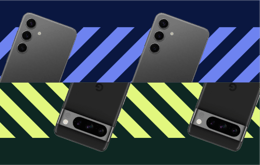
The Samsung Galaxy A56 and the Google Pixel 9a represent popular options in the mid-range smartphone segment, both launching in early 2025. While both devices run on the Android operating system, they approach everyday mobile computing through different design philosophies and hardware ecosystems. Choosing between them involves weighing distinct differences in physical footprint, software features, and daily handling characteristics.

Available Models

Colour

Storage

Scores

Durability

When examining longevity and physical durability, both smartphones offer robust build materials and extended software support timelines suited for long-term ownership.

  • Software Support Window: The Google Pixel 9a benefits from an extended update commitment of seven years for operating system and security patches, whereas the Samsung Galaxy A56 provides multi-year support aligned with typical mid-range device lifecycles.
  • Build and Protection: Both models incorporate sturdy outer frames and glass front panels with high water and dust resistance ratings, helping them withstand everyday environmental exposure.
  • Repair and Maintenance: Both devices feature sealed internal designs where professional assistance is generally required for component replacements like batteries, making a quality-assured refurbished option a sustainable choice that extends device utility.

Release year

2025

2025

Operating system

Android

Android

Foldable

No

No

Performance

Under everyday workloads, both devices deliver responsive multitasking, smooth app launching, and reliable battery life for typical daily routines.

  • Storage Configurations: Both smartphones offer standard configurations starting at 128GB of internal storage, accommodating apps, media, and documents without frequent clearing.
  • Battery Behavior: Both units house large-capacity internal batteries capable of sustaining a full day of mixed usage, though charging speeds and energy management vary slightly under heavy workloads.
  • System Responsiveness: Each model handles demanding applications, web browsing, and casual gaming smoothly, backed by optimized processing hardware and efficient memory management.

Screen quality

Display characteristics differ primarily in screen dimensions and panel sizing, while both maintain high visual clarity and fluid motion.

  • Display Technology: Both devices utilize vibrant OLED panel technology that delivers deep black levels, high contrast ratios, and sharp text rendering for media consumption and reading.
  • Refresh Rate and Smoothness: Both screens support dynamic refresh rates up to 120Hz, ensuring fluid scrolling through web pages and responsive touch interactions during gaming.
  • Size and Ergonomics: The Samsung Galaxy A56 features a larger 6.7-inch display suited for media viewing, while the Google Pixel 9a employs a more compact 6.3-inch screen designed for easier single-handed reach.

Resolution

1080 x 2340

1080x2424

Audiovisual

Imaging capabilities on both smartphones cater to everyday photography, low-light environments, and casual video recording.

  • Camera Array: The Galaxy A56 incorporates a versatile triple-lens rear system including a dedicated macro or depth helper, while the Pixel 9a relies on a dual-lens setup paired with advanced computational photography software.
  • Low-Light Performance: Both devices capture clear images in dim conditions through automated night processing modes, minimizing grain and preserving color accuracy.
  • Video and Audio: Both models support stable high-definition video recording alongside clear microphone pickup for calls, voice notes, and media playback through stereo speakers.

Miscellaneous

Practical physical and connectivity features define how each device integrates into daily routines and travels.

  • Connectivity Standards: Both smartphones support modern 5G cellular networks, Wi-Fi standards, and Bluetooth for reliable accessory pairing and fast data transfers.
  • Physical Dimensions: The Galaxy A56 is slightly taller and heavier to accommodate its larger screen, whereas the Pixel 9a offers a lighter, more compact profile that fits easily into smaller pockets.
  • Authentication Sensors: Both models feature secure biometric unlock methods via under-display fingerprint sensors and facial recognition capabilities.

Weight

200 oz

186 oz

Screen size (in)

6.7

6.3

Network

4G

5G

SIM card

Physical SIM + eSIM

Physical SIM + eSIM

Carrier compatibility

Unlocked

Unlocked

What the community thinks

Users evaluating these two smartphones often note that the Samsung Galaxy A56 stands out for its expansive screen estate and multimedia-friendly proportions, while the Google Pixel 9a frequently receives praise for its compact handling and clean software interface. Common discussions highlight preferences for screen size and software customization features across various online communities.

Users prioritizing a larger viewing area and broader physical dimensions may prefer the Galaxy A56, while users prioritizing a compact footprint and extended software update longevity may lean toward the Pixel 9a. Exploring a quality-assured refurbished option provides an eco-friendly alternative for acquiring either model while reducing electronic waste. Ultimately, the choice depends on whether a larger display or a more pocket-friendly build aligns better with individual daily routines.