iPhone 16 vs Motorola Razr 40 Ultra

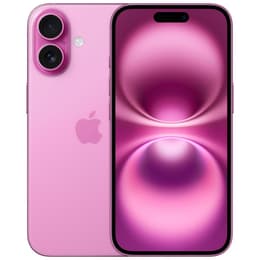
iPhone 16
iPhone 16
Starting at

Refurbished price:A$946.00

Versus A$1,399.00 new

See options
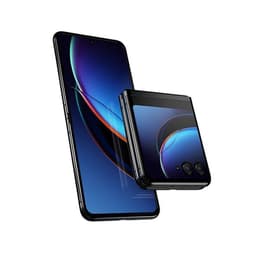
Motorola Razr 40 Ultra
See options

The iPhone 16, released in September 2024, and the Motorola Razr 40 Ultra, launched in June 2023, represent distinct approaches to smartphone design and functionality. While the iPhone 16 offers a traditional smartphone experience with Apple's iOS ecosystem, the Razr 40 Ultra stands out with its unique foldable clamshell design and Android operating system. These fundamental differences cater to varying user preferences, from those seeking a conventional, robust device to those desiring a compact, innovative form factor.

Scores

Durability

The expected lifespan and software support differ between these two devices, largely due to their respective release timelines and manufacturer policies.

  • Release Timeline and Age: The iPhone 16 was released in September 2024, making it a more recent device compared to the Motorola Razr 40 Ultra, which launched in June 2023. This difference in age impacts their remaining software support cycles.
  • Software Longevity: Apple is known for providing extensive software support, with the iPhone 16 expected to receive major iOS updates for approximately 5 to 7 years from its release, potentially until 2036. The Motorola Razr 40 Ultra is slated to receive three major Android OS upgrades, up to Android 16, and four years of bi-monthly security updates, with support ending around June 2027. [20, 30, 37, 38, 47]
  • Physical Durability: The iPhone 16 features an IP68 rating for dust and water resistance, indicating a high level of protection against immersion. The Razr 40 Ultra has an IP52 rating, offering splash resistance. [6, 12] User reports for the Razr 40 Ultra indicate that while the hinge generally holds up well, the cover screen can be susceptible to damage under pressure due to its design. [14, 17, 23, 40]

Release year

2024

2023

Compatible with latest Update

Yes

Yes

Foldable

No

Yes

Performance

Both devices offer capable performance for daily tasks, though their underlying hardware and real-world usage experiences present some distinctions.

  • Processing Power: The iPhone 16 is equipped with a current-generation Apple processor, designed to handle demanding applications and multitasking with efficiency. The Motorola Razr 40 Ultra features a powerful processor from its release year, providing a smooth experience for most applications and graphic-intensive games. [7, 9, 16, 24, 39]
  • System Responsiveness: Users of the iPhone 16 can expect fluid navigation and quick app loading times, characteristic of its optimized software and hardware integration. The Razr 40 Ultra also offers a responsive experience, though some users have noted occasional minor lags in specific scenarios. [17, 39]
  • Battery Behavior: The iPhone 16's battery is designed to provide all-day power for typical usage, with optimizations for efficiency. The Razr 40 Ultra, despite its smaller battery capacity due to the foldable design, often manages to last a full day for many users, partly due to its efficient display technology and the utility of its external screen for lighter tasks. [7, 8, 10, 27]

Memory (GB)

8 GB

8 GB

Screen quality

The display experience is a primary differentiator, with the iPhone 16 offering a traditional flat screen and the Razr 40 Ultra featuring a unique foldable design with two displays.

  • Display Technology and Size: The iPhone 16 features a 6.1-inch Super Retina XDR OLED display, known for its deep blacks and vibrant colors. The Motorola Razr 40 Ultra boasts a 6.9-inch foldable pOLED main display and a prominent 3.6-inch pOLED external cover display. [6, 12, 21]
  • Resolution and Clarity: Both devices offer high-resolution displays, with the iPhone 16 providing approximately 460 pixels per inch (ppi) for sharp visuals. The Razr 40 Ultra's main display has a resolution of 1080 x 2640 pixels, and its cover display also maintains a high pixel density for clear content. [6, 12, 21]
  • Refresh Rate and Brightness: The iPhone 16's display operates at a standard 60 Hz refresh rate. The Razr 40 Ultra's main display offers a high refresh rate of up to 165 Hz, providing very smooth scrolling and animations, while its cover display reaches up to 144 Hz. Both displays offer sufficient brightness for outdoor visibility, with the Razr 40 Ultra's main screen reaching up to 1400 nits peak brightness. [6, 12, 21, 27]

Resolution

1179 x 2556

1080 x 2640

Screen type

Super Retina XDR OLED

Foldable LTPO AMOLED

Audiovisual

Both smartphones provide capable camera systems, but they cater to slightly different photographic priorities and user experiences.

  • Camera System Configuration: The iPhone 16 features an advanced dual-camera system with a 48MP Fusion Main lens and a 12MP Ultra Wide lens, arranged vertically to enable spatial video capture. The Motorola Razr 40 Ultra also has a dual camera setup on the rear, consisting of a 12MP wide-angle lens with optical image stabilization and a 13MP ultra-wide-angle lens. [5, 6, 9, 12, 13, 21]
  • Photography Performance: The iPhone 16 is designed for consistent, high-quality photography across various conditions, including improved low-light performance and advanced computational photography features. The Razr 40 Ultra performs well in good lighting conditions, producing vibrant images, but some users note it can struggle with capturing moving subjects and its overall camera performance is considered mid-range compared to top-tier flagships. [5, 7, 10, 28]
  • Video Recording and Features: Both devices support 4K video recording at various frame rates. The iPhone 16 offers features like Cinematic mode and Action mode, along with spatial video recording. A unique aspect of the Razr 40 Ultra is the ability to use its main cameras for high-quality selfies and video calls by utilizing the large cover screen as a viewfinder. [7, 12, 13, 21]

Main camera

48 megapixels

12 megapixels

Front camera

12 megapixels

32 megapixels

Miscellaneous

Beyond core features, several practical elements contribute to the overall user experience and differentiate these two devices.

  • Connectivity and Ports: The iPhone 16 supports Wi-Fi 7, Bluetooth 5.3, and 5G connectivity, and features a USB-C port (with USB 2.0 speeds). The Motorola Razr 40 Ultra also offers 5G, Wi-Fi 6E, Bluetooth 5.3, and a USB 2.0 Type-C port. [4, 13, 27]
  • Biometrics and Security: The iPhone 16 relies on Face ID for secure facial recognition. The Razr 40 Ultra incorporates a fingerprint sensor, typically integrated into the power button, for biometric authentication. [7, 13, 19]
  • Form Factor and Handling: The iPhone 16 maintains a traditional slab smartphone design, with dimensions of 147.6 × 71.6 × 7.8 mm and a weight of 170g. The Razr 40 Ultra's foldable design allows it to be compact when closed (73.95 x 88.42 x 15.1 mm) and expands to a larger screen when open (73.95 x 170.83 x 6.99 mm), weighing 188g. [6, 12, 19] This unique form factor offers portability when folded and a larger display when unfolded.

Weight

170 oz

1 oz

Screen size (in)

6.1

6.9

Network

5G

5G

SIM card

Physical SIM + eSIM

Dual Physical SIM

Carrier compatibility

Unlocked

Unlocked

User sentiment for the iPhone 16, building on its predecessors, often praises its intuitive interface, consistent performance, and high-quality camera system, particularly for video recording and computational photography. Common criticisms, though less frequent for newer models, sometimes include the standard 60Hz refresh rate on the base model and, for some users, the perceived lack of significant design changes from previous generations. [11, 22, 25, 31, 32]

For the Motorola Razr 40 Ultra, users frequently highlight the appeal of its large, functional external display, which allows for many tasks without opening the phone, and its compact, pocketable form factor when folded. The unique design and satisfying hinge mechanism are also often praised. Criticisms sometimes point to the camera performance not matching traditional flagship smartphones and concerns about the long-term durability of the internal screen protector or the external display under specific pressures. [7, 9, 10, 14, 17, 23, 28, 39, 40, 41, 42, 43]

Users prioritizing a highly polished software experience, long-term software support, and a consistently excellent camera for both photos and videos in a traditional smartphone form factor may find the iPhone 16 well-suited to their needs. Conversely, individuals who value a unique, compact, and innovative design with a highly functional external display, and who appreciate the flexibility of the Android ecosystem, might lean towards the Motorola Razr 40 Ultra. Both devices offer distinct advantages, and considering a quality-assured refurbished option can be an eco-friendly alternative for either model.

See all articles

Our recent comparisons