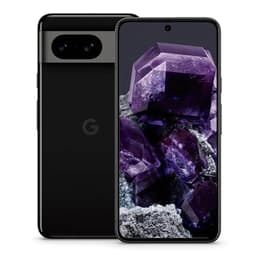

Galaxy S21 5G vs Google Pixel 8

Galaxy S21 5G
Galaxy S21 5G
Starting at

Refurbished price:A$318.00

Versus A$1,369.00 new

See options
Google Pixel 8
Google Pixel 8
Starting at

Refurbished price:A$465.00

Versus A$1,245.00 new

See options

Ratings

The Samsung Galaxy S21 5G (2021) and the Google Pixel 8 (2023) are both Android smartphones that offer distinct user experiences. While the Galaxy S21 5G, released in January 2021, represents Samsung's flagship offering from a few years ago, the Pixel 8, launched in October 2023, showcases Google's latest advancements in mobile technology, particularly in software integration and computational photography. These devices differ significantly in their software support timelines and camera philosophies.

Scores

Durability

The practical lifespan of a smartphone is heavily influenced by its software support and physical durability. Both devices offer robust build quality, but their release timelines create a notable difference in expected software longevity.

  • Software Support: The Google Pixel 8 stands out with an industry-leading commitment of seven years of OS, security, and feature updates, extending its support until at least October 2030. In contrast, the Samsung Galaxy S21 5G, released in January 2021, received four years of OS updates and five years of security updates, meaning its official software support concluded around January 2026.
  • Repairability: The Galaxy S21 5G generally receives a good repairability score, with some assessments giving it a 7.5 out of 10, noting its ease of disassembly and modular components. The Pixel 8 also scores well in repairability, with some experts giving it a 7 out of 10, citing good parts availability and screen replacement ease. Both phones are rated IP68 for dust and water resistance, providing a similar level of protection against environmental elements.
  • Expected Lifespan: Users prioritizing long-term software updates and the latest Android features will find the Pixel 8 offers a significantly extended practical lifespan. The Galaxy S21 5G, while still a capable device, has reached the end of its official software support window, which may impact its security and compatibility with future applications.

Release year

2021

2023

Compatible with latest Update

Yes

Yes

Operating system

Android

Android

Foldable

No

No

Performance

Performance in modern smartphones is about more than just raw speed; it encompasses how smoothly the device handles daily tasks, multitasking, and demanding applications, alongside efficient battery usage.

  • Everyday Responsiveness: The Pixel 8, with its newer generation processor, delivers a highly responsive experience, handling demanding apps and multitasking smoothly. Users report a snappy feel and smooth software performance. The Galaxy S21 5G, powered by its 2021 flagship processor, also offers strong performance for everyday use and gaming, though it may show its age with the most intensive current applications compared to newer chipsets.
  • Battery Behavior: The Pixel 8 features a larger 4575 mAh battery, and users generally report adequate battery life, often lasting a full day with mixed usage. However, some users have noted that heavy usage, particularly with mobile data, can lead to faster drainage. The Galaxy S21 5G comes with a 4000 mAh battery. Its battery life was considered good at launch, typically lasting a day, but some tests indicated it could be less consistent with high refresh rates or 5G usage.
  • Storage and RAM: Both devices offer 8GB of RAM, which is sufficient for smooth multitasking. Storage options for both typically include 128GB and 256GB, providing ample space for apps, photos, and media.

Memory (GB)

8 GB

8 GB

Screen quality

The display is a primary interface for smartphone interaction, and both the Galaxy S21 5G and Pixel 8 offer high-quality viewing experiences with some key differences in their panel technology and capabilities.

  • Display Technology and Clarity: The Galaxy S21 5G features a 6.2-inch Dynamic AMOLED 2X display, known for its vibrant colors, deep blacks, and excellent contrast. The Pixel 8 also has a 6.2-inch OLED display, which provides similar benefits in color reproduction and contrast. Both offer a Full HD+ resolution (2400 x 1080 pixels), ensuring sharp and clear visuals for text and images.
  • Brightness and Refresh Rate: The Pixel 8's Actua display boasts a significantly higher peak brightness of 2000 nits, making it exceptionally visible in bright outdoor conditions. The Galaxy S21 5G offers a peak brightness of 1300 nits, which is still bright for most environments but less intense than the Pixel 8. Both phones feature a 120Hz refresh rate, providing a smooth scrolling experience and fluid animations.
  • Viewing Experience: Users of both devices appreciate the smooth visuals provided by the high refresh rates. The Pixel 8's enhanced brightness offers a practical advantage for outdoor use, while both displays deliver an immersive viewing experience for media consumption.

Resolution

1080 x 2400

1080 x 2400

Screen type

Dynamic AMOLED 2X

OLED

Audiovisual

Both the Samsung Galaxy S21 5G and the Google Pixel 8 are recognized for their camera capabilities, though they approach photography with different hardware configurations and processing philosophies.

  • Camera System Configuration: The Galaxy S21 5G features a versatile triple camera setup, including a 12MP wide-angle lens, a 12MP ultrawide lens, and a 64MP telephoto lens with 3x hybrid optical zoom. The Pixel 8 opts for a dual-camera system, comprising a 50MP main wide-angle lens and a 12MP ultrawide lens.
  • Photography Performance: The Pixel 8 leverages its advanced computational photography and AI features to produce detailed and color-accurate images, excelling in various lighting conditions, including low light. Users often praise the Pixel's ability to capture natural-looking photos. The Galaxy S21 5G also delivers strong photographic results with its dedicated telephoto lens offering optical zoom capabilities, which can be beneficial for distant subjects. Its camera system is capable of capturing high-quality photos and 8K video.
  • Video and Audio: Both devices offer high-quality video recording, with the Galaxy S21 5G capable of 8K video at 24fps and 4K at 30/60fps. The Pixel 8 also supports 4K video recording up to 60fps. Both phones include stereo speakers for an enhanced media consumption experience.

Main camera

12 megapixels

50 megapixels

Front camera

10 megapixels

10.5 megapixels

Miscellaneous

Beyond core performance and display, several practical elements contribute to the overall user experience, including connectivity, physical design, and security features.

  • Connectivity and Ports: Both the Galaxy S21 5G and Pixel 8 support 5G connectivity for fast mobile data speeds. The Pixel 8 supports Wi-Fi 7 and Bluetooth 5.3, offering more current wireless standards, while the Galaxy S21 5G supports Wi-Fi 6 and Bluetooth 5.0. Both devices utilize a USB-C port for charging and data transfer, and neither includes a traditional 3.5mm headphone jack.
  • Security and Sensors: Both phones feature in-display fingerprint sensors for secure unlocking. The Pixel 8 also offers face recognition. Both devices include a range of sensors such as accelerometers, gyroscopes, and barometers.
  • Design and Handling: The Galaxy S21 5G features a glass front (Gorilla Glass Victus), an aluminum frame, and a plastic back, weighing 169g. The Pixel 8 has a glass front and back (Gorilla Glass Victus) with an aluminum frame, weighing 187g. The Pixel 8 is slightly thicker than the S21 5G. Some users find the Pixel 8's size and weight comfortable for one-handed use.

Weight

169 oz

187 oz

Screen size (in)

6.2

6.2

Network

5G

5G

SIM card

Physical SIM + eSIM

Physical SIM + eSIM

Carrier compatibility

Unlocked

Unlocked

Connector

USB-C

USB-C

The Samsung Galaxy S21 5G and Google Pixel 8 offer distinct propositions for users in the Android ecosystem. The Galaxy S21 5G, a device from 2021, was praised at its launch for its vibrant AMOLED display, versatile triple camera system with optical zoom, and overall solid performance. Users appreciated its compact size and IP68 rating. However, common criticisms included its battery life, especially with the 120Hz refresh rate enabled, and the plastic back, which some felt detracted from a premium feel.

The Google Pixel 8, released in late 2023, has garnered positive feedback for its exceptional software experience, long-term update commitment, and advanced computational photography. Users frequently highlight its bright Actua OLED display and the smooth performance driven by its optimized processor. Some user concerns have revolved around battery life, particularly with mobile data usage, and occasional reports of overheating.

Users prioritizing extended software support, cutting-edge AI features, and a camera system that excels with computational photography will find the Google Pixel 8 well-suited to their needs. Its long update promise makes it a compelling choice for those who keep their devices for many years. Conversely, users who value a dedicated telephoto lens for optical zoom, a slightly lighter build, and a proven Samsung interface might still consider the Galaxy S21 5G, understanding that its software support has concluded. For those looking for an eco-friendly alternative, both models are available as quality-assured refurbished options, providing a sustainable choice for acquiring capable technology.
See all articles

Our recent comparisons