
Galaxy S10 vs Motorola Edge 30 Fusion

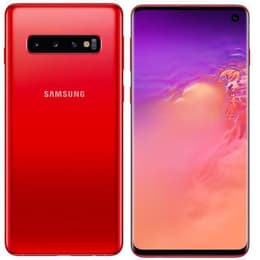
Galaxy S10
Galaxy S10
Starting at

Refurbished price:A$359.00

Versus A$849.00 new

See options
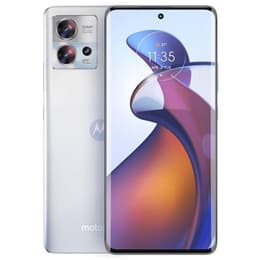
Motorola Edge 30 Fusion
Starting at

Refurbished price:A$257.46

Versus A$1,352.00 new

See options

The Samsung Galaxy S10, released in March 2019, and the Motorola Edge 30 Fusion, launched in September 2022, represent different eras in smartphone technology. While both devices offer a premium experience, the Edge 30 Fusion benefits from more recent advancements in processing power and display technology, whereas the Galaxy S10 provides a more established software ecosystem. Both run on the Android operating system, though with different manufacturer customizations and update timelines.

Scores

Durability

When considering the long-term usability of these devices, their respective release timelines and software support policies are key differentiators.

  • Software Longevity: The Samsung Galaxy S10, having been released in 2019, received major Android operating system updates up to Android 12, with security patches concluding around March 2023. The Motorola Edge 30 Fusion, launched in 2022 with Android 12, is expected to receive two major OS upgrades (up to Android 14) and three years of security updates. This means the Edge 30 Fusion offers a longer period of official software support from its manufacturer.
  • Repairability: The Galaxy S10 received a low repairability score of 3 out of 10 from iFixit, primarily due to extensive use of adhesive, a soldered USB-C port, and a glued-down battery, making repairs challenging and costly, especially for screen or battery replacements. The Motorola Edge 30 Fusion has a slightly better repairability score of 5 out of 10, though it also uses adhesive for the back cover and battery, and screen replacement involves disassembling multiple components.
  • Practical Lifespan: Given the cessation of official software and security updates for the Galaxy S10, users might find its practical lifespan for secure daily use diminishing. The Motorola Edge 30 Fusion, with its more recent release and ongoing update commitment, is better positioned for extended practical use, especially for those considering a quality-assured refurbished option for sustainable technology.

Release year

2019

2022

Compatible with latest Update

No

Yes

Operating system

Android

Android

Foldable

No

No

Performance

The performance capabilities of these two smartphones reflect the technological advancements made between their release dates, impacting how they handle daily tasks and demanding applications.

  • Processing Power: The Motorola Edge 30 Fusion features a more recent generation processor, allowing it to handle demanding applications, intensive multitasking, and graphic-heavy games with greater fluidity and responsiveness. The Galaxy S10, while capable for its time, may exhibit slower app loading times and less seamless transitions when running multiple complex applications simultaneously.
  • Storage and RAM: Both devices offer various internal storage options, with the Galaxy S10 providing 128GB or 512GB, and the Edge 30 Fusion offering 128GB, 256GB, or 512GB. The Galaxy S10's storage is expandable via a microSD card, a feature not present in the Edge 30 Fusion. Both typically come with 8GB of RAM, which supports efficient multitasking, though some Edge 30 Fusion variants may offer more.
  • Battery Behavior: The Galaxy S10 is equipped with a 3400mAh battery, which some users reported as insufficient for a full day of heavy use, sometimes leading to more frequent charging. The Motorola Edge 30 Fusion has a larger 4400mAh battery, but user experiences suggest it can also drain quickly with moderate to heavy usage, often requiring a recharge by evening. However, the Edge 30 Fusion supports significantly faster 68W charging, capable of reaching 50% charge in about 10-12 minutes, compared to the Galaxy S10's Quick Charge 2.0.

Memory (GB)

8 GB

8 GB

Screen quality

The visual experience on both devices is delivered through high-quality displays, though with notable differences in technology and specifications.

  • Display Technology and Resolution: The Samsung Galaxy S10 features a 6.1-inch Dynamic AMOLED display with a QHD+ resolution (1440x3040 pixels), offering sharp details and vibrant colors. The Motorola Edge 30 Fusion sports a slightly larger 6.55-inch P-OLED display with an FHD+ resolution (1080x2400 pixels). While the Galaxy S10 has a higher pixel density, both displays provide a clear and immersive viewing experience for everyday content.
  • Refresh Rate and Brightness: A key difference lies in the refresh rate; the Galaxy S10 has a standard 60Hz refresh rate, while the Edge 30 Fusion boasts a smoother 144Hz refresh rate, resulting in more fluid scrolling and animations. The Edge 30 Fusion also offers a higher peak brightness of up to 1100 nits, which can improve visibility in bright outdoor conditions compared to the Galaxy S10.
  • Design and Durability: Both phones feature curved displays, contributing to a sleek aesthetic. The Galaxy S10 is protected by Gorilla Glass 6, while the Edge 30 Fusion uses Gorilla Glass 5. Some users of the Galaxy S10 noted that the curved edges could lead to accidental touches.

Resolution

1440 x 3040

1080 x 2400

Screen type

Dynamic AMOLED

P-OLED

Audiovisual

Both smartphones offer versatile camera systems designed to capture a range of photographic and videographic content, with varying strengths and capabilities.

  • Rear Camera System: The Samsung Galaxy S10 features a triple-camera setup on the rear, including a 12MP wide-angle lens, a 12MP telephoto lens with 2x optical zoom, and a 16MP ultra-wide-angle lens. The Motorola Edge 30 Fusion also has a triple rear camera system, comprising a 50MP main sensor with optical image stabilization (OIS), a 13MP ultra-wide/macro lens, and a 2MP depth sensor.
  • Photography Performance: The Galaxy S10 was generally praised for its daylight photography, producing detailed and vibrant images, though some users reported issues with third-party apps and low-light performance. The Edge 30 Fusion's 50MP main camera also performs well in daylight, capturing crisp photos, but its low-light performance and the utility of its ultra-wide camera in dark environments have been noted as weaknesses by users.
  • Video Recording and Front Camera: Both devices are capable of recording 4K video, with the Galaxy S10 supporting 4K at 60 frames per second. The Edge 30 Fusion can record up to 8K video. For selfies, the Galaxy S10 has a 10MP front camera, while the Edge 30 Fusion features a higher-resolution 32MP front camera, which performs well in good lighting conditions.
  • Audio Experience: Both phones offer stereo speakers, with the Edge 30 Fusion supporting Dolby Atmos for an enhanced audio experience. The Galaxy S10 retains a 3.5mm headphone jack, a feature absent on the Edge 30 Fusion.

Main camera

12 megapixels

50 megapixels

Front camera

10 megapixels

32 megapixels

Miscellaneous

Beyond their core features, several practical elements contribute to the overall user experience and daily convenience of these smartphones.

  • Connectivity: The Motorola Edge 30 Fusion supports 5G connectivity, Wi-Fi 6E, and Bluetooth 5.2, offering more modern and faster wireless communication standards. The Samsung Galaxy S10 supports 4G LTE, Wi-Fi 6, and Bluetooth 5.0.
  • Ports and Biometrics: Both devices utilize a USB-C port for charging and data transfer. The Galaxy S10 notably includes a 3.5mm headphone jack, which is absent on the Edge 30 Fusion. For security, both feature in-display fingerprint sensors, with users generally finding the Edge 30 Fusion's sensor to be fast and responsive.
  • Design and Handling: The Galaxy S10 measures 149.9 x 70.4 x 7.8mm and weighs 157g, offering a compact and lightweight feel. The Edge 30 Fusion is slightly larger and heavier at 158.48 x 71.99 x 7.45mm and 172g, but is still considered slim and comfortable to hold. The Edge 30 Fusion also carries an IP52 rating for dust and splash resistance.
  • User Interface: The Motorola Edge 30 Fusion runs a near-stock Android experience with Motorola's MyUX customizations, including useful gestures. The Galaxy S10 runs Samsung's One UI, which offers a feature-rich interface but can be perceived as more customized than stock Android.

Weight

157 oz

168 oz

Screen size (in)

6.1

6,55

Network

4G

5G

SIM card

Physical SIM

Dual Physical SIM

Carrier compatibility

Unlocked

Unlocked

The Samsung Galaxy S10 and Motorola Edge 30 Fusion cater to different user priorities, largely due to their respective release timelines and design philosophies. The Galaxy S10, a former flagship, was praised for its vibrant QHD+ AMOLED display and versatile triple camera system, which performed well in good lighting. Users appreciated its compact size and the inclusion of a 3.5mm headphone jack. However, common criticisms included its battery life, which often required mid-day charging for heavy users, and its lower repairability score due to extensive adhesive use. Some users also noted slower Android updates compared to other brands at the time.

The Motorola Edge 30 Fusion, a more recent device, is lauded for its smooth 144Hz P-OLED display and strong performance for demanding tasks, making it suitable for gaming and intensive multitasking. Its fast 68W charging is a significant advantage for users needing quick power top-ups. User feedback often highlights its sleek design and near-stock Android experience. Conversely, frequent concerns revolve around its battery draining quickly with heavy use, and its camera performance in low-light conditions and for video recording. The absence of a headphone jack and wireless charging are also points of consideration for some users.

Users prioritizing a high-resolution display, a compact form factor, and the convenience of a headphone jack may find the Samsung Galaxy S10 appealing. Those who value a high refresh rate screen, faster performance for modern applications, rapid charging, and a more up-to-date software experience will likely lean towards the Motorola Edge 30 Fusion. Both devices, especially when considering a quality-assured refurbished option, offer a pathway to advanced smartphone technology while making an eco-friendly choice.


See all articles

Our recent comparisons