
iPhone 16 Pro Max vs Nokia X30

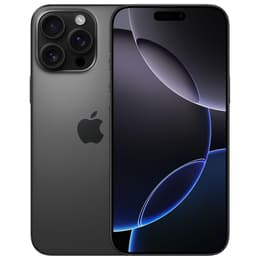
iPhone 16 Pro Max
iPhone 16 Pro Max
Starting at

Refurbished price:A$1,325.00

Versus A$2,149.00 new

See options
Nokia X30
Nokia X30
Starting at

Refurbished price:A$298.00

Versus A$965.00 new

See options

The iPhone 16 Pro Max, released in September 2024, and the Nokia X30, launched in September 2022, represent distinct approaches to smartphone design and functionality. While both devices offer modern connectivity and display technologies, the iPhone 16 Pro Max emphasizes high-end performance and advanced imaging capabilities, whereas the Nokia X30 focuses on a balanced user experience with an emphasis on sustainable materials. The iPhone operates on Apple's iOS, while the Nokia X30 runs on Android, offering different software ecosystems and user interfaces.

Scores

Durability

The practical lifespan of a smartphone is influenced by its release timeline, software support, and physical durability. These two devices, separated by two years, offer different expectations in these areas.

  • Software Longevity: The iPhone 16 Pro Max, having launched in late 2024 with iOS 18, is expected to receive major iOS updates for an extended period, typically around five to six years from its release. The Nokia X30, released in 2022 with Android 12, was anticipated to receive three years of OS updates, meaning it has likely reached or is nearing the end of its major Android version updates, though security updates may continue for a while longer.
  • Physical Durability: The iPhone 16 Pro Max features a titanium frame and Ceramic Shield front cover, contributing to its robust build and enhanced resistance against drops and scratches. It also boasts an IP68 rating for dust and water resistance, allowing submersion up to 6 meters for 30 minutes. The Nokia X30 incorporates an aluminum frame and a plastic back, with a Corning Gorilla Glass Victus display for scratch protection. It carries an IP67 rating, providing dust and water resistance for submersion up to 1 meter for 30 minutes.
  • Repairability: While specific repairability scores can vary by region and independent assessments, Apple generally designs its Pro Max models with a certain level of modularity, though specialized tools are often required for repairs. The Nokia X30, with its focus on sustainability, has been noted for its use of recycled materials, which can sometimes align with easier repair processes, though official repairability scores are not consistently highlighted.

Release year

2024

2022

Compatible with latest Update

Yes

No

Foldable

No

No

Performance

Performance differences between these two smartphones are notable, primarily due to their respective release dates and target segments, impacting how they handle demanding applications and daily tasks.

  • Processing Power: The iPhone 16 Pro Max is equipped with a current-generation processor designed for high-intensity tasks, enabling smooth operation across complex applications, advanced gaming, and demanding video editing. The Nokia X30 utilizes a mid-range processor that handles everyday tasks, web browsing, and light gaming competently, providing a responsive experience for general use.
  • Multitasking and Responsiveness: The iPhone 16 Pro Max typically offers substantial RAM, contributing to seamless multitasking and quick app switching without noticeable slowdowns. Its optimized software and hardware integration ensure a fluid user experience. The Nokia X30, with its available RAM configurations, provides adequate performance for typical multitasking, though it may exhibit more hesitation when managing numerous demanding applications simultaneously.
  • Storage Options: The iPhone 16 Pro Max offers a range of internal storage capacities, starting from 256GB and extending up to 1TB, utilizing fast NVMe storage for rapid data access. The Nokia X30 comes with 128GB or 256GB internal storage options, which are suitable for most users' app and media storage needs.

Memory (GB)

8 GB

8 GB

Screen quality

The visual experience on both devices is shaped by their display technologies, resolution, and brightness capabilities, catering to different user expectations for clarity and vibrancy.

  • Display Technology and Size: The iPhone 16 Pro Max features a larger 6.9-inch LTPO Super Retina XDR OLED display, known for its deep blacks, high contrast, and vibrant color reproduction. The Nokia X30 sports a 6.43-inch AMOLED display, which also delivers rich colors and good contrast, offering a pleasant viewing experience for media consumption and daily interactions.
  • Resolution and Refresh Rate: The iPhone 16 Pro Max provides a higher resolution of 1320 x 2868 pixels, resulting in a sharper image with approximately 460 pixels per inch, and an adaptive refresh rate up to 120Hz for exceptionally smooth scrolling and animations. The Nokia X30 offers a Full HD+ resolution of 1080 x 2400 pixels and a 90Hz refresh rate, which provides a smoother visual experience than standard 60Hz displays.
  • Brightness and Outdoor Visibility: The iPhone 16 Pro Max can reach typical brightness levels of 1000 nits and peak brightness of 2000 nits in high brightness mode, making it highly visible even in bright outdoor conditions. The Nokia X30 has a typical brightness of 400 nits and a peak brightness of 700 nits, which is adequate for indoor use and generally acceptable for outdoor viewing, though it may struggle in direct sunlight compared to the iPhone.

Resolution

1320 x 2868

1080 x 2400

Screen type

LTPO Super Retina XDR OLED

AMOLED

Audiovisual

Camera capabilities are a significant differentiator, with the iPhone 16 Pro Max offering a more advanced and versatile system compared to the Nokia X30, particularly for professional-grade photography and videography.

  • Rear Camera System: The iPhone 16 Pro Max features a triple camera setup, including a 48MP main sensor with sensor-shift optical image stabilization (OIS), a 48MP ultrawide lens, and a 12MP periscope telephoto lens with 5x optical zoom and 3D sensor-shift OIS. It also includes a LiDAR scanner for enhanced depth sensing. The Nokia X30 comes with a dual camera system, comprising a 50MP main sensor with OIS and a 13MP ultrawide lens.
  • Photography Performance: The iPhone 16 Pro Max excels in various lighting conditions, offering detailed images with accurate colors, improved low-light performance, and advanced computational photography features. Its 5x optical zoom provides significant flexibility for distant subjects. The Nokia X30's 50MP main camera performs well in good lighting, capturing clear and vibrant photos, and its ultrawide lens is suitable for broader scenes. It also includes features like Night Mode 2.0 for improved low-light shots.
  • Video Recording and Audio: The iPhone 16 Pro Max supports high-resolution video recording up to 4K at 120 frames per second, with advanced features like 10-bit HDR, Dolby Vision HDR, and ProRes, along with spatial video capabilities. The Nokia X30 records video at 1080p resolution at 30 or 60 frames per second, offering OZO Spatial Audio capture for improved sound quality in videos.

Main camera

48 megapixels

50 megapixels

Front camera

12 megapixels

16 megapixels

Miscellaneous

Beyond core specifications, several practical elements contribute to the overall user experience, from connectivity to physical design and unique features.

  • Connectivity and Ports: The iPhone 16 Pro Max supports the latest Wi-Fi 7 standard and Bluetooth 5.3, along with 5G connectivity, and features a USB-C port for charging and data transfer. The Nokia X30 supports Wi-Fi 6 and Bluetooth 5.1, also offering 5G connectivity, and includes a USB-C 2.0 port.
  • Biometric Security and Navigation: The iPhone 16 Pro Max relies on Face ID for secure facial recognition and authentication. It also introduces a new customizable Action button and a dedicated Camera Control button for quick access to camera functions. The Nokia X30 features an in-display fingerprint sensor for biometric security.
  • Build Materials and Ergonomics: The iPhone 16 Pro Max is constructed with a titanium frame and glass back, weighing approximately 227 grams. The Nokia X30 uses an aluminum frame and a plastic back, with a lighter weight of around 185 grams, and is notable for incorporating recycled materials in its construction.

Weight

227 oz

185 oz

Screen size (in)

6.9

6.43

Network

5G

5G

SIM card

Physical SIM + eSIM

Dual Physical SIM

Carrier compatibility

Unlocked

Unlocked

User feedback for the iPhone 16 Pro Max frequently highlights its exceptional camera quality, robust overall performance, and impressive battery life as key strengths. Users also appreciate its large, vibrant display and the fluidity of the iOS experience. Some common criticisms include its substantial size and weight, which can make one-handed use challenging, and the camera bump design.

For the Nokia X30, users generally praise its sturdy build, the inclusion of an AMOLED display, and its commitment to using recycled materials. Its battery life is often described as sufficient for a full day of use, and the camera performance is considered good for its segment. However, some users note that its processor, while capable for daily tasks, may not match the performance of higher-end devices, and the lack of 4K video recording is a point of consideration for some.

Users prioritizing cutting-edge performance, advanced photography and videography features, and a large, high-refresh-rate display will find the iPhone 16 Pro Max well-suited to their needs. Its extended software support and robust build also cater to those seeking a device with a longer expected lifespan. Conversely, users who value a balanced smartphone experience, a lighter form factor, and a commitment to sustainable manufacturing may lean toward the Nokia X30. It offers a reliable Android experience with good display quality and decent camera capabilities for everyday use.

Both devices are available as quality-assured refurbished options, providing an eco-friendly alternative for consumers looking to make informed and sustainable choices.
See all articles

Our recent comparisons