
iPhone 16 Pro Max vs Motorola Edge 30 Fusion

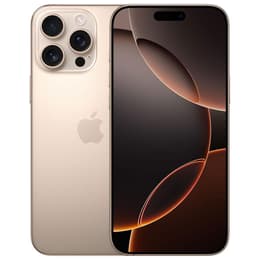
iPhone 16 Pro Max
iPhone 16 Pro Max
Starting at

Refurbished price:A$1,325.00

Versus A$2,149.00 new

See options
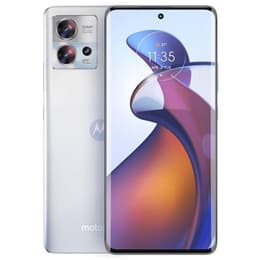
Motorola Edge 30 Fusion
Starting at

Refurbished price:A$257.46

Versus A$1,352.00 new

See options

The iPhone 16 Pro Max, released in September 2024, and the Motorola Edge 30 Fusion, launched in September 2022, represent different approaches to smartphone design and functionality. While the iPhone operates on Apple's iOS ecosystem, the Motorola device runs on Android, offering distinct user experiences. The primary differentiators lie in their generational advancements, software support timelines, and overall hardware capabilities, catering to varied user preferences.

Scores

Durability

When considering the practical lifespan of these devices, their release timelines and software support policies are key factors.

  • Release Timeline: The iPhone 16 Pro Max is a more recent device, having been released in September 2024. The Motorola Edge 30 Fusion was released two years prior, in September 2022. This age difference inherently impacts their remaining support cycles and the duration they will receive the latest software features and security updates.
  • Software Longevity: Apple is known for providing extended software support, with the iPhone 16 Pro Max expected to receive major iOS updates until at least 2031, offering approximately seven years of support from its release. In contrast, the Motorola Edge 30 Fusion was promised two major Android OS updates and three years of security patches from its launch. This means it likely concluded its major OS updates with Android 14 and will receive security updates until late 2025.
  • Physical Durability: The iPhone 16 Pro Max features a Ceramic Shield front cover and a titanium frame, contributing to its robust build and IP68 water and dust resistance, allowing submersion up to 6 meters for 30 minutes. The Motorola Edge 30 Fusion utilizes Gorilla Glass 5 for its front display and an aluminum frame, offering IP52 splash and dust resistance, protecting against light splashes.

Release year

2024

2022

Compatible with latest Update

Yes

Yes

Foldable

No

No

Performance

The performance of a smartphone is crucial for daily tasks, from browsing to demanding applications and gaming.

  • Processing Power: The iPhone 16 Pro Max is equipped with Apple's A18 Pro chip, featuring a 6-core CPU, a 6-core GPU, and a 16-core Neural Engine. This hardware delivers top-tier performance, ensuring smooth operation for intensive applications, advanced gaming, and on-device artificial intelligence tasks. The Motorola Edge 30 Fusion is powered by a Snapdragon 888+ 5G processor, which was a high-end chip at its release. It handles everyday multitasking and most games effectively, though it may experience performance throttling under prolonged heavy use.
  • System Responsiveness: Users of the iPhone 16 Pro Max can expect highly responsive interactions and quick app loading times, maintaining consistent performance even with numerous applications running simultaneously. The Motorola Edge 30 Fusion also offers a fluid user experience for general navigation and app usage, with its processor providing ample power for typical smartphone activities.
  • Multitasking Capabilities: Both devices are capable of handling multiple applications concurrently. The iPhone 16 Pro Max, with its advanced chip and optimized iOS, manages background processes efficiently, allowing for seamless switching between demanding apps. The Motorola Edge 30 Fusion, often available with 8GB or 12GB of RAM, also provides a capable multitasking experience for most users.

Memory (GB)

8 GB

8 GB

Screen quality

The display is a primary interface for smartphone interaction, and both devices offer distinct visual experiences.

  • Display Technology and Clarity: The iPhone 16 Pro Max features a 6.9-inch Super Retina XDR OLED display, providing deep blacks, vibrant colors, and a high resolution of 2868x1320 pixels, resulting in sharp and detailed visuals. The Motorola Edge 30 Fusion has a 6.55-inch pOLED display with a 1080x2400 (FHD+) resolution, offering good clarity and color reproduction, enhanced by HDR10+ support.
  • Brightness and Refresh Rate: The iPhone 16 Pro Max's display boasts a typical brightness of 1000 nits, peaking at 1600 nits for HDR content and up to 2000 nits for outdoor visibility, ensuring content remains clear in various lighting conditions. It also features ProMotion technology for adaptive refresh rates up to 120Hz, contributing to smooth scrolling and animations. The Motorola Edge 30 Fusion offers a peak brightness of 1100 nits and a higher 144Hz refresh rate, which provides a very fluid visual experience, particularly noticeable during scrolling and gaming.
  • Viewing Experience: The iPhone 16 Pro Max's larger screen size and higher peak brightness make it well-suited for media consumption and outdoor use. The Motorola Edge 30 Fusion's curved pOLED display and high refresh rate offer an immersive viewing experience, especially for users who appreciate very smooth motion.

Resolution

1320 x 2868

1080 x 2400

Screen type

LTPO Super Retina XDR OLED

P-OLED

Audiovisual

Camera capabilities are a significant consideration for many users, and both smartphones offer advanced photographic and videographic features.

  • Rear Camera Systems: The iPhone 16 Pro Max is equipped with a versatile Pro camera system, including a 48MP main camera with second-generation sensor-shift optical image stabilization, a 48MP Ultra Wide camera with a 120° field of view, and a 12MP 5x Telephoto camera with 3D sensor-shift optical image stabilization. The Motorola Edge 30 Fusion features a triple-camera setup with a 50MP main sensor with optical image stabilization, a 13MP ultrawide camera that also supports macro photography, and a 2MP depth sensor.
  • Photography Performance: The iPhone 16 Pro Max excels in capturing detailed images with accurate colors and improved low-light performance across its lenses, capable of producing 24MP or 48MP photos from its main sensor. The Motorola Edge 30 Fusion delivers good daylight photos with plenty of detail and natural colors from its main camera, and its ultrawide camera performs well for its class, though low-light performance can be less consistent.
  • Video Recording and Audio: The iPhone 16 Pro Max supports 4K Dolby Vision video recording at various frame rates, including up to 120fps, offering advanced video capabilities for creators. The Motorola Edge 30 Fusion can record video up to 8K at 30fps with its main camera and 4K at 30fps with its ultrawide and front cameras. Both devices offer capable microphone quality for calls and recording, and the Motorola Edge 30 Fusion features dual stereo speakers for a good media consumption experience.

Main camera

48 megapixels

50 megapixels

Front camera

12 megapixels

32 megapixels

Miscellaneous

Beyond core features, several practical elements contribute to the overall user experience and device utility.

  • Connectivity and Ports: The iPhone 16 Pro Max supports the latest wireless standards, including Wi-Fi 7 and Bluetooth 5.3, and features a USB-C port for charging and data transfer. The Motorola Edge 30 Fusion includes Wi-Fi 6 and Bluetooth 5.2, also utilizing a USB-C port (USB 3.1 compatible). Neither device includes a traditional headphone jack.
  • Biometric Security and Navigation: The iPhone 16 Pro Max relies on Face ID for secure facial recognition and authentication. It also incorporates an Action Button for customizable shortcuts. The Motorola Edge 30 Fusion features an in-display optical fingerprint sensor for biometric security and supports face unlock.
  • Design and Handling: The iPhone 16 Pro Max has dimensions of 163.0 x 77.6 x 8.25 mm and weighs 227g, featuring a premium titanium build. The Motorola Edge 30 Fusion is more compact and lighter at 158.5 x 72 x 7.5 mm and 168g, with an aluminum frame and glass back. These differences impact one-handed use and pocketability.

Weight

227 oz

168 oz

Screen size (in)

6.9

6,55

Network

5G

5G

SIM card

Physical SIM + eSIM

Dual Physical SIM

Carrier compatibility

Unlocked

Unlocked

Choosing between the iPhone 16 Pro Max and the Motorola Edge 30 Fusion involves weighing generational advantages against specific user needs. The iPhone 16 Pro Max, as a more recently released flagship, offers a longer software support window, a more advanced and brighter display, and superior overall processing power, particularly for demanding tasks and future-proof performance. Its camera system provides highly refined image and video capabilities, especially in challenging lighting conditions. Users often praise the iPhone's consistent performance, robust ecosystem, and long-term value due to extended software updates. Criticisms sometimes point to its larger size and weight, which might not suit all users.

The Motorola Edge 30 Fusion, while an older model, still provides a compelling package for its segment. It features a very smooth 144Hz pOLED display, a capable processor for everyday use, and a lighter, more compact design. Users appreciate its near-stock Android experience and fast charging capabilities. Common feedback suggests that while its camera performs well in good lighting, it may not match the low-light prowess of newer flagships. Its software update policy, while adequate for its time, is shorter compared to the iPhone.

Users prioritizing the absolute latest technology, extended software longevity, and top-tier camera performance, especially for video and low-light photography, may find the iPhone 16 Pro Max better suited to their needs. Its robust build and ecosystem integration are also strong points. Conversely, users who prefer a lighter, more compact device with a very high refresh rate display and a clean Android experience for general use and moderate gaming might lean towards the Motorola Edge 30 Fusion. Both devices, particularly when considering quality-assured refurbished options, offer a sustainable choice for consumers looking to make an informed purchasing decision.

See all articles

Our recent comparisons