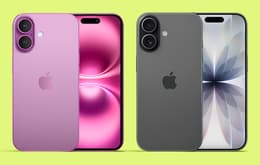
iPhone 16 Plus vs Oppo Reno 8 Pro

iPhone 16 Plus
iPhone 16 Plus
Starting at

Refurbished price:A$942.00

Versus A$1,599.00 new

See options
Oppo Reno 8 Pro
Oppo Reno 8 Pro
Starting at

Refurbished price:A$327.00

Versus A$1,741.00 new

See options

The iPhone 16 Plus, released in September 2024, and the Oppo Reno 8 Pro, launched in July 2022, represent distinct approaches to smartphone design and functionality. While both devices offer large displays and capable camera systems, they differ significantly in their operating systems, core processing power, and display refresh rates. The iPhone 16 Plus operates on Apple's iOS, emphasizing a streamlined user experience, whereas the Oppo Reno 8 Pro runs on Android with Oppo's ColorOS overlay, offering extensive customization.

Scores

Durability

The practical lifespan of a smartphone is influenced by its release timeline, software support, and physical resilience. The iPhone 16 Plus, being a more recent device, benefits from a longer expected period of major software updates compared to the Oppo Reno 8 Pro.

  • Software Longevity: Apple typically provides major iOS updates for approximately five to seven years, with security updates extending even further, suggesting the iPhone 16 Plus will receive support well into the future. The Oppo Reno 8 Pro, released in 2022, falls under Oppo's older update policy, which generally offered two to three major Android version updates and three to four years of security patches for its Reno series.
  • Physical Durability: The iPhone 16 Plus features a Ceramic Shield front and an aluminum frame, along with an IP68 rating for dust and water resistance, allowing submersion up to 6 meters for 30 minutes. The Oppo Reno 8 Pro utilizes Corning Gorilla Glass 5 for its front display and has an IP54 rating, providing protection against dust and splashes.
  • Battery Health: Oppo highlights its Battery Health Engine in the Reno 8 Pro, designed to maintain 80% of the original battery capacity for up to 1600 charging cycles, which translates to approximately four years of average daily use.

Release year

2024

2022

Foldable

No

No

Performance

Performance in both devices is driven by their respective internal components, impacting how smoothly applications run, how quickly tasks are completed, and how efficiently power is managed.

  • Processing Power: The iPhone 16 Plus is equipped with a current-generation processor optimized for demanding applications and artificial intelligence tasks, providing responsive performance for multitasking and complex operations. The Oppo Reno 8 Pro features a processor that handles daily tasks and gaming smoothly, though it may experience some warmth during sustained intensive workloads.
  • Storage and Multitasking: The iPhone 16 Plus offers storage options up to 512GB and includes 8GB of RAM, contributing to efficient app handling and data access. The Oppo Reno 8 Pro comes with 256GB of internal storage and is available with either 8GB or 12GB of RAM, supporting fluid multitasking.
  • Battery Behavior: The iPhone 16 Plus is designed for extended usage, offering up to 27 hours of video playback and 100 hours of audio playback. The Oppo Reno 8 Pro's battery can reliably last through a full day of moderate to heavy use, with some users reporting it can extend into a second day with lighter usage.

Memory (GB)

8 GB

8 GB

Screen quality

The visual experience on a smartphone is largely defined by its display technology, resolution, and responsiveness, which vary between these two models.

  • Display Technology and Clarity: Both devices feature large 6.7-inch OLED displays, offering deep blacks and vibrant colors. The iPhone 16 Plus utilizes a Super Retina XDR OLED display with a resolution of 2796 by 1290 pixels, resulting in a pixel density of approximately 460 ppi. The Oppo Reno 8 Pro has an AMOLED display with a 1080 x 2412 pixel resolution and a pixel density of 394 ppi.
  • Brightness and Outdoor Visibility: The iPhone 16 Plus can reach a typical brightness of 1000 nits, with peak brightness up to 1600 nits for HDR content and 2000 nits for outdoor use, ensuring good visibility in various lighting conditions. The Oppo Reno 8 Pro offers a typical brightness of 500 nits, with a high brightness mode of 800 nits and a peak brightness of 950 nits, providing clear viewing outdoors.
  • Refresh Rate and Smoothness: A notable difference is the refresh rate; the iPhone 16 Plus features a standard 60Hz refresh rate. In contrast, the Oppo Reno 8 Pro offers a 120Hz refresh rate, which contributes to smoother scrolling and a more fluid visual experience, particularly noticeable during gaming or fast-paced content.

Resolution

1290 x 2796

1080 x 2412

Audiovisual

Both smartphones are equipped with advanced camera systems designed to capture high-quality photos and videos, though they employ different hardware and processing approaches.

  • Rear Camera Systems: The iPhone 16 Plus features an advanced dual-camera system with a 48MP main sensor and a 12MP ultra-wide lens, capable of 2x optical zoom through the main sensor. It includes sensor-shift optical image stabilization (OIS) on the main camera. The Oppo Reno 8 Pro has a triple camera setup, comprising a 50MP main sensor, an 8MP ultra-wide lens, and a 2MP macro lens. It incorporates a dedicated imaging NPU (MariSilicon X) to enhance low-light video and HDR processing.
  • Photography Performance: The iPhone 16 Plus benefits from features like Photonic Engine, Deep Fusion, and Smart HDR 5, which contribute to detailed and well-exposed images across various conditions, including next-generation portraits. The Oppo Reno 8 Pro's main camera performs well in both daylight and low-light conditions, producing good-looking shots, though the ultra-wide camera's performance may not match the main sensor, especially in challenging light.
  • Video Recording Capabilities: The iPhone 16 Plus supports 4K Dolby Vision video recording at up to 60 frames per second, along with Cinematic mode and Action mode for stabilized video. The Oppo Reno 8 Pro can record 4K video at 30 frames per second and includes 4K Ultra Night Video and 4K Ultra HDR Video features, enabled by its NPU, for improved video quality in varied lighting.

Miscellaneous

Beyond core performance and display, practical elements such as connectivity, physical design, and additional features contribute to the overall user experience of these devices.

  • Connectivity and Ports: The iPhone 16 Plus supports Wi-Fi 7 and Bluetooth 5.3, and features a USB-C port for charging and data transfer. The Oppo Reno 8 Pro supports Wi-Fi 6 and Bluetooth 5.3, also utilizing a USB Type-C port. Both devices offer 5G cellular connectivity.
  • Biometrics and Sensors: The iPhone 16 Plus relies on Face ID for secure authentication and includes an Ultra Wideband (UWB) chip for enhanced spatial awareness. The Oppo Reno 8 Pro features an optical in-display fingerprint sensor for unlocking and authentication.
  • Design and Handling: The iPhone 16 Plus has dimensions of 160.9 × 77.8 × 7.8 mm and weighs 199 grams, featuring an aluminum frame and a color-infused glass back. The Oppo Reno 8 Pro is slightly lighter and thinner at 161.2 x 74.2 x 7.34 mm and 183 grams, with a glass front and a streamlined unibody glass back.

Weight

199 oz

183 oz

Screen size (in)

6.7

6,7

Network

5G

5G

SIM card

Physical SIM + eSIM

Dual Physical SIM

Carrier compatibility

Unlocked

Unlocked

Users frequently praise the iPhone 16 Plus for its robust software ecosystem, consistent performance, and advanced camera capabilities, particularly its computational photography features and video quality. Common discussions often highlight its long-term software support and the integration of new AI features. Some users, however, note the 60Hz display as a point of comparison with Android devices offering higher refresh rates.

The Oppo Reno 8 Pro is often commended by users for its striking design, vibrant 120Hz AMOLED display, and exceptionally fast wired charging. Its battery life is also a frequent point of praise, with many finding it sufficient for a full day of heavy use. Criticisms sometimes revolve around the presence of pre-installed applications in ColorOS and the camera's ultra-wide sensor not matching the main sensor's quality.

Users prioritizing a device with a longer software update cycle, a highly integrated ecosystem, and advanced video recording features may find the iPhone 16 Plus well-suited to their needs. Conversely, those who value a smoother display experience with a 120Hz refresh rate, extremely fast wired charging, and extensive Android customization options might lean toward the Oppo Reno 8 Pro. Both devices offer compelling features for different user profiles, and considering a quality-assured refurbished option for either model can be a sustainable choice for consumers.

See all articles

Our recent comparisons