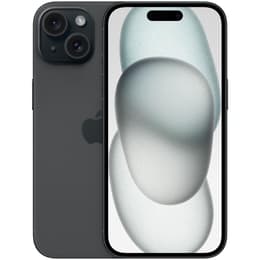
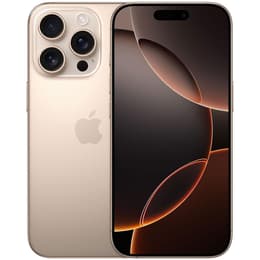

iPhone 15 vs iPhone 16 Pro

iPhone 15
iPhone 15
Starting at

Refurbished price:A$680.00

Versus A$1,249.00 new

See options
iPhone 16 Pro
iPhone 16 Pro
Starting at

Refurbished price:A$1,148.00

Versus A$1,999.00 new

See options

Ratings

The iPhone 15, released in September 2023, and the iPhone 16 Pro, launched in September 2024, represent different tiers within Apple's smartphone lineup. While both operate on Apple's iOS platform, the iPhone 16 Pro introduces a more advanced processor, an upgraded camera system, and a larger display with a higher refresh rate, catering to users with more demanding needs.

Scores

Durability

When considering the practical lifespan of these devices, several factors come into play, including software support, physical construction, and battery longevity.

  • Release Timeline and OS Support: The iPhone 15, released in September 2023, will receive iOS updates for a substantial period, typically 5-6 years from its launch. The iPhone 16 Pro, being a year newer with a September 2024 release, is expected to receive software support for an additional year, extending its functional lifespan.
  • Build Materials and Durability: The iPhone 15 features a durable color-infused glass back and an aluminum design, with Ceramic Shield protection on the front and IP68 water and dust resistance. The iPhone 16 Pro elevates this with a titanium frame, which is both lightweight and strong, and also includes Ceramic Shield and IP68 water and dust resistance.
  • Battery Longevity: Apple has indicated that iPhone 15 models are designed to retain 80% of their original battery capacity after 1000 complete charge cycles, an improvement over previous models. While specific figures for the iPhone 16 Pro are not as widely detailed, newer models generally benefit from ongoing battery technology advancements and optimized power management.

Release year

2023

2024

Compatible with latest Update

Yes

Yes

Foldable

No

No

Performance

The performance capabilities of both devices are central to their user experience, influencing everything from app responsiveness to handling intensive tasks.

  • Processor Capabilities: The iPhone 15 is powered by a capable processor that handles everyday applications, multitasking, and most games smoothly. The iPhone 16 Pro, however, features a newer, more advanced processor designed for significantly enhanced performance, particularly in AI-related tasks and demanding applications. This translates to faster app loading, smoother transitions, and more efficient handling of complex computations.
  • Multitasking and Responsiveness: The iPhone 15 offers a responsive experience for general use. The iPhone 16 Pro, with its more powerful processor and increased memory, provides a more fluid experience for heavy multitasking, running multiple demanding applications simultaneously, and engaging in graphics-intensive gaming without noticeable slowdowns.
  • Storage Options: Both models offer various storage configurations to suit different user needs. The iPhone 15 is available with 128GB, 256GB, and 512GB options. The iPhone 16 Pro starts at 128GB (though some regions might start at 256GB for Pro Max) and extends up to 1TB, providing more headroom for large files, high-resolution media, and extensive app libraries.

Memory (GB)

6 GB

8 GB

Screen quality

The visual experience is a key differentiator, with both models offering high-quality displays but with distinct enhancements in the Pro model.

  • Display Technology and Clarity: Both the iPhone 15 and iPhone 16 Pro feature Super Retina XDR OLED displays, delivering deep blacks, vibrant colors, and excellent contrast. The iPhone 15 has a 6.1-inch display with a resolution of 2556 x 1179 pixels, resulting in a pixel density of approximately 460 PPI. The iPhone 16 Pro features a slightly larger 6.3-inch display with a resolution of 2622 x 1206 pixels, maintaining a similar pixel density of 460 PPI for sharp visuals.
  • Refresh Rate and Smoothness: A notable difference lies in the refresh rate. The iPhone 15 has a standard 60Hz refresh rate. The iPhone 16 Pro, however, incorporates ProMotion technology, offering an adaptive refresh rate up to 120Hz. This results in noticeably smoother scrolling, more fluid animations, and a more responsive feel, particularly beneficial for gaming and fast-paced content.
  • Brightness and Features: Both displays offer high brightness levels, with typical brightness up to 1000 nits and peak outdoor brightness reaching 2000 nits, ensuring good visibility in various lighting conditions. The iPhone 15 introduced the Dynamic Island feature, which is also present on the iPhone 16 Pro. The Pro model further includes an Always-On Display.

Resolution

1179 x 2556

1206 x 2622

Screen type

Super Retina XDR OLED

LTPO Super Retina XDR OLED

Audiovisual

The camera systems are a significant focus for both devices, with the Pro model offering more advanced capabilities for photography and videography enthusiasts.

  • Camera System Capabilities: The iPhone 15 features a dual-camera system with a 48MP main camera and a 12MP ultra-wide camera, offering 2x telephoto capabilities through a digital crop of the main sensor. The iPhone 16 Pro boasts a more comprehensive triple-camera system, including a 48MP main camera, a 48MP ultra-wide camera, and a 12MP telephoto camera with 5x optical zoom.
  • Photography Performance: Both devices excel in everyday photography, producing detailed and color-accurate images. The iPhone 16 Pro's larger sensors and advanced computational photography, including a new 48MP ultra-wide lens, contribute to improved low-light performance and greater detail capture, especially in challenging conditions. The 5x optical telephoto lens on the 16 Pro provides greater versatility for distant subjects.
  • Video Recording and Audio: Both iPhones offer high-quality video recording. The iPhone 15 supports 4K video recording up to 60fps. The iPhone 16 Pro enhances video capabilities with support for 4K video recording at up to 120fps, including ProRes and Log video options, offering more flexibility for professional video workflows. Both devices feature stereo speakers and good microphone quality for calls and recordings.

Main camera

48 megapixels

48 megapixels

Front camera

12 megapixels

12 megapixels

Miscellaneous

Beyond the core features, several practical elements contribute to the overall user experience and differentiate these two iPhone models.

  • Connectivity Standards: Both devices support 5G cellular connectivity and Bluetooth 5.3. The iPhone 15 features Wi-Fi 6. The iPhone 16 Pro upgrades to Wi-Fi 7, offering potentially faster and more stable wireless connections, particularly in environments with compatible routers.
  • Port Type and Speeds: Both the iPhone 15 and iPhone 16 Pro utilize a USB-C port. However, the iPhone 15's USB-C port operates at USB 2.0 speeds (up to 480 Mb/s). The iPhone 16 Pro's USB-C port supports faster USB 3.2 Gen 2 speeds (up to 10 Gb/s), enabling quicker data transfers for large files and external accessories.
  • Physical Design and Sensors: The iPhone 15 has dimensions of 147.6 x 71.6 x 7.80 mm and weighs 171 grams. The iPhone 16 Pro is slightly larger and heavier, measuring 149.6 x 71.5 x 8.25 mm and weighing 199 grams, due to its larger display and titanium construction. Both feature Face ID for secure authentication. The iPhone 16 Pro also includes a LiDAR scanner for enhanced augmented reality experiences and improved low-light focusing, and an Action Button for customizable shortcuts.

Weight

171 oz

199 oz

Screen size (in)

6.1

6.3

Network

5G

5G

SIM card

Physical SIM + eSIM

Physical SIM + eSIM

Carrier compatibility

Unlocked

Unlocked

Connector

USB-C (USB 2)

USB-C (USB 3)

The iPhone 15 and iPhone 16 Pro cater to different user priorities, with each offering a compelling set of features. User feedback for the iPhone 15 often praises its significant camera upgrade over previous non-Pro models, the introduction of Dynamic Island, and the switch to USB-C, making it a well-rounded device for general use. Its battery life is also frequently highlighted as a strong point, particularly for the Plus model.

The iPhone 16 Pro, on the other hand, is often lauded by users for its cutting-edge performance, especially for demanding applications and gaming, thanks to its more advanced processor. Its enhanced camera system, including the 5x telephoto lens and improved ultra-wide, receives positive remarks from those prioritizing photography and videography. The smoother ProMotion display and the durable titanium build are also frequently cited as key advantages.

Users prioritizing a balance of modern features, solid performance for everyday tasks, and excellent battery life will find the iPhone 15 well-suited to their needs. It offers a premium experience without the absolute top-tier specifications. Conversely, users who require the utmost in processing power for intensive applications, advanced camera capabilities for creative work, a larger and smoother display, and the latest connectivity standards will lean towards the iPhone 16 Pro. It is designed for those who push their devices to the limit and value the incremental advancements in technology.

For those considering either device, exploring quality-assured refurbished options can provide an eco-friendly alternative, offering access to these advanced technologies while supporting sustainable consumption.

See all articles

Our recent comparisons