iPhone 13 mini vs iPhone 16

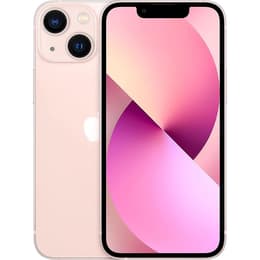
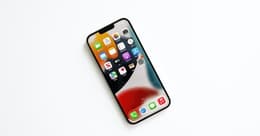
iPhone 13 mini
iPhone 13 mini
Starting at

Refurbished price:A$368.00

Versus A$1,049.00 new

See options
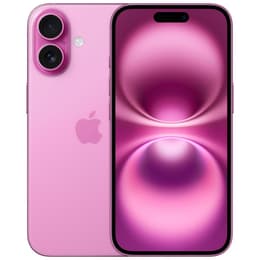
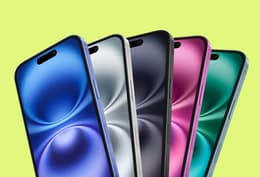
iPhone 16
iPhone 16
Starting at

Refurbished price:A$952.00

Versus A$1,399.00 new

See options

Ratings

The iPhone 13 Mini, released in September 2021, offers a compact smartphone experience, while the iPhone 16, expected in late 2026, represents a newer generation with advancements across various aspects. These devices cater to different user preferences, primarily differing in physical size, processing power, and camera capabilities. Both operate on Apple's iOS ecosystem, providing a consistent software experience.

Scores

Durability

Comparing the practical lifespan of these two iPhones involves considering their release timelines and expected software support.

  • Release Timeline: The iPhone 13 Mini launched in September 2021, making it several years older than the iPhone 16, which is anticipated for release in late 2026. This age difference directly impacts the duration of future software updates.
  • Software Longevity: Apple typically provides iOS updates for 5-6 years from a device's release. The iPhone 16, being a much newer model, will benefit from a significantly longer period of official software support, extending its functional lifespan and access to new features and security patches compared to the iPhone 13 Mini.
  • Physical Durability: Both models feature a Ceramic Shield front cover and an IP68 rating for water and dust resistance, indicating a robust build. The iPhone 16 is expected to incorporate a next-generation Ceramic Shield, potentially offering enhanced toughness.

Release year

2021

2024

Compatible with latest Update

Yes

Yes

Foldable

No

No

Performance

The performance gap between the iPhone 13 Mini and the anticipated iPhone 16 is substantial, reflecting several generations of technological advancement.

  • Processing Power: The iPhone 13 Mini is equipped with a capable processor that handles everyday applications and multitasking smoothly. The iPhone 16 is expected to feature a significantly more advanced processor with an upgraded Neural Engine, designed for enhanced responsiveness, more demanding applications, and advanced AI features.
  • Multitasking and Responsiveness: While the iPhone 13 Mini offers 4GB of RAM, sufficient for most tasks, the iPhone 16 is rumored to increase its RAM to 8GB for its base models. This increase would allow the newer device to manage more applications simultaneously and switch between them with greater fluidity, particularly beneficial for power users.
  • Battery Behavior: The iPhone 13 Mini, with its compact size, has a smaller battery capacity (2406 mAh). Users generally report it can last a full day with moderate use, though heavy usage might necessitate a midday charge. The iPhone 16 is expected to feature a larger battery and a more power-efficient processor, likely resulting in extended battery life and less frequent charging for most users.

Memory (GB)

4 GB

8 GB

Screen quality

Both iPhones offer high-quality displays, but the newer iPhone 16 is expected to bring improvements in size and visual experience.

  • Display Technology and Size: The iPhone 13 Mini features a 5.4-inch Super Retina XDR OLED display, known for its deep blacks and vibrant colors, with a resolution of 2340x1080 pixels. The iPhone 16 is expected to come with a larger 6.1-inch Super Retina XDR OLED display, offering a more expansive viewing area while maintaining a similar pixel density.
  • Brightness and Clarity: The iPhone 13 Mini provides a typical maximum brightness of 800 nits and a peak HDR brightness of 1200 nits, ensuring good visibility in various lighting conditions. The iPhone 16 is anticipated to offer improved brightness levels, potentially enhancing outdoor visibility and HDR content consumption.
  • Refresh Rate: Both the iPhone 13 Mini and the standard iPhone 16 models are expected to feature a 60Hz refresh rate. This provides a smooth experience for general use, though it does not offer the ultra-smooth scrolling found on devices with higher refresh rates.

Resolution

1080 x 2340

1179 x 2556

Screen type

Super Retina XDR OLED

Super Retina XDR OLED

Audiovisual

The camera systems on both devices are capable, but the iPhone 16 is set to introduce significant advancements over the iPhone 13 Mini.

  • Main Camera System: The iPhone 13 Mini features a dual 12MP camera system with a wide (f/1.6) and ultra-wide (f/2.4) lens, including sensor-shift optical image stabilization on the main sensor. The iPhone 16 is expected to upgrade its main camera to a 48MP sensor with an f/1.6 aperture, offering enhanced detail and improved low-light performance, along with 2x optical quality zoom.
  • Ultra-Wide and Macro Capabilities: The iPhone 13 Mini's ultra-wide camera has a 120-degree field of view. The iPhone 16 is rumored to feature an improved ultra-wide camera with a faster f/2.2 aperture, allowing it to capture more light. Additionally, the iPhone 16 is expected to introduce macro photography capabilities, a feature not present on the iPhone 13 Mini.
  • Video and User Experience: Both phones support 4K video recording up to 60fps. The iPhone 13 Mini includes Cinematic mode at 1080p. The iPhone 16 is expected to feature a new, dedicated Capture Button on its side, providing a two-stage shutter experience for easier focusing and photo capture, and supporting spatial video recording.

Main camera

12 megapixels

48 megapixels

Front camera

12 megapixels

12 megapixels

Miscellaneous

Beyond core specifications, several practical elements differentiate the iPhone 13 Mini and the iPhone 16, influencing daily usability.

  • Connectivity and Ports: Both devices support 5G and Wi-Fi 6. The iPhone 13 Mini uses a Lightning port for charging and data transfer. The iPhone 16 is expected to feature a USB-C port, aligning with newer industry standards and offering broader compatibility with accessories.
  • Biometric Security: Both models rely on Face ID for secure facial recognition, enabled by the TrueDepth camera system.
  • Form Factor and Handling: The iPhone 13 Mini is notably compact and lightweight, measuring 131.5 x 64.2 x 7.65 mm and weighing 141g, making it ideal for one-handed use and easy pocketability. The iPhone 16 is a larger device, with dimensions typical of a standard smartphone, offering a more expansive screen but requiring a different handling approach.

Weight

140 oz

170 oz

Screen size (in)

5,4

6.1

Network

5G

5G

SIM card

Physical SIM + eSIM

Physical SIM + eSIM

Carrier compatibility

Unlocked

Unlocked

Connector

Lightning

USB-C (USB 2)

The iPhone 13 Mini and the upcoming iPhone 16 cater to distinct user needs, primarily defined by their size and generational advancements. Users frequently praise the iPhone 13 Mini for its unique compact form factor, making it comfortable for one-handed use and easy to carry. Its performance is generally considered robust for everyday tasks, and its camera system delivers good results in well-lit conditions. However, common criticisms often revolve around its battery life, which, while improved over its predecessor, may not consistently last a full day for heavy users. The absence of a telephoto lens and macro photography is also noted by some.

The iPhone 16, as a newer model, is expected to address many of these points through generational improvements. It will likely offer significantly enhanced processing power, a larger display, and a more versatile camera system with macro capabilities and a higher-resolution main sensor. Its battery life is also anticipated to be more robust. Users prioritizing a compact device that is easy to handle and pocket will find the iPhone 13 Mini well-suited to their needs. Conversely, users who prioritize the latest technology, a larger screen for media consumption, advanced camera features, and extended battery life will likely lean towards the iPhone 16. For those seeking a quality-assured refurbished option, the iPhone 13 Mini remains an eco-friendly alternative that delivers a premium experience in a small package.
See all articles

Our recent comparisons