
iPhone 11 vs Motorola Moto G53

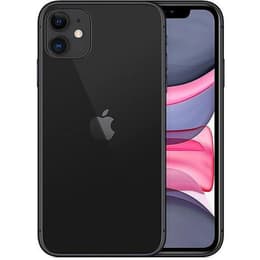
iPhone 11
iPhone 11
Starting at

Refurbished price:A$246.00

Versus A$769.00 new

See options
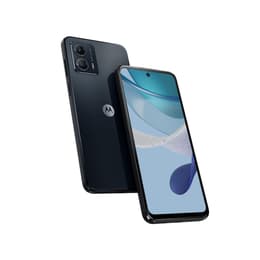
Motorola Moto G53
Motorola Moto G53
Starting at

Refurbished price:A$203.77

Versus A$975.00 new

See options

The iPhone 11, released in September 2019, and the Motorola Moto G53, launched in January 2023, represent different approaches to smartphone design and functionality. While the iPhone 11 operates on Apple's iOS ecosystem, the Moto G53 runs on Android, offering distinct user experiences. These devices cater to varying user priorities, with key differences in their display technology, camera capabilities, and software support timelines.

Scores

Durability

The longevity of a smartphone is influenced by its release date, software support, and physical resilience. The iPhone 11, being an older device, has a different support trajectory compared to the more recent Moto G53.

  • Software Updates: The iPhone 11, launched in 2019, has received consistent iOS updates, currently supporting iOS 17 and is expected to receive iOS 18, with potential support for iOS 19. Apple typically provides 5 to 7 years of software and security updates for its devices, meaning the iPhone 11 is likely to be supported until late 2026 or beyond for security patches. The Motorola Moto G53, released in late 2022/early 2023, launched with Android 13 and has since been updated to Android 14. Motorola generally offers 1-2 major Android OS upgrades and 2-3 years of security updates for its G-series phones, suggesting a shorter official software support period compared to the iPhone 11.
  • Physical Durability: The iPhone 11 features an aerospace-grade aluminum frame and glass on both the front and back, along with an IP68 rating for water and dust resistance, allowing it to withstand immersion in up to 2 meters of water for 30 minutes. The Moto G53 has a plastic frame and back, offering a water-repellent design with an IP52 rating, providing protection against dust and light splashes but not full submersion.
  • Expected Lifespan: Users report that the iPhone 11, with a battery replacement, can still perform well for daily tasks in 2026, indicating a practical lifespan that extends several years past its release. The Moto G53, while newer, may see its practical lifespan limited by fewer major OS updates and its less robust physical protection.

Release year

2019

2022

Compatible with latest Update

Yes

Yes

Operating system

iOS

Android

Foldable

No

No

Performance

Performance in smartphones is determined by the processor, RAM, and how efficiently the software utilises these components for daily tasks and demanding applications.

  • Processing Power: The iPhone 11 is equipped with a processor that, at its release, was considered very fast and capable. It continues to handle everyday applications, multitasking, and many graphically intensive games smoothly, demonstrating robust performance longevity. The Motorola Moto G53 features a processor that provides adequate performance for daily use, web browsing, and casual gaming. While it supports 5G connectivity, its overall processing power is designed for more basic tasks and may show limitations with very demanding applications or heavy multitasking.
  • Multitasking and Responsiveness: The iPhone 11 typically comes with 4GB of RAM, which, combined with its efficient operating system, allows for smooth app switching and background process management. The Moto G53 is available with 4GB, 6GB, or 8GB of RAM, with some regional models commonly featuring 4GB. While a clean Android interface aids responsiveness, the lower-tier processor can sometimes lead to minor delays when navigating or loading heavier applications.
  • Storage Options: The iPhone 11 offers internal storage options of 64GB, 128GB, and 256GB, without expandable storage. The Moto G53 comes with 64GB or 128GB of internal storage, but it includes a microSD card slot, allowing users to expand storage up to 1TB.

Memory (GB)

4 GB

8 GB

Screen quality

The display is a primary interface for smartphone interaction, with technology, resolution, and refresh rate significantly impacting the visual experience.

  • Display Technology and Clarity: The iPhone 11 features a 6.1-inch Liquid Retina HD display, which is an IPS LCD panel. It offers a resolution of 1792 x 828 pixels at 326 pixels per inch (ppi), providing clear visuals with good color accuracy. The Motorola Moto G53 has a larger 6.5-inch IPS LCD display with a resolution of 1600 x 720 pixels (HD+) and a pixel density of 270 ppi. While larger, its lower resolution results in less sharpness compared to the iPhone 11.
  • Brightness and Refresh Rate: The iPhone 11's display reaches a typical maximum brightness of 625 nits, which is sufficient for outdoor visibility. It has a standard 60Hz refresh rate. The Moto G53's display offers a 120Hz refresh rate, providing smoother scrolling and a more fluid visual experience, though its overall brightness and contrast may not match the iPhone 11.
  • Viewing Experience: The iPhone 11's display is noted for its vibrant colors and good contrast for an LCD panel, though it does not offer the deep blacks of OLED screens found in more premium devices. The Moto G53's larger screen size can be beneficial for media consumption, but the lower resolution and IPS technology mean that blacks are not as deep and overall clarity is less pronounced.

Resolution

828 x 1792

720x1600

Screen type

Liquid Retina IPS LCD

IPS LCD

Audiovisual

Camera systems are a crucial aspect of modern smartphones, with capabilities varying significantly in terms of lens configuration, low-light performance, and video recording features.

  • Rear Camera System: The iPhone 11 features a dual 12MP camera system, comprising a wide and an ultrawide lens. It introduced features like Night mode and Deep Fusion, which significantly enhance low-light photography and detail capture. It is capable of recording 4K video at up to 60 frames per second with good stabilization. The Motorola Moto G53 has a dual camera setup with a 50MP main sensor (which uses pixel binning to produce 12.5MP photos) and a 2MP macro lens. It lacks an ultrawide camera. While the main camera can take decent photos in good lighting, its low-light performance is generally considered weaker, and video recording is limited to 1080p at 30 frames per second.
  • Front Camera and Video Quality: The iPhone 11 includes a 12MP front camera that supports 4K video recording up to 60fps, offering high-quality selfies and video calls. The Moto G53 comes with an 8MP front camera, which performs adequately for selfies and video calls, but its video recording capabilities are also limited to 1080p at 30fps.
  • Audio Experience: The iPhone 11 provides stereo speakers for a more immersive audio experience during media playback. The Moto G53 also features stereo speakers with Dolby Atmos certification, aiming to deliver a rich audio experience for its users.

Main camera

12 megapixels

50 megapixels

Front camera

12 megapixels

8 megapixels

Miscellaneous

Beyond core features, several practical elements contribute to the overall user experience, including connectivity, physical design, and additional functionalities.

  • Connectivity and Ports: The iPhone 11 supports 4G LTE and Wi-Fi 6, along with Bluetooth 5.0, and uses Apple's proprietary Lightning port for charging and data transfer. The Motorola Moto G53 offers 5G connectivity, Wi-Fi 5, and Bluetooth 5.1. It uses a more universal USB-C port and retains a 3.5mm headphone jack, which is absent on the iPhone 11.
  • Biometrics and Sensors: The iPhone 11 relies on Face ID for secure authentication and unlocking, utilising its TrueDepth camera system. The Moto G53 features a side-mounted fingerprint sensor for biometric security, which users generally find responsive.
  • Design and Handling: The iPhone 11 has a glass and aluminum construction, giving it a premium feel, and weighs 194 grams. The Moto G53 has a plastic build, making it lighter at 183 grams, and its slightly larger dimensions may affect one-handed use for some users.

Weight

194 oz

183 oz

Screen size (in)

6.1

6.5

Network

4G

5G

SIM card

Physical SIM + eSIM

Dual Physical SIM

Carrier compatibility

Unlocked

Unlocked

The iPhone 11 and Motorola Moto G53 cater to different user expectations and priorities. The iPhone 11 is often praised by users for its robust and consistent performance, reliable camera system in good lighting, and Apple's long-term software support, which ensures the device remains functional and secure for an extended period. Common criticisms, particularly in 2026, include its lack of 5G connectivity, the LCD display not offering the deep blacks of OLED, and the design appearing somewhat dated compared to newer models.

The Motorola Moto G53 receives positive feedback for its excellent battery life, 5G capability, and the smoother scrolling experience provided by its 120Hz display. However, users frequently note its lower-resolution display, less capable camera performance in challenging conditions, and Motorola's typically shorter software update commitment as areas of concern.

Users prioritizing a long-supported operating system, a consistently strong camera for photos and videos in various conditions, and a premium build quality may find the iPhone 11 well-suited to their needs. Conversely, individuals who value extended battery life, 5G connectivity, a larger screen with a high refresh rate, and expandable storage might lean towards the Motorola Moto G53. Both devices offer distinct advantages, and for those seeking an eco-friendly and quality-assured option, considering a refurbished version of either model can be a practical choice.


See all articles

Our recent comparisons