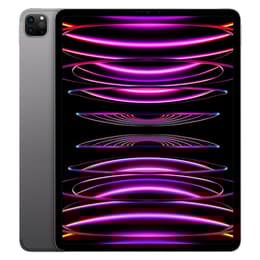
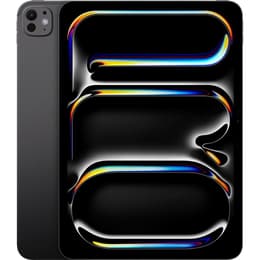

iPad Pro (2022, M2 series) vs iPad Pro (2024, M4 series)

iPad Pro (2022, M2 series)
Starting at

Refurbished price:A$1,071.71

Versus A$1,399.00 new

See options
iPad Pro (2024, M4 series)
Starting at

Refurbished price:A$1,359.00

Versus A$1,617.83 new

See options

Ratings

The iPad Pro 2022 M2 Series and the iPad Pro 2024 M4 Series represent two generations of Apple's high-performance tablets, designed for demanding tasks and creative professionals. While both offer a premium tablet experience with the iPadOS operating system, the M4 model introduces significant advancements in display technology and processing power, alongside refinements in design and camera capabilities. These differences cater to varying user needs, from everyday productivity to intensive creative workflows.

Scores

Durability

When considering the longevity of these devices, both iPad Pro models offer substantial software support and robust build quality. The primary distinctions lie in their release timelines and the potential for future operating system updates.

  • Release Timeline: The iPad Pro 2022 M2 Series was released in October 2022, while the iPad Pro 2024 M4 Series launched in May 2024. This nearly 18-month difference means the M4 model will likely receive software updates for a longer period.
  • OS Support Duration: Apple typically provides iPadOS upgrades for approximately six years. Consequently, both devices are expected to receive updates for a considerable time, with the M4 potentially extending support to the same core OS release as the M2, or slightly beyond due to its newer launch.
  • Repairability: Both generations feature an aluminum enclosure. While specific repairability scores can vary, Apple designs its devices with a certain level of serviceability in mind. Users can expect similar practical lifespans in terms of hardware durability, assuming typical usage.

Release year

2022

2024

Compatible with latest Update

Yes

Yes

Operating system

iPadOS

iPadOS

Minimum system requirements (iPadOS)

iPadOS 18

iPadOS 18

Performance

The performance capabilities of the iPad Pro M2 and M4 series are central to their appeal, with the newer M4 model bringing notable enhancements for demanding applications. Both are highly capable, but the M4 offers a more advanced foundation for future tasks.

  • Processing Power: The iPad Pro 2022, equipped with its advanced processor, handles intensive tasks like video editing and graphic design with ease, providing a fluid and responsive experience. The iPad Pro 2024 features a next-generation processor that delivers a significant boost in CPU performance, up to 50% faster, and substantially improved graphics processing, up to four times faster in certain scenarios, making it particularly well-suited for 3D rendering, advanced video editing, and generative AI tasks.
  • Multitasking and Responsiveness: Both models offer excellent multitasking capabilities, allowing users to run multiple applications simultaneously without slowdowns. The M4 model's enhanced processing power and increased memory bandwidth contribute to an even more responsive system, especially when dealing with complex workflows or very large files.
  • Battery Behavior: Apple estimates that both the M2 and M4 iPad Pro models provide comparable battery life, offering up to 10 hours of web surfing on Wi-Fi or video playback on a single charge. While the M4 chip is designed for greater power efficiency, real-world usage can vary, with some initial reports suggesting similar or slightly varied endurance depending on the task.

Memory (GB)

8 GB

8 GB

Processor

Apple M2

Apple M4

Screen quality

The display is a key differentiator between these two iPad Pro generations, with the M4 model introducing a significant technological leap for visual fidelity.

  • Display Technology: The iPad Pro 2022 11-inch model features a Liquid Retina (IPS LCD) display, while the 12.9-inch model uses a Liquid Retina XDR (mini-LED) display, offering excellent brightness and contrast. The iPad Pro 2024, however, introduces the Ultra Retina XDR display across both its 11-inch and 13-inch models, utilizing Tandem OLED technology. This is the first time OLED has been used in an iPad, providing deeper blacks, more vibrant colors, and enhanced contrast ratios.
  • Brightness and Clarity: Both generations offer high resolution and clarity, with a pixel density of 264 pixels per inch. The M4's Ultra Retina XDR display achieves 1000 nits of full-screen brightness for SDR content and up to 1600 nits peak brightness for HDR content, surpassing the 11-inch M2's 600 nits SDR brightness and matching the 12.9-inch M2's HDR peak brightness. This makes the M4 model particularly well-suited for outdoor use or viewing HDR content.
  • Refresh Rate and Size: Both models feature ProMotion technology, offering an adaptive refresh rate up to 120Hz for smooth scrolling and responsiveness. The M4 model's larger variant is now a 13-inch display, a slight increase from the 12.9-inch of the M2, providing a marginally more expansive viewing experience.

Resolution

2388 x 1668

2420 x 1668

True Tone

Yes

Yes

Promotion

Yes

Yes

Screen type

Liquid Retina XDR

Ultra Retina XDR display

Pixel density

264ppp

264ppp

Brightness

600 nits brightness max

1000 nits brightness max

Sound quality

Speakers

Four speaker audio

Four speaker audio

Audiovisual

The camera systems on both iPad Pro models are designed for versatility, though the M4 series sees a slight adjustment in its rear camera configuration.

  • Rear Camera System: The iPad Pro 2022 features a dual-camera setup on the rear, including a 12MP Wide camera and a 10MP Ultra Wide camera, along with a LiDAR Scanner. The iPad Pro 2024 simplifies this to a single 12MP Wide camera on the rear, retaining the LiDAR Scanner. This means the M2 model offers more versatility with its ultra-wide lens for photography.
  • Front Camera and Video: Both generations include a 12MP Ultra Wide front camera with Center Stage, which keeps the user in the frame during video calls. A notable change in the M4 model is the repositioning of the front camera to the landscape edge, which is more convenient for video conferencing when the iPad is used horizontally. Both support 4K video recording at 60 frames per second and ProRes video recording.
  • Audio Experience: Both iPad Pro models are equipped with a four-speaker audio system, providing a rich sound experience for media consumption. The M2 model features a five-microphone setup, while the M4 model has a four-microphone array, both designed for clear audio capture during calls and recordings.

Miscellaneous

Beyond core performance and display, several practical elements distinguish the iPad Pro M2 and M4 series, impacting daily usability and accessory compatibility.

  • Connectivity Options: Both models support Wi-Fi 6E and Bluetooth 5.3 for fast wireless connections. For cellular models, both offer 5G support. However, the M4 model's 5G connectivity is limited to sub-6GHz bands, omitting mmWave support found in the M2. Additionally, the M4 cellular models exclusively use eSIM, removing the physical SIM card tray present in the M2.
  • Physical Design and Handling: The iPad Pro 2024 M4 Series introduces a significantly thinner and lighter design compared to its predecessor. The 13-inch M4 model is notably thinner than any previous Apple product, making it more portable. The 11-inch M4 is also thinner and lighter than the 11-inch M2.
  • Port Types and Sensors: Both generations feature a Thunderbolt/USB 4 port, offering high-speed data transfer and connectivity to external displays and accessories. Both also include Face ID for secure authentication. The M4 model introduces compatibility with the new Apple Pencil Pro and a redesigned Magic Keyboard with a function row, which are not compatible with the M2.

Weight

466 oz

444 oz

Width

17.85 in

17.7 in

Height

24.76 in

24.9 in

Depth

0.59 in

0.5 in

Screen size (in)

11

11

Network

Wi-Fi

Wi-Fi

Carrier compatibility

Without SIM Port

Without SIM Port

Wi-Fi version

Wi-Fi 6 802.11ax

Wi-Fi 6E 802.11ax

Bluetooth version

Bluetooth 5.3

Bluetooth 5.3

Face ID

Yes

Yes

Touch ID

No

No

Connector

USB Type-C

USB Type-C

User sentiment for both the iPad Pro M2 and M4 series generally highlights their robust performance and premium experience. For the M2, common praise points include its powerful processing capabilities, excellent display (especially the 12.9-inch mini-LED), and overall reliability for professional tasks. Users often note that the M2 remains highly capable for most demanding applications, even with the release of newer models.

The M4 iPad Pro receives significant acclaim for its groundbreaking Ultra Retina XDR OLED display, which users describe as a "game-changer" for visual quality, offering deeper blacks and superior contrast. Its thinner and lighter design is also frequently praised, along with the enhanced performance for future-proofing and AI-driven tasks. Criticisms for the M4 sometimes revolve around the removal of the ultra-wide rear camera and the need for new accessories like the Apple Pencil Pro and Magic Keyboard, which are not backward compatible.

Users prioritizing an unparalleled visual experience, the thinnest possible design, and the absolute latest in processing power for future-intensive applications will find the iPad Pro 2024 M4 Series well-suited to their needs. This includes creative professionals working with high-resolution media, 3D rendering, or those who value cutting-edge display technology. Conversely, users who require a highly capable tablet for general productivity, content consumption, and existing professional workflows, and who may already own compatible accessories, will find the iPad Pro 2022 M2 Series to be a strong contender. Both models offer a premium tablet experience, and choosing between them often comes down to the specific value placed on the M4's display and performance advancements. For those seeking an eco-friendly alternative, quality-assured refurbished options for both models can provide an excellent way to access these powerful devices.

See all articles

Our recent comparisons