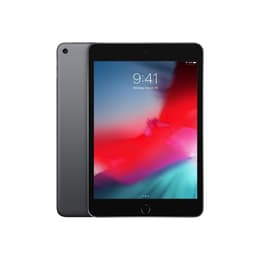
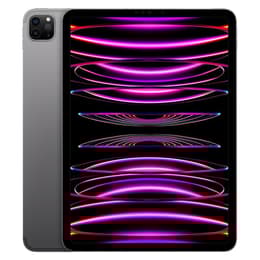

iPad mini 5 (2019, A12 series) vs iPad Pro (2022, M2 series)

iPad mini 5 (2019, A12 series)
Starting at

Refurbished price:A$328.00

Versus A$649.00 new

See options
iPad Pro (2022, M2 series)
Starting at

Refurbished price:A$1,070.71

Versus A$1,399.00 new

See options

Ratings

The iPad Mini (2019), released in March 2019, and the iPad Pro (2022), launched in October 2022, represent distinct approaches within Apple's tablet lineup. While both devices operate on iPadOS, they cater to different user needs through their size, processing power, display technology, and camera capabilities. The iPad Mini prioritizes portability and casual use, whereas the iPad Pro is designed for demanding professional workflows and creative tasks.

Scores

Durability

The practical lifespan of a tablet is significantly influenced by its release date and ongoing software support. These two iPads, separated by several years, offer different expectations in this regard.

  • Release Timeline: The iPad Mini (2019) was released in March 2019, making it an older device compared to the iPad Pro (2022), which launched in October 2022. This difference in age directly impacts their remaining support cycles.
  • Software Longevity: The iPad Mini (2019) has received iPadOS updates up to iPadOS 17 and is expected to receive updates for a few more years, potentially up to iPadOS 18. The iPad Pro (2022), being a newer model with a more powerful processor, is expected to receive major iPadOS updates for several more years, extending its software longevity significantly further into the future.
  • Repairability: Both devices are designed with Apple's build quality. However, the iPad Mini (2019) received a low repairability score due to extensive use of adhesive, particularly for the battery, making repairs challenging. The newer iPad Pro may benefit from more readily available parts and repair services for a longer duration due to its more recent release.

Release year

2019

2022

Compatible with latest Update

Yes

Yes

Operating system

iPadOS

iPadOS

Minimum system requirements (iPadOS)

iPadOS 18

iPadOS 18

Performance

Performance is a key differentiator between these two tablets, driven by their respective internal components and design philosophies.

  • Processing Power: The iPad Mini (2019) is equipped with a capable processor that handles everyday tasks, web browsing, and light gaming smoothly. It may show limitations with very resource-intensive workflows or demanding applications. The iPad Pro (2022) features a significantly more powerful processor, enabling exceptional performance for professional applications, intensive gaming, video editing, and 3D rendering, handling multitasking with ease.
  • Storage Options: The iPad Mini (2019) is available with 64GB or 256GB of internal storage. The iPad Pro (2022) offers a wider range of storage configurations, from 128GB up to 2TB, catering to users with extensive storage needs for large files and applications.
  • Battery Behavior: Both iPads are designed to offer all-day battery life under typical usage conditions, with Apple rating them for up to 10 hours of web browsing or video playback over Wi-Fi. The iPad Pro (2022) models feature larger battery capacities (e.g., 7538 mAh for the 11-inch model) compared to the iPad Mini (2019)'s 5124 mAh battery. While the iPad Pro's more powerful components might consume more energy during peak performance, its larger battery and efficient processor allow it to sustain demanding tasks for extended periods.

Memory (GB)

3 GB

8 GB

Processor

Apple A12 Bionic

Apple M2

Screen quality

The display experience varies significantly between these two devices, impacting visual clarity, smoothness, and overall immersion.

  • Display Technology and Size: The iPad Mini (2019) features a 7.9-inch Retina IPS LCD with a resolution of 2048 x 1536 pixels, offering a clear and vibrant viewing experience for its compact size. The iPad Pro (2022) is available with an 11-inch Liquid Retina IPS LCD (2388 x 1668 pixels) or a 12.9-inch Liquid Retina XDR mini-LED display (2732 x 2048 pixels). The larger screens of the Pro models provide a more expansive canvas for creative work, media consumption, and multitasking.
  • Brightness and Color: The iPad Mini (2019) offers a maximum brightness of 500 nits, along with True Tone and P3 wide color support. The iPad Pro (2022) models feature higher brightness, with the 11-inch reaching 600 nits and the 12.9-inch Liquid Retina XDR display achieving 1000 nits typical brightness and up to 1600 nits peak brightness for HDR content, providing superior contrast and dynamic range.
  • Refresh Rate: A key difference is the refresh rate. The iPad Mini (2019) has a standard 60Hz refresh rate. The iPad Pro (2022) includes ProMotion technology, offering an adaptive refresh rate up to 120Hz for smoother scrolling, more fluid motion, and a more responsive touch experience.

Resolution

2048 x 1536

2388 x 1668

True Tone

Yes

Yes

Promotion

No

Yes

Screen type

Retina display

Liquid Retina XDR

Pixel density

326ppp

264ppp

Brightness

500 nits brightness

600 nits brightness max

Sound quality

Speakers

Stereo speakers

Four speaker audio

Audiovisual

The camera systems on these two iPads are designed for different use cases, reflecting their respective target audiences.

  • Rear Camera System: The iPad Mini (2019) features an 8-megapixel rear camera, suitable for casual photography, document scanning, and augmented reality applications. The iPad Pro (2022) boasts a more advanced dual-camera system, including a 12-megapixel wide camera and a 10-megapixel ultra-wide camera, along with a LiDAR Scanner. This setup allows for higher quality photos, improved low-light performance, and enhanced augmented reality experiences.
  • Front Camera and Video: The iPad Mini (2019) has a 7-megapixel front camera, capable of 1080p video recording, which is adequate for video calls. The iPad Pro (2022) features a 12-megapixel ultra-wide front camera with Center Stage, which automatically keeps users in the frame during video calls. Both devices can record 1080p video, but the iPad Pro (2022) offers more advanced video capabilities, including 4K recording and ProRes video capture, making it suitable for content creators.
  • Audio Experience: The iPad Mini (2019) provides stereo speakers, offering clear audio for media consumption. The iPad Pro (2022) features a four-speaker audio system, delivering a more immersive and richer sound experience, particularly beneficial for media consumption and professional audio work.

Miscellaneous

Beyond core performance and display, several practical elements differentiate the user experience between the iPad Mini (2019) and the iPad Pro (2022).

  • Connectivity and Ports: The iPad Mini (2019) supports Wi-Fi 802.11ac and Bluetooth 5.0, and charges via a Lightning port. The iPad Pro (2022) offers more modern connectivity with Wi-Fi 6E and Bluetooth 5.3, providing faster wireless speeds. It also features a versatile USB-C port with Thunderbolt/USB 4 support, enabling faster data transfers and broader accessory compatibility with external displays and storage.
  • Biometric Authentication: The iPad Mini (2019) uses Touch ID for secure authentication, integrated into the home button. The iPad Pro (2022) utilizes Face ID, offering a convenient and secure facial recognition system.
  • Design and Accessories: The iPad Mini (2019) is known for its compact 7.9-inch form factor, making it highly portable and suitable for one-handed use. It supports the first-generation Apple Pencil. The iPad Pro (2022) models are larger and heavier, providing more screen real estate for productivity and creative tasks. They support the second-generation Apple Pencil, which attaches magnetically and charges wirelessly, as well as the Magic Keyboard and Smart Keyboard Folio, transforming the device into a more laptop-like experience.

Weight

308 oz

466 oz

Width

13.48 in

17.85 in

Height

23.32 in

24.76 in

Depth

0.61 in

0.59 in

Screen size (in)

7.9

11

Network

Wi-Fi + 4G

Wi-Fi

Carrier compatibility

Unlocked

Without SIM Port

Wi-Fi version

Wi-Fi 6 802.11a/b/g/n/ac

Wi-Fi 6 802.11ax

Bluetooth version

Bluetooth 5.0

Bluetooth 5.3

Face ID

No

Yes

Touch ID

Yes

No

Connector

Lightning connector

USB Type-C

User sentiment for the iPad Mini (2019) often highlights its exceptional portability, making it a preferred device for reading, casual media consumption, and basic note-taking. Some users have noted its older design with larger bezels and the Lightning port as areas for potential improvement. Conversely, the iPad Pro (2022) is widely praised for its immense power, stunning display, and advanced capabilities, making it a strong contender for productivity and creative work. Criticisms sometimes revolve around its size and weight for portability, especially the larger model, and the software experience, which, while robust, may not fully replicate a desktop operating system for all professional workflows.

Users prioritizing a highly portable device for everyday tasks, reading, and light entertainment will find the iPad Mini (2019) well-suited to their needs. It is an excellent choice for students or individuals who value a compact form factor. For those who require a powerful tablet for demanding professional applications, creative endeavors, extensive multitasking, or who desire a larger, high-quality display with advanced features, the iPad Pro (2022) is the more appropriate option. It caters to users seeking a device that can handle intensive workloads and potentially serve as a laptop replacement. Both models are available as quality-assured refurbished options, providing an eco-friendly alternative for consumers.

See all articles

Our recent comparisons