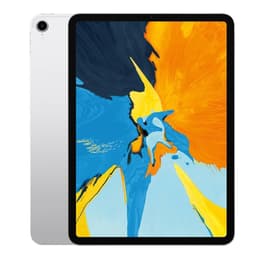
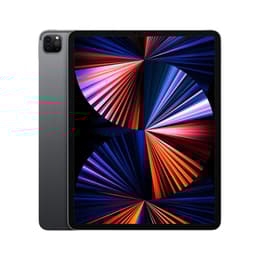

iPad Pro (2018, A12 series) vs iPad Pro (2021, M1 series)

iPad Pro (2018, A12 series)
Starting at

Refurbished price:A$466.00

Versus A$949.00 new

See options
iPad Pro (2021, M1 series)
Starting at

Refurbished price:A$929.00

Versus A$1,829.00 new

See options

Ratings

The iPad Pro 2018, featuring the A12 series chip, and the iPad Pro 2021, powered by the M1 chip, represent two generations of Apple's high-performance tablets. Both devices are designed for demanding tasks and creative professionals, running on Apple's iPadOS. The primary distinctions lie in their processing power, display technology (especially for the larger 2021 model), and advanced camera capabilities, offering different levels of performance and features for various user needs.

Scores

Durability

When considering the longevity of these devices, several factors come into play, including their release dates and Apple's typical software support cycles.

  • Release Timeline: The iPad Pro 2018 was released in October 2018, while the iPad Pro 2021 launched in April 2021. This three-year difference means the 2021 model benefits from a more recent starting point for software updates.
  • OS Support Duration: Apple generally provides 5-6 years of major iPadOS updates for its devices. The iPad Pro 2018, having been released earlier, is expected to receive major software updates for a shorter period compared to the iPad Pro 2021. Users of the 2018 model might see software support conclude around 2025-2026, whereas the 2021 model is likely to continue receiving updates until approximately 2028-2029.
  • Practical Lifespan: Both models feature robust build quality. While the 2021 model is marginally thicker in its 12.9-inch variant, the overall design language and materials are similar. The practical lifespan for everyday use extends beyond official software support, but newer models generally offer a longer period of optimal performance with the latest features.

Release year

2018

2021

Compatible with latest Update

Yes

Yes

Operating system

iPadOS

iPadOS

Minimum system requirements (iPadOS)

iPadOS 18

iPadOS 18

Performance

The core difference between these two iPad Pro generations lies in their processing capabilities, which significantly impacts how they handle various tasks.

  • Processor Capabilities: The iPad Pro 2018 is equipped with a powerful chip from the A12 series, which was highly capable at its release, offering strong performance for a wide range of applications. The iPad Pro 2021, however, integrates a desktop-class processor, delivering a substantial leap in processing power. This newer chip provides a noticeable boost in CPU and GPU performance, making it more adept at handling intensive workloads.
  • Real-world Usage: For everyday tasks like web browsing, email, streaming, and light photo editing, both devices offer a smooth and responsive experience. However, for more demanding applications such as 4K video editing, complex 3D rendering, or running multiple professional-grade apps simultaneously, the 2021 model demonstrates significantly faster rendering times and a more fluid workflow. Users engaging in these heavy-duty tasks will experience a more responsive and efficient performance on the newer device.
  • RAM and Storage: The 2021 iPad Pro offers increased RAM configurations, with up to 16GB available on higher storage tiers, compared to the 2018 model's maximum of 6GB. This expanded memory in the 2021 model enhances multitasking capabilities and allows for smoother operation with memory-intensive applications. Both models offer various storage options, with the 2021 model extending up to 2TB.

Memory (GB)

4 GB

8 GB

Processor

Apple A12X Bionic

Apple M1

Screen quality

The display is a critical component of any tablet, and these two iPad Pro models offer distinct visual experiences, particularly in their larger variants.

  • Display Technology: Both the 2018 and 2021 11-inch iPad Pro models feature a Liquid Retina IPS LCD display with ProMotion technology, offering a smooth 120Hz refresh rate, wide color support, and True Tone. However, the 12.9-inch iPad Pro 2021 introduces the Liquid Retina XDR display, which utilizes mini-LED technology. This advanced display provides significantly higher peak brightness, especially for HDR content, and a much greater contrast ratio compared to the IPS LCD panels.
  • Brightness and Clarity: The 12.9-inch 2021 model's Liquid Retina XDR display can achieve up to 1000 nits of full-screen brightness and 1600 nits peak brightness for HDR content, offering a more vibrant and immersive viewing experience for movies and professional creative work. The 2018 model and the 11-inch 2021 model typically reach 600 nits of brightness.
  • Viewing Experience: While both displays offer excellent clarity and color accuracy, the mini-LED technology in the 12.9-inch 2021 iPad Pro provides deeper blacks and more precise local dimming, enhancing the visual impact of high-dynamic-range content. Users who prioritize media consumption or color-critical work will find the 12.9-inch 2021 display a notable upgrade.

Resolution

2388 x 1668

2732 x 2048

True Tone

Yes

Yes

Promotion

Yes

Yes

Screen type

Liquid Retina display

Liquid Retina XDR

Pixel density

264ppp

264ppp

Brightness

600 nits brightness

600 nits brightness max

Sound quality

Speakers

Four speaker audio

Four speaker audio

Audiovisual

The camera systems on these iPad Pro models have evolved, with the 2021 version introducing several enhancements for both photography and video conferencing.

  • Rear Camera System: The iPad Pro 2018 features a single 12MP wide-angle rear camera capable of 4K video recording. The iPad Pro 2021 upgrades this with a dual-camera system, including a 12MP wide and a 10MP ultra-wide lens, along with a LiDAR Scanner. The LiDAR Scanner improves autofocus in low-light conditions and enhances augmented reality (AR) applications.
  • Front Camera and Video Calls: The 2018 model has a 7MP TrueDepth front camera. The 2021 model significantly improves the front-facing camera to a 12MP ultra-wide TrueDepth camera, which enables the Center Stage feature. Center Stage automatically keeps the user in the frame during video calls, even as they move around, and expands to include other participants.
  • Audio Quality: Both devices feature a four-speaker audio system, providing a rich sound experience for media consumption. The 2021 model's speakers offer improved bass definition and a fuller sound.

Miscellaneous

Beyond the core performance and display, several practical elements differentiate these two iPad Pro generations, impacting connectivity, accessory compatibility, and overall handling.

  • Connectivity: Both models feature USB-C ports. However, the iPad Pro 2021 upgrades to a Thunderbolt/USB 4 port, offering significantly faster data transfer speeds (up to 40Gbps) and broader compatibility with external displays and high-performance accessories. The 2021 model also introduces optional 5G cellular connectivity, providing faster wireless speeds in supported areas compared to the 2018 model's LTE.
  • Accessory Compatibility: Both iPad Pro models are compatible with the Apple Pencil 2 and the Magic Keyboard. While the 11-inch models generally have consistent accessory fit, the 12.9-inch 2021 model is marginally thicker than its 2018 counterpart, which might affect the fit of some older cases.
  • Dimensions and Weight: The physical dimensions and weight are largely similar between corresponding sizes, maintaining a sleek and portable design. The 12.9-inch 2021 model is slightly thicker and heavier due to its mini-LED display technology. Both feature Face ID for secure authentication.

Weight

468 oz

682 oz

Width

17.85 in

21.49 in

Height

24.76 in

28.06 in

Depth

0.59 in

0.64 in

Screen size (in)

11

12.9

Network

Wi-Fi

Wi-Fi

Carrier compatibility

Without SIM Port

Without SIM Port

Wi-Fi version

Wi-Fi 6 802.11a/b/g/n/ac

Wi-Fi 6 802.11ax

Bluetooth version

Bluetooth 5.0

Bluetooth 5.0

Face ID

Yes

Yes

Touch ID

No

No

Connector

USB Type-C

USB Type-C

The iPad Pro 2018 and iPad Pro 2021 both offer compelling tablet experiences, but they cater to slightly different user priorities. Users frequently praise the 2018 model for its enduring performance and still-excellent Liquid Retina display, noting that it remains highly capable for most daily tasks and even some professional workflows. Common feedback suggests that for general use, the performance difference isn't always immediately apparent.

Conversely, the iPad Pro 2021 receives acclaim for its substantial performance boost, particularly with the M1 chip, which excels in demanding applications like advanced video editing and 3D design. The 12.9-inch 2021 model's Liquid Retina XDR display is frequently highlighted for its superior brightness and contrast, making it ideal for HDR content and color-critical work. The enhanced camera system with Center Stage and Thunderbolt connectivity are also significant advantages for users who leverage these features. Some users have noted that the battery life on the 2021 M1 model, while still good, might not always exceed that of the 2018 model under heavy loads, possibly due to the more powerful components.

Users prioritizing raw processing power, a cutting-edge display (especially on the 12.9-inch model), and advanced connectivity for professional workflows may find the iPad Pro 2021 better suited to their needs. Those who require a highly capable tablet for general productivity, creative tasks, and media consumption, and who value a more established ecosystem, may find the iPad Pro 2018 to be a robust and reliable option. Both devices represent excellent choices, and considering a quality-assured refurbished option can be a sustainable choice for either model.

See all articles

Our recent comparisons