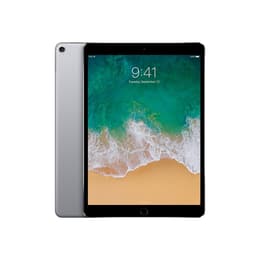
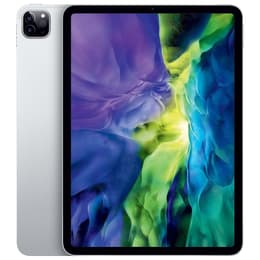

iPad Pro (2017, A10 series) vs iPad Pro (2020, A12 series)

iPad Pro (2017, A10 series)
Starting at

Refurbished price:A$274.00

Versus A$739.00 new

See options
iPad Pro (2020, A12 series)
Starting at

Refurbished price:A$751.00

Versus A$899.00 new

See options

Ratings

The iPad Pro 2017, released in June 2017, and the iPad Pro 2020, launched in March 2020, represent distinct generations within Apple's professional tablet lineup. While both devices operate on iPadOS and are designed for demanding tasks, the 2020 model introduces notable advancements in processing power, camera technology, and connectivity options. These differences cater to varying user needs, from everyday productivity to specialized creative workflows.

Scores

Durability

When considering the longevity of these devices, their release timelines and hardware capabilities play a significant role in their expected practical lifespan and software support.

  • Release Timeline: The iPad Pro 2017 is an older model, having been released three years prior to the iPad Pro 2020. This age difference inherently impacts how long each device will continue to receive major software updates and remain fully compatible with the latest applications.
  • OS Support Duration: Both models are capable of running recent versions of iPadOS. However, the iPad Pro 2020, with its newer hardware, is expected to receive major iPadOS updates for a longer period, extending its software longevity and access to new features. The iPad Pro 2017 is upgradeable to iPadOS 17.2, similar to the 2020 model, but the 2020 model will likely continue to receive updates beyond this point.
  • Software Longevity: The newer internal components of the iPad Pro 2020 provide more headroom for future software advancements and increasingly demanding applications, ensuring smoother performance over a longer duration.
  • Physical Durability: Both devices feature robust aluminum enclosures, offering a similar level of physical durability in daily use. There are no significant differences in their general repairability.
  • Expected Practical Lifespan: Users prioritizing the longest possible software support and optimal performance with future applications will find the iPad Pro 2020 offers a more extended practical lifespan due to its newer hardware and anticipated longer update cycle.

Release year

2017

2020

Compatible with latest Update

No

Yes

Operating system

iPadOS

iPadOS

Minimum system requirements (iPadOS)

iPadOS 17

iPadOS 18

Performance

The performance capabilities of these iPad Pro models are a key differentiator, influencing how smoothly they handle various tasks, from casual browsing to intensive professional applications.

  • Storage Options: The iPad Pro 2017 was available with storage capacities up to 512GB, while the iPad Pro 2020 offers a higher base storage starting at 128GB and extending up to 1TB, providing more space for large files and applications.
  • Battery Behavior: Both models are designed to deliver approximately 10 hours of battery life during general use, such as web browsing or video playback. For more demanding tasks, the iPad Pro 2020's more efficient processor may offer slightly better endurance.
  • Processor Capabilities: The iPad Pro 2017 features a powerful processor for its time, enabling smooth performance for gaming, multitasking, and many creative applications. The iPad Pro 2020, however, incorporates a significantly more advanced processor, delivering substantial performance gains, particularly for graphics-intensive workflows like 4K video editing, 3D rendering, and augmented reality applications.
  • Overall System Responsiveness: The newer processor and increased RAM (6GB in the 2020 model compared to 4GB in the 2017 model) contribute to a noticeably more responsive experience on the iPad Pro 2020, especially when switching between multiple demanding applications or handling large files.
  • RAM Implications: The higher amount of RAM in the iPad Pro 2020 allows it to keep more applications active in the background and manage complex projects with greater efficiency, benefiting users who frequently multitask or work with memory-intensive software.

Memory (GB)

4 GB

6 GB

Processor

Apple A10X Fusion

Apple A12Z Bionic

Screen quality

Both iPad Pro models offer high-quality displays, but there are subtle differences in their specifications and how they impact the visual experience.

  • Display Technology: Both devices utilize Liquid Retina IPS LCD displays, known for their accurate color reproduction and wide viewing angles.
  • Resolution and Clarity: The pixel density remains consistent at 264 pixels per inch (PPI) across comparable screen sizes, ensuring sharp text and clear images on both models.
  • Brightness Levels: Both the 2017 and 2020 iPad Pro models offer a peak brightness of 600 nits, providing good visibility even in brightly lit environments or outdoors.
  • Refresh Rate and Smoothness: A key feature shared by both is ProMotion technology, which enables an adaptive refresh rate of up to 120Hz. This results in exceptionally fluid scrolling, highly responsive touch input, and a smoother experience when using the Apple Pencil.
  • Screen Size and Viewing Experience: The iPad Pro 2017 was available in 10.5-inch and 12.9-inch variants. The iPad Pro 2020 introduced an 11-inch model, which, thanks to reduced bezels, offered a larger screen in a physical footprint similar to the 2017's 10.5-inch model. The 12.9-inch models also saw bezel reductions, providing a more immersive viewing experience on the 2020 version.

Resolution

2224 x 1668

2388 x 1668

True Tone

Yes

Yes

Promotion

Yes

Yes

Screen type

Retina display

Liquid Retina display

Pixel density

264ppp

264ppp

Brightness

600 nits brightness max

600 nits brightness max

Sound quality

Speakers

Four speaker audio

Four speaker audio

Audiovisual

The camera systems on these iPad Pro models reflect the advancements in mobile photography over their respective release years, with the 2020 model offering a more versatile setup.

  • Camera System Capabilities: The iPad Pro 2017 features a single 12-megapixel rear camera with an f/1.8 aperture and optical image stabilization, alongside a 7-megapixel front-facing camera. The iPad Pro 2020 significantly upgrades this with a dual-camera system on the rear, comprising a 12-megapixel wide lens (f/1.8) and a 10-megapixel ultra-wide lens (f/2.4 with a 125° field of view). It also includes a LiDAR scanner for enhanced augmented reality experiences and a 7-megapixel TrueDepth front camera with support for Portrait mode.
  • Low-Light and Everyday Photography: While the 2017 model captures good everyday photos, the 2020 model's dual-camera system and improved image processing offer better performance, especially with the added versatility of the ultra-wide lens and enhanced low-light capabilities.
  • Video Recording Quality: The iPad Pro 2017 supports 4K video recording at 30 frames per second (fps). The iPad Pro 2020 expands on this, offering 4K video recording at 24, 30, or 60 fps on the wide lens, and 60 fps on the ultra-wide lens, providing more options for videographers.
  • Microphone Quality: The iPad Pro 2020 incorporates studio-quality microphones (a five-mic array), which can be beneficial for video calls, recordings, and content creation, offering clearer audio capture compared to the dual microphones on the 2017 model.
  • Speaker Output: Both generations feature a four-speaker audio system, delivering rich and immersive stereo sound that adapts to the device's orientation, enhancing the media consumption experience.

Miscellaneous

Beyond core performance and display, several practical features and connectivity options differentiate these two iPad Pro models, impacting their versatility and user experience.

  • Connectivity Options: The iPad Pro 2017 supports Wi-Fi 5 (802.11ac) and Bluetooth 4.2. The iPad Pro 2020 features newer standards, including Wi-Fi 6 (802.11ax) and Bluetooth 5.0, offering faster wireless speeds and more stable connections with compatible accessories.
  • Port Types: A significant change is the charging and data port. The iPad Pro 2017 uses Apple's proprietary Lightning port. The iPad Pro 2020 adopts a USB-C port, which provides broader compatibility with external monitors, hubs, and various USB-C accessories, making it more versatile for professional setups.
  • Useful Sensors: The iPad Pro 2017 relies on Touch ID for biometric authentication. The iPad Pro 2020 replaces this with Face ID, offering secure facial recognition for unlocking and purchases. Additionally, the 2020 model includes a LiDAR scanner, which enhances augmented reality applications by accurately mapping environments.
  • Weight and Dimensions: While both generations maintain a sleek profile, the 2020 models, particularly the 11-inch variant, achieve a larger screen size within a similar or slightly more compact physical footprint compared to their 2017 counterparts due to reduced bezels. For example, the 12.9-inch iPad Pro 2020 is slightly thinner and lighter than the 2017 12.9-inch model.
  • Apple Pencil Support: The iPad Pro 2017 is compatible with the 1st generation Apple Pencil. The iPad Pro 2020 supports the 2nd generation Apple Pencil, which offers magnetic attachment and charging, as well as tap gestures for tool switching, enhancing the creative workflow.

Weight

469 oz

471 oz

Width

17.41 in

17.85 in

Height

25.06 in

24.76 in

Depth

0.61 in

0.59 in

Screen size (in)

10.5

11

Network

Wi-Fi

Wi-Fi

Carrier compatibility

Without SIM Port

Without SIM Port

Wi-Fi version

Wi-Fi 6 802.11a/b/g/n/ac

Wi-Fi 6 802.11ax

Bluetooth version

Bluetooth 4.2

Bluetooth 5.0

Face ID

No

Yes

Touch ID

Yes

No

Connector

Lightning connector

USB Type-C

User sentiment for the iPad Pro 2017 often highlights its enduring capability for general use, media consumption, and note-taking, with many finding it still performs well for everyday tasks. Its display and overall responsiveness were highly praised at its release. However, common criticisms now revolve around its aging processor and the Lightning port, which limits modern accessory compatibility. The iPad Pro 2020, on the other hand, receives widespread acclaim for its significant performance boost, the versatility of its camera system with the LiDAR scanner, the convenience of USB-C connectivity, and the modern Face ID authentication. Some users note that the full potential of the LiDAR scanner is still developing, with niche applications currently available.

Users prioritizing a device for media consumption, casual gaming, web browsing, and light productivity tasks, such as students or those who primarily use their tablet for entertainment and basic note-taking, may find the iPad Pro 2017 well-suited to their needs. Conversely, creative professionals, artists, video editors, or users who require robust multitasking capabilities, advanced augmented reality features, and broader accessory compatibility will likely lean towards the iPad Pro 2020. Its enhanced processing power and modern connectivity make it a more future-proof option for demanding workflows.

For those seeking a quality device while also making an eco-friendly choice, considering a refurbished iPad Pro from either generation offers a sustainable alternative to purchasing new, ensuring a quality-assured product that meets various user requirements.

See all articles

Our recent comparisons