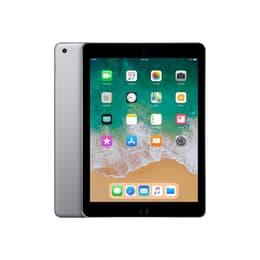
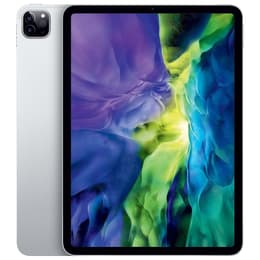

iPad 6 (2018, A10 series) vs iPad Pro (2020, A12 series)

iPad 6 (2018, A10 series)
Starting at

Refurbished price:A$143.00

Versus A$439.00 new

See options
iPad Pro (2020, A12 series)
Starting at

Refurbished price:A$753.00

Versus A$899.00 new

See options

Ratings

The iPad 2018 (6th generation), released in March 2018, and the iPad Pro 2020 (4th generation), launched in March 2020, represent different tiers within Apple's tablet lineup. While both devices operate on iPadOS, the iPad Pro 2020 introduces significant advancements in performance, display technology, and camera capabilities, catering to more demanding users. The iPad 2018, on the other hand, offers a more foundational tablet experience.

Scores

Durability

When considering the longevity of these two tablets, their respective release dates and hardware play a significant role in expected software support and overall practical lifespan.

  • Software Updates: The iPad Pro 2020, being a newer device, benefits from a longer period of major iPadOS updates compared to the iPad 2018. The iPad 2018 supports up to iPadOS 17.7.10, with no support for iPadOS 18, indicating its software lifecycle is nearing its end. The iPad Pro 2020, however, shipped with iPadOS 13.4 and currently supports iPadOS 26.4.1, suggesting several more years of updates.
  • Hardware Durability: Both models feature robust aluminum enclosures. The iPad Pro 2020's design, while similar to its predecessor, includes more advanced internal components that may offer greater resilience to future software demands.
  • Practical Lifespan: For general tasks like web browsing, media consumption, and light productivity, the iPad 2018 remains functional. However, for users requiring performance for demanding applications or those who prioritize the latest software features, the iPad Pro 2020 offers a considerably longer practical lifespan due to its more powerful internal components and extended software support.

Release year

2018

2020

Compatible with latest Update

No

Yes

Operating system

iPadOS

iPadOS

Minimum system requirements (iPadOS)

iPadOS 17

iPadOS 18

Performance

The performance capabilities of these two iPads differ substantially, primarily due to the generational gap in their internal processing hardware, impacting how they handle various tasks.

  • Processing Power: The iPad 2018 is equipped with a processor that handles everyday tasks, web browsing, and casual gaming smoothly. The iPad Pro 2020, featuring a more advanced processor, delivers a significantly more responsive experience, excelling in demanding applications, professional creative workflows, and advanced gaming.
  • Multitasking and Responsiveness: The iPad Pro 2020 includes more memory, which contributes to smoother multitasking and faster app loading times, making it better suited for users who frequently switch between multiple applications or work with large files. The iPad 2018, with less memory, is more suited for single-app focus or lighter multitasking.
  • Storage Options: The iPad 2018 offers storage options of 32 GB or 128 GB. The iPad Pro 2020 starts with 128 GB and extends to higher capacities, providing more room for applications, media, and large projects.

Memory (GB)

2 GB

6 GB

Processor

Apple A10 Fusion

Apple A12Z Bionic

Screen quality

The display is a key area of distinction between these two iPad models, with the iPad Pro 2020 offering a more advanced visual experience.

  • Display Technology and Clarity: The iPad 2018 features a 9.7-inch Retina IPS LCD display with a resolution of 2048 x 1536 pixels, providing clear visuals for general use. The iPad Pro 2020 comes with a Liquid Retina IPS LCD display, available in 11-inch or 12.9-inch sizes, with higher resolutions (2388 x 1668 pixels for 11-inch, 2732 x 2048 pixels for 12.9-inch) and enhanced color accuracy (P3 wide color).
  • Smoothness and Brightness: A significant upgrade in the iPad Pro 2020 is its ProMotion technology, offering an adaptive refresh rate up to 120Hz for smoother scrolling and more fluid interactions, a feature absent in the standard 60Hz display of the iPad 2018. The iPad Pro 2020 also boasts higher peak brightness, improving visibility in various lighting conditions.
  • Display Features: The iPad Pro 2020's display is fully laminated and features an antireflective coating, reducing glare and enhancing the viewing experience, particularly for creative tasks. The iPad 2018's display is not laminated.

Resolution

2048 x 1536

2388 x 1668

True Tone

No

Yes

Promotion

No

Yes

Screen type

Retina display

Liquid Retina display

Pixel density

264ppp

264ppp

Brightness

500 nits brightness

600 nits brightness max

Sound quality

Speakers

Stereo speakers

Four speaker audio

Audiovisual

The camera systems on these two iPads cater to different user needs, with the iPad Pro 2020 offering a more versatile and advanced setup.

  • Rear Camera System: The iPad 2018 includes a single 8-megapixel rear camera capable of 1080p video recording, suitable for basic photography and document scanning. The iPad Pro 2020 features a dual-camera system with a 12-megapixel wide lens and a 10-megapixel ultrawide lens, alongside a LiDAR Scanner for enhanced augmented reality experiences and improved depth sensing. It also supports 4K video recording.
  • Front Camera and Video Calls: For video conferencing and selfies, the iPad 2018 has a 1.2-megapixel FaceTime HD camera. The iPad Pro 2020 significantly upgrades this with a 7-megapixel TrueDepth front camera, enabling Face ID for secure authentication and offering better quality for video calls.
  • Audio Experience: The iPad Pro 2020 is equipped with a four-speaker audio system and studio-quality microphones, providing a more immersive audio experience for media consumption and clearer sound capture for recordings and calls. The iPad 2018 features stereo speakers.

Miscellaneous

Beyond core performance and display, several other features differentiate the iPad 2018 and iPad Pro 2020, impacting their utility and compatibility with accessories.

  • Connectivity and Ports: The iPad 2018 uses a Lightning port for charging and accessories, and supports Wi-Fi 802.11ac and Bluetooth 4.2. The iPad Pro 2020 transitions to a more versatile USB-C port, allowing for broader accessory compatibility and faster data transfer, and supports newer standards like Wi-Fi 6 and Bluetooth 5.0.
  • Stylus and Keyboard Support: The iPad 2018 is compatible with the 1st generation Apple Pencil. The iPad Pro 2020 supports the 2nd generation Apple Pencil, which offers magnetic attachment and wireless charging. Additionally, the iPad Pro 2020 is compatible with the Magic Keyboard, which includes a trackpad, transforming the tablet into a more laptop-like device.
  • Biometric Authentication: The iPad 2018 uses Touch ID for fingerprint-based authentication. The iPad Pro 2020 adopts Face ID, using facial recognition for secure unlocking and purchases.

Weight

469 oz

471 oz

Width

16.95 in

17.85 in

Height

24 in

24.76 in

Depth

0.75 in

0.59 in

Screen size (in)

9.7

11

Network

Wi-Fi

Wi-Fi

Carrier compatibility

Without SIM Port

Without SIM Port

Wi-Fi version

Wi-Fi 6 802.11a/b/g/n/ac

Wi-Fi 6 802.11ax

Bluetooth version

Bluetooth 4.2

Bluetooth 5.0

Face ID

No

Yes

Touch ID

Yes

No

Connector

Lightning connector

USB Type-C

The iPad 2018 and iPad Pro 2020 cater to distinct user needs, with their differences becoming more pronounced with time. The iPad 2018 is frequently praised for its reliability and suitability for fundamental tasks such as note-taking, casual web browsing, and media consumption. Users often highlight its enduring performance for these basic functions, making it a solid choice for students or those seeking a straightforward tablet experience. However, its limitations include an aging processor and a display that lacks the advanced features found in newer models, leading to a shorter expected software support lifespan.

Conversely, the iPad Pro 2020 is lauded for its powerful performance, advanced Liquid Retina display with ProMotion, and versatile camera system including a LiDAR scanner. Users appreciate its capability to handle demanding professional applications, graphic design, and advanced multitasking, often noting the significant improvement in fluidity and responsiveness. Criticisms are less common but sometimes point to the fact that the 2020 Pro model was seen as a minor update over its 2018 Pro predecessor, though it still offered notable enhancements like increased RAM and the LiDAR scanner.

Users prioritizing a device for everyday tasks, educational purposes, or light entertainment will find the iPad 2018 to be a capable option. Its straightforward functionality and compatibility with the 1st generation Apple Pencil make it a practical choice for those who do not require the most advanced features. However, users who need a tablet for professional creative work, intensive multitasking, advanced gaming, or those who value a longer software support window and cutting-edge display technology will find the iPad Pro 2020 better suited to their requirements. The iPad Pro 2020's USB-C connectivity and support for the 2nd generation Apple Pencil and Magic Keyboard also make it a more versatile tool for productivity. Both models are available as quality-assured refurbished options, providing an eco-friendly alternative for consumers.

See all articles

Our recent comparisons