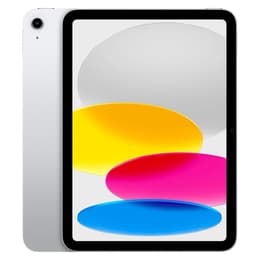
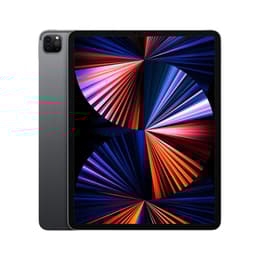

iPad 10 (2022, A14 series) vs iPad Pro (2021, M1 series)

iPad 10 (2022, A14 series)
Starting at

Refurbished price:A$419.00

Versus A$599.00 new

See options
iPad Pro (2021, M1 series)
Starting at

Refurbished price:A$929.00

Versus A$1,829.00 new

See options

Ratings

The iPad 2022, also known as the 10th generation iPad, was released in October 2022, offering a refreshed design and updated internal components. The iPad Pro 2021, featuring the M1 chip, launched earlier in April 2021, positioning itself as a more powerful device for demanding tasks. While both run on Apple's iPadOS, the core differentiators lie in their processing power, display technology, and advanced features tailored for different user needs.

Scores

Durability

When considering the long-term usability of these tablets, several factors come into play, including their release timelines and expected software support.

  • Release Timeline: The iPad Pro 2021 was released in April 2021, making it older than the iPad 2022, which launched in October 2022. This difference in release date can influence the duration of future software updates.
  • OS Support Duration: Devices with the A14 Bionic chip, like the iPad 2022, are generally expected to receive iPadOS updates for approximately 5-7 years from their release. The iPad Pro 2021, with its M1 chip, is anticipated to have a longer support lifespan, potentially receiving updates for 7-10 years, aligning with Apple's desktop-class chip support.
  • Practical Lifespan: Both iPads are built with durable materials, but the iPad Pro's more robust internal components and advanced display technology may contribute to a slightly longer practical lifespan for intensive use cases. Users can expect both devices to remain functional and receive security updates for many years, with the M1-equipped Pro model likely offering extended feature support.

Release year

2022

2021

Compatible with latest Update

Yes

Yes

Operating system

iPadOS

iPadOS

Minimum system requirements (iPadOS)

iPadOS 18

iPadOS 18

Performance

The performance capabilities of these two iPads cater to different levels of user demand, primarily due to their distinct processors.

  • Processor Capabilities: The iPad 2022 is equipped with a capable processor that handles everyday tasks, web browsing, and most applications smoothly. The iPad Pro 2021, however, features a more powerful processor, enabling it to manage highly demanding applications, complex multitasking, and graphics-intensive games with greater ease and responsiveness.
  • Multitasking and Responsiveness: For users who frequently switch between multiple applications or work with professional-grade software, the iPad Pro 2021 offers a more fluid and responsive experience, minimizing lag during heavy workloads. The iPad 2022 provides a solid experience for general multitasking, but may show limitations with very intensive applications.
  • Storage Options: The iPad 2022 is available with 64GB or 256GB of internal storage. The iPad Pro 2021 offers a wider range of storage configurations, starting from 128GB and extending up to 2TB, providing more flexibility for users with extensive storage needs for large files, projects, or media.

Memory (GB)

4 GB

8 GB

Processor

Apple A14 Bionic

Apple M1

Screen quality

The visual experience on these tablets differs significantly, largely due to the display technology and features implemented in each model.

  • Display Technology: The iPad 2022 features a 10.9-inch Liquid Retina IPS LCD display. The iPad Pro 2021 (11-inch model) also uses a Liquid Retina IPS display, but the 12.9-inch model boasts a Liquid Retina XDR mini-LED display, offering superior contrast and brightness. The iPad 2022's display is not fully laminated, which can result in a slight gap between the glass and the display panel.
  • Resolution and Brightness: Both devices offer sharp resolutions suitable for their screen sizes, with the iPad 2022 at 2360 x 1640 pixels and the 11-inch iPad Pro 2021 at 2388 x 1668 pixels. The iPad 2022 provides 500 nits of typical brightness. The iPad Pro 2021 (11-inch) reaches 600 nits, while the 12.9-inch model can achieve up to 1000 nits typical brightness and 1600 nits peak brightness for HDR content, making it significantly brighter for outdoor use and HDR viewing.
  • Refresh Rate: The iPad 2022 has a standard 60Hz refresh rate. The iPad Pro 2021 features ProMotion technology, offering an adaptive refresh rate up to 120Hz, which results in smoother scrolling, more fluid animations, and a more responsive touch experience.

Resolution

2360 x 1640

2732 x 2048

True Tone

Yes

Yes

Promotion

No

Yes

Screen type

Liquid Retina display

Liquid Retina XDR

Pixel density

264ppp

264ppp

Brightness

500 nits brightness

600 nits brightness max

Sound quality

Speakers

Stereo speakers

Four speaker audio

Audiovisual

Both iPads offer capable camera systems, but the iPad Pro 2021 includes advanced features designed for more professional use cases.

  • Rear Camera System: The iPad 2022 features a 12MP Wide rear camera capable of 4K video recording. The iPad Pro 2021 includes a dual-camera system with a 12MP Wide and a 10MP Ultra Wide lens, along with a LiDAR Scanner for enhanced depth sensing and augmented reality applications.
  • Front Camera and Video Calls: Both models feature a 12MP Ultra Wide front camera with Center Stage, which automatically keeps subjects in the frame during video calls. A notable difference is the placement: the iPad 2022's front camera is located on the landscape edge, which is ideal for video conferencing when the tablet is in a horizontal orientation. The iPad Pro 2021's front camera is on the shorter edge, which is more traditional for tablets.
  • Audio Quality: The iPad Pro 2021 is equipped with a quad-speaker setup, providing a richer and more immersive audio experience for media consumption. The iPad 2022 offers a two-speaker audio system. Both include multiple microphones for clear audio input during calls and recordings.

Miscellaneous

Beyond core performance and display, several practical elements differentiate these two tablets, impacting their utility in daily use.

  • Connectivity: Both devices support Wi-Fi 6 and offer optional 5G connectivity for cellular models. However, the iPad Pro 2021 features a Thunderbolt/USB 4 port, offering significantly faster data transfer speeds and broader compatibility with external accessories and displays compared to the USB-C 2.0 port on the iPad 2022.
  • Biometric Authentication: The iPad 2022 utilizes Touch ID integrated into the top button for secure authentication. The iPad Pro 2021 employs Face ID, using facial recognition for unlocking and secure payments.
  • Accessory Compatibility: The iPad 2022 supports the first-generation Apple Pencil (requiring an adapter for charging) and the Magic Keyboard Folio. The iPad Pro 2021 supports the second-generation Apple Pencil, which attaches magnetically and charges wirelessly, and the Magic Keyboard, offering a more integrated accessory experience.
  • Design and Portability: The iPad 2022 has a modern, all-screen design with flat edges, similar to the iPad Air and Pro models. The iPad Pro 2021 shares a similar design language but is slightly thinner and lighter for its 11-inch variant compared to the 10th-gen iPad.

Weight

477 oz

682 oz

Width

17.95 in

21.49 in

Height

24.86 in

28.06 in

Depth

0.7 in

0.64 in

Screen size (in)

10.9

12.9

Network

Wi-Fi

Wi-Fi

Carrier compatibility

Without SIM Port

Without SIM Port

Wi-Fi version

Wi-Fi 6 802.11ax

Wi-Fi 6 802.11ax

Bluetooth version

Bluetooth 5.2

Bluetooth 5.0

Face ID

No

Yes

Touch ID

Yes

No

Connector

USB Type-C

USB Type-C

User feedback often highlights the iPad 2022 as a versatile and capable tablet for general use, praised for its modern design, improved cameras, and the convenience of its landscape-oriented front camera for video calls. Some users note that its display, while good, lacks the advanced features of more premium models, and the base storage of 64GB can be limiting for some. The iPad Pro 2021 consistently receives acclaim for its exceptional performance, stunning display (especially the 12.9-inch Liquid Retina XDR), and robust capabilities for creative and professional tasks. Criticisms sometimes point to iPadOS limitations that prevent it from fully utilizing its powerful hardware as a laptop replacement.

Users prioritizing a balance of modern design, solid performance for everyday tasks, and an excellent video calling experience may find the iPad 2022 well-suited to their needs. It serves as a reliable device for students, casual users, and families. Conversely, individuals who require top-tier performance for demanding applications like video editing, graphic design, or advanced multitasking, along with a superior display and more advanced accessory integration, will likely prefer the iPad Pro 2021. Its M1 chip and ProMotion display make it a powerful tool for professionals and power users.

For those considering either device, exploring quality-assured refurbished options can provide an eco-friendly alternative, extending the life of these products and offering a sustainable choice.

See all articles

Our recent comparisons