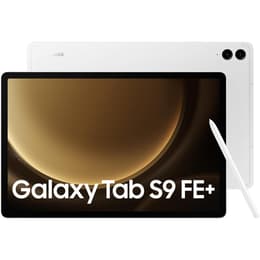
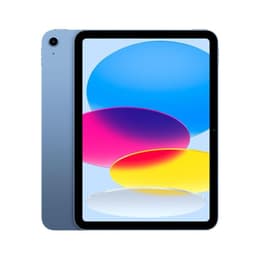

Galaxy Tab S9 FE+ (12.4", 2023) vs iPad 10 (2022, A14 series)

Galaxy Tab S9 FE+ (12.4", 2023)
Starting at

Refurbished price:A$738.00

Versus A$974.00 new

See options
iPad 10 (2022, A14 series)
Starting at

Refurbished price:A$419.00

Versus A$599.00 new

See options

The Samsung Galaxy Tab S9 FE+ (released in October 2023) and the Apple iPad 10th Generation (released in October 2022) are both prominent tablets designed for a range of users. While both offer a portable computing experience, they differ significantly in their operating systems and approach to features, with the Galaxy Tab S9 FE+ running Android and including an S Pen, and the iPad 10th Gen operating on iPadOS.

Scores

Durability

When considering the longevity of these devices, both tablets offer a reasonable expected lifespan, though their update policies differ based on their respective ecosystems.

  • Release Timeline: The iPad 10th Gen was released in October 2022, making it slightly older than the Galaxy Tab S9 FE+, which launched in October 2023. This means the iPad has already used up a year of its potential software support compared to the Samsung tablet.
  • OS Support Duration: Apple is known for providing extended software support for its devices, typically offering major iPadOS updates for 5-7 years from release, with security updates often continuing beyond that. Samsung generally provides four major Android OS updates and five years of security updates for its Tab S series, including the S9 FE+. This suggests the iPad 10th Gen may receive software updates for a longer overall period.
  • Repairability: Both devices are designed with modern tablet construction, which can make user-level repairs challenging. Professional repair services are generally available for both platforms.

Release year

2023

2022

Compatible with latest Update

Yes

Yes

Operating system

Android

iPadOS

Performance

The performance of a tablet is crucial for daily tasks, from browsing to more demanding applications. Both the Galaxy Tab S9 FE+ and the iPad 10th Gen offer capable performance for their intended use cases.

  • Storage Options: The Galaxy Tab S9 FE+ is available with 128GB or 256GB of internal storage, with the added flexibility of a microSD card slot for expansion up to 1TB. The iPad 10th Gen comes with either 64GB or 256GB of storage, without an option for external expansion.
  • Battery Behavior: The Galaxy Tab S9 FE+ features a larger 10,090 mAh battery, which generally translates to extended usage times. In tests, it has been noted to last over 18 hours with mixed usage. The iPad 10th Gen has a 28.6 Wh battery (approximately 7,606 mAh), providing up to 10 hours of web browsing or video watching over Wi-Fi. This indicates the Samsung tablet typically offers longer battery life for heavy users.
  • Overall System Responsiveness: The iPad 10th Gen, powered by its efficient processor, handles everyday tasks, app loading, and multitasking smoothly. The Galaxy Tab S9 FE+ also provides smooth performance for most daily activities and light gaming, though some users have noted occasional stutters when running multiple demanding apps simultaneously.

Memory (GB)

8 GB

4 GB

Screen quality

The display is a primary interaction point for any tablet, and both devices offer clear and vibrant viewing experiences, though with some key differences in technology and size.

  • Display Technology: Both tablets feature LCD panels. The Galaxy Tab S9 FE+ uses an IPS LCD, while the iPad 10th Gen features a Liquid Retina IPS LCD. Both technologies provide good color reproduction and viewing angles.
  • Resolution and Clarity: The Galaxy Tab S9 FE+ has a 12.4-inch display with a resolution of 2560 x 1600 pixels. The iPad 10th Gen has a 10.9-inch display with a resolution of 2360 x 1640 pixels. Both offer sharp images and clear text for reading and media consumption.
  • Refresh Rate and Smoothness: The Galaxy Tab S9 FE+ offers a 90Hz refresh rate, providing a smoother scrolling and animation experience compared to the iPad 10th Gen's standard 60Hz refresh rate.
  • Screen Size and Viewing Experience: The Galaxy Tab S9 FE+ offers a larger 12.4-inch screen, which can be beneficial for multitasking, drawing, or immersive media viewing. The iPad 10th Gen's 10.9-inch display provides a more compact form factor, which some users might find easier to handle for extended periods.

Resolution

1600 x 2560

2360 x 1640

Screen type

IPS LCD

Liquid Retina display

Pixel density

250ppp

264ppp

Audiovisual

While tablets are not typically primary photography devices, their cameras are important for video calls, document scanning, and casual captures. Both tablets offer capable camera systems for these purposes.

  • Camera System Capabilities: The Galaxy Tab S9 FE+ features a dual rear camera setup with an 8MP wide and an 8MP ultrawide lens, along with a 12MP ultrawide front-facing camera. The iPad 10th Gen has a single 12MP wide rear camera and a 12MP ultrawide front-facing camera, notably positioned on the long edge for landscape video calls.
  • Low-Light and Everyday Photography: Both devices perform adequately in good lighting conditions for casual photos and document scanning. The iPad 10th Gen's rear camera, with its 12MP sensor and f/1.8 aperture, tends to produce brighter and sharper images in various conditions. The Galaxy Tab S9 FE+'s rear cameras are considered decent for a tablet, but not exceptional.
  • Video Recording Quality: The iPad 10th Gen supports 4K video recording at various frame rates with its rear camera. The Galaxy Tab S9 FE+'s rear camera is limited to Full HD video recording, though its front camera can record in UHD quality.
  • Microphone Quality and Speaker Output: Both tablets offer good microphone quality for video calls. The Galaxy Tab S9 FE+ features AKG-tuned stereo speakers, providing good audio output. The iPad 10th Gen also has good speakers, suitable for media consumption.

Miscellaneous

Beyond core performance and display, several practical elements contribute to the overall user experience of these tablets.

  • Connectivity Options: Both tablets support Wi-Fi 6 and Bluetooth 5.2 (iPad 10th Gen) or 5.3 (Galaxy Tab S9 FE+). Both also offer cellular models with 5G connectivity.
  • Port Types: Both devices have a USB-C port for charging and data transfer. The iPad 10th Gen's USB-C port is limited to USB 2.0 transfer speeds.
  • Useful Sensors: Both tablets incorporate fingerprint recognition for secure unlocking. The Galaxy Tab S9 FE+ has a side-mounted fingerprint sensor integrated into the power button. The iPad 10th Gen also features Touch ID integrated into the top button.
  • Weight and Dimensions: The Galaxy Tab S9 FE+ is larger and heavier, weighing around 627-628g with dimensions of 285.4 x 185.4 x 6.5 mm. The iPad 10th Gen is more compact and lighter at around 477-481g, with dimensions of 248.6 x 179.5 x 7 mm.
  • Stylus Support: A significant differentiator is stylus inclusion. The Galaxy Tab S9 FE+ comes bundled with an S Pen, which offers a natural writing and drawing experience. The iPad 10th Gen supports the first-generation Apple Pencil, which is sold separately and requires an adapter for charging and pairing.

Weight

920 oz

477 oz

Screen size (in)

12.4

10.9

Network

Wi-Fi

Wi-Fi

Carrier compatibility

Without SIM Port

Without SIM Port

User sentiment for both the Galaxy Tab S9 FE+ and the iPad 10th Gen generally highlights their strengths for everyday use, media consumption, and light productivity. The Galaxy Tab S9 FE+ is often praised for its excellent battery life, the inclusion of the S Pen, and its water and dust resistance. Some users, however, note that its processor might feel less powerful for very demanding tasks compared to higher-end tablets. The iPad 10th Gen receives positive feedback for its redesigned look, vibrant display, and smooth performance for general use. Criticisms often revolve around its compatibility with the first-generation Apple Pencil and its charging method, as well as the display not being fully laminated.

Users prioritizing a larger screen, longer battery life, and an included stylus for note-taking and drawing may find the Samsung Galaxy Tab S9 FE+ well-suited to their needs. Its expandable storage also appeals to those who require more space for files and media. Conversely, users who are already integrated into the Apple ecosystem, value a slightly more compact design, and appreciate the consistent performance of iPadOS for a wide range of applications might lean towards the iPad 10th Gen. Both devices offer a quality-assured refurbished option, providing a sustainable choice for consumers looking to extend the life cycle of electronics.


See all articles

Our recent comparisons