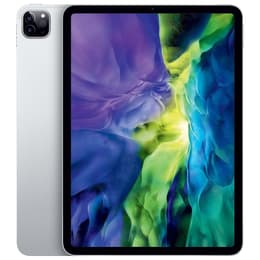

Galaxy Tab S8 (11.0", 2022) vs iPad Pro (2020, A12 series)

Galaxy Tab S8 (11.0", 2022)
Starting at

Refurbished price:A$632.00

Versus A$639.00 new

See options
iPad Pro (2020, A12 series)
Starting at

Refurbished price:A$753.00

Versus A$899.00 new

See options

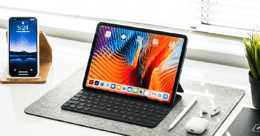
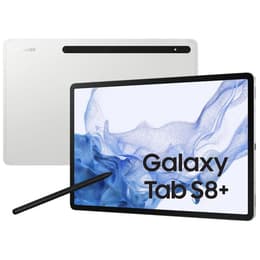
The Samsung Galaxy Tab S8 (2022) and the Apple iPad Pro (2020) are both premium tablets designed for productivity and entertainment. While the Galaxy Tab S8 runs on Android, offering a versatile ecosystem, the iPad Pro operates on iPadOS, known for its optimized tablet experience. Key differentiators include their respective operating systems, the included S Pen with the Tab S8, and the iPad Pro's LiDAR scanner for enhanced augmented reality applications.

Scores

Durability

When considering the long-term usability of these devices, their release timelines and software support are important factors.

  • Release Timeline: The Galaxy Tab S8 was released in 2022, making it two years newer than the iPad Pro (2020). This difference in release year typically translates to a longer period of manufacturer software support for the newer device.
  • Software Longevity: Samsung generally provides several years of Android OS updates and security patches for its flagship tablets, with the Tab S8 expected to receive updates for an extended period, potentially through Android 16 and security updates through Android 17. Apple is known for its long-term software support, and while the iPad Pro 2020 still receives updates, the Tab S8's newer release date suggests it will continue to receive updates for a longer duration into the future.
  • Repairability: Both devices feature premium builds, and while specific repairability scores can vary, both are designed with a focus on durability. Users can expect a practical lifespan influenced more by software support and personal usage patterns than by inherent fragility.

Release year

2022

2020

Compatible with latest Update

Yes

Yes

Operating system

Android

iPadOS

Performance

Both tablets offer robust performance suitable for demanding tasks, though they achieve this through different hardware architectures.

  • Processing Power: The Galaxy Tab S8 is equipped with a current-generation processor that handles demanding applications and multitasking smoothly, providing a responsive experience for gaming, creative work, and everyday use. The iPad Pro 2020 features a powerful chip that was at the forefront of tablet performance at its release, and it continues to deliver excellent speed and efficiency for a wide range of tasks, including intensive photo and video editing.
  • Multitasking and Responsiveness: The Galaxy Tab S8 typically comes with 8GB or 12GB of RAM, facilitating efficient multitasking and quick app switching. The iPad Pro 2020 includes 6GB of RAM, which, combined with iPadOS optimizations, allows for smooth handling of multiple applications simultaneously.
  • Storage Options: Both tablets offer various internal storage configurations, with the Galaxy Tab S8 available in 128GB and 256GB options, and the iPad Pro 2020 offering 128GB, 256GB, 512GB, and 1TB. The Galaxy Tab S8 also supports expandable storage via microSD cards up to 1TB, a feature not present on the iPad Pro.
  • Battery Behavior: The Galaxy Tab S8, with its 8,000 mAh battery, can provide a full day of use for many users, with some tests showing over 12 hours of web surfing. The iPad Pro 2020, with a 7,538 mAh battery (11-inch model), is also rated for up to 10 hours of web surfing on Wi-Fi, though heavy usage like streaming can reduce this.

Memory (GB)

8 GB

6 GB

Screen quality

The visual experience on both tablets is designed to be immersive, though they utilize different display technologies.

  • Display Technology: The Galaxy Tab S8 features an 11-inch LTPS TFT LCD display with a resolution of 2560 x 1600 pixels. The iPad Pro 2020 comes with an 11-inch Liquid Retina IPS LCD display, offering a resolution of 2388 x 1668 pixels.
  • Refresh Rate and Smoothness: Both tablets boast a 120Hz refresh rate, which contributes to smooth scrolling, fluid animations, and a more responsive touch experience.
  • Brightness and Clarity: The Galaxy Tab S8's display offers good brightness and vibrant colors, with an average brightness of around 463 nits. The iPad Pro 2020's display provides up to 600 nits of maximum brightness, ensuring good visibility in various lighting conditions.
  • Viewing Experience: Both screens offer sharp visuals and good color reproduction, suitable for media consumption, productivity, and creative tasks. The iPad Pro's display also features True Tone technology for adaptive white balance.

Resolution

1600x2560

2388 x 1668

Pixel density

280ppp

264ppp

Audiovisual

Both tablets include capable camera systems, though their strengths and additional features differ.

  • Rear Camera System: The Galaxy Tab S8 features a dual-camera setup on the rear, including a 13MP wide lens and a 6MP ultra-wide lens, capable of recording 4K video. The iPad Pro 2020 also has a dual-camera system with a 12MP wide camera and a 10MP ultra-wide camera, alongside a LiDAR scanner.
  • Front Camera Performance: For video calls and selfies, the Galaxy Tab S8 has a 12MP ultra-wide front camera with auto-framing capabilities. The iPad Pro 2020 features a 7MP TrueDepth front camera, which also supports Face ID.
  • Special Features: The iPad Pro's LiDAR scanner enhances augmented reality applications by accurately measuring depth. Both tablets offer good microphone quality for calls, with the Tab S8 featuring three microphones with noise cancellation.
  • Video Recording: Both devices are capable of recording high-resolution video, with the Tab S8 supporting 4K at 30fps and the iPad Pro supporting 4K at up to 60fps.

Miscellaneous

Beyond core specifications, several practical elements contribute to the overall user experience of these tablets.

  • Connectivity: The Galaxy Tab S8 supports Wi-Fi 6E and Bluetooth 5.2, offering advanced wireless connectivity. The iPad Pro 2020 supports Wi-Fi 6 and Bluetooth 5.0. Both offer optional cellular connectivity.
  • Ports and Accessories: Both tablets utilize a USB-C port for charging and data transfer. The Galaxy Tab S8 includes the S Pen stylus in the box, providing a natural writing and drawing experience. The Apple Pencil (2nd Gen) for the iPad Pro 2020 is sold separately but offers precise input and attaches magnetically for charging.
  • Biometric Security: The Galaxy Tab S8 features a fingerprint sensor for secure unlocking. The iPad Pro 2020 uses Face ID for facial recognition.
  • Build and Handling: The Galaxy Tab S8 has dimensions of 253.8 x 165.3 x 6.3 mm and weighs 503g (Wi-Fi model). The 11-inch iPad Pro 2020 measures 247.6 x 178.5 x 5.9 mm and weighs 471g (Wi-Fi model). Both feature aluminum frames and glass fronts, contributing to a premium feel.

Weight

507 oz

471 oz

Screen size (in)

11.0

11

Network

Wi-Fi + 5G

Wi-Fi

Carrier compatibility

Unlocked

Without SIM Port

User feedback for the Galaxy Tab S8 often praises its included S Pen, the versatility of the Android operating system, and its strong performance for a wide range of tasks. Some users appreciate the expandable storage option. Criticisms sometimes point to the LCD display not being as vibrant as AMOLED panels found in some other premium tablets, and the Android tablet app ecosystem, while improving, still having some gaps compared to iPadOS.

The iPad Pro 2020 is frequently lauded for its powerful performance, the fluidity of iPadOS, and the quality of its display. Users often highlight its suitability for creative professionals and its robust app ecosystem. Common concerns can include the separate purchase of essential accessories like the Apple Pencil and Magic Keyboard, and some users on forums like Reddit have noted varying battery life experiences over time, particularly with heavy streaming.

Users prioritizing an integrated stylus experience and the flexibility of the Android ecosystem, including expandable storage, may find the Galaxy Tab S8 well-suited to their needs. Those who value a highly optimized tablet operating system with a strong professional app selection, particularly for creative work and augmented reality, may lean toward the iPad Pro 2020. Both devices offer a premium tablet experience, and considering a quality-assured refurbished option for either can be an eco-friendly alternative for making an informed choice.


See all articles

Our recent comparisons