
Compare models

Google Pixel 9a vs Motorola Edge 30 Pro

  • 1-year warranty
  • Free standard shipping
  • Free 30-day returns
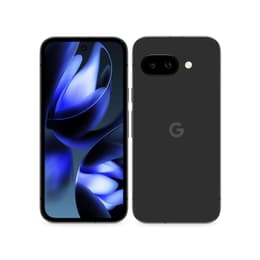
Google Pixel 9a
Starting at

Refurbished price:A$570.00

Versus A$731.50 new

See options
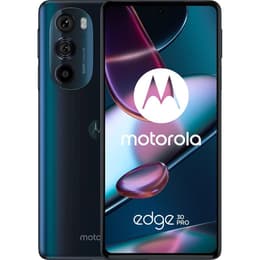
Motorola Edge 30 Pro
Starting at

Refurbished price:A$343.00

Versus A$2,709.00 new

See options

Differences at a glance

The Google Pixel 9a (2025) and the Motorola Edge 30 Pro (2022) represent two distinct approaches to modern smartphone engineering. While the Google Pixel 9a focuses on streamlined everyday usability and long-term software support, the Motorola Edge 30 Pro prioritizes high-refresh-rate visuals and versatile processing capabilities. Both run on the Android operating system, though they offer different user interfaces and feature sets. Choosing between them depends on whether users prioritize extended software longevity or alternative hardware configurations.

Available Models

Colour

Storage (GB)

Scores

Durability

Software update timelines and build design heavily influence how long each device remains practical for daily use.

  • Software longevity: The Google Pixel 9a benefits from an extended official support window spanning several years, ensuring ongoing security patches and operating system updates. The Motorola Edge 30 Pro operates further along its lifecycle, resulting in a shorter remaining window for major software upgrades.
  • Repairability and physical build: Both models use robust construction materials designed to withstand everyday wear and tear. Devices chosen through a quality-assured refurbished option provide a sustainable choice that extends hardware lifespans while reducing electronic waste.
  • Expected practical lifespan: Users seeking maximum software currency over time will find the newer Google Pixel model well-positioned for extended utility, whereas the Motorola option relies on its robust foundational hardware to maintain daily performance.

Release year

2025

2022

Operating system

Android

Android

Foldable

No

No

Performance

System responsiveness and hardware efficiency dictate how smoothly each phone handles daily multitasking and demanding applications.

  • Everyday multitasking: Both devices load apps quickly, switch between open programs without noticeable stutter, and manage background tasks reliably using their respective system memory configurations.
  • Storage and power efficiency: Storage availability varies by model configuration, impacting how many media files and applications can be stored locally. Power management strategies differ, with newer internal components on the Google Pixel 9a optimizing energy draw during sustained use.
  • Gaming and intensive tasks: The Motorola Edge 30 Pro handles demanding mobile games and heavy processing tasks smoothly, while the Google Pixel 9a focuses on stable, cool-running thermal performance for routine applications and casual entertainment.

Screen quality

Display technology shapes the viewing experience for media consumption, navigation, and reading.

  • Display panels: Both smartphones utilize advanced OLED panel technology, delivering deep blacks, high contrast ratios, and vivid color reproduction for photos and videos.
  • Refresh rate and fluidity: The Motorola Edge 30 Pro features a notably high refresh rate that makes scrolling through menus and web pages exceptionally smooth. The Google Pixel 9a provides a balanced refresh rate optimized for visual clarity and battery conservation.
  • Brightness and outdoor visibility: Maximum brightness levels on both screens allow for comfortable outdoor viewing under direct sunlight, though automatic brightness adjustments respond differently depending on ambient lighting conditions.

Resolution

1080x2424

1080 x 2400

Screen type

P-OLED

OLED

Audiovisual

Imaging hardware and software processing determine the quality of captured photos, recorded videos, and audio output.

  • Camera systems: The Google Pixel 9a relies on advanced computational photography algorithms to capture balanced exposures and natural skin tones in diverse lighting. The Motorola Edge 30 Pro offers high-megapixel sensors and an ultra-wide lens that doubles as a macro shooter for close-up details.
  • Video and low-light performance: Low-light environments are handled efficiently by both devices, reducing digital noise in dark settings. Video recording remains stable, supported by built-in image stabilization features for handheld clips.
  • Audio and media consumption: Stereo speaker setups on both phones deliver clear audio for hands-free calls and casual video viewing, while microphone arrays isolate voice input effectively during phone calls.

Miscellaneous

Physical dimensions, connectivity standards, and daily handling characteristics vary noticeably between the two models.

  • Handling and design: The Google Pixel 9a features a compact, balanced form factor that rests comfortably in one hand. The Motorola Edge 30 Pro offers a slightly larger footprint and distinct rear panel finish that affects overall grip and pocketability.
  • Connectivity and ports: Both smartphones support modern 5G networks, fast Wi-Fi standards, and reliable Bluetooth pairing for wireless accessories. Charging and data transfer are handled via a standard USB Type-C port on both models.
  • Security sensors: Biometric authentication is handled via secure facial recognition and integrated fingerprint sensors, offering quick access depending on user preference.

Weight

186 oz

196 oz

Screen size (in)

6.3

6,7

Network

5G

5G

SIM card

Physical SIM + eSIM

Dual Physical SIM

Carrier compatibility

Unlocked

Unlocked

What the community thinks

User discussions across online communities highlight distinct preferences for each device based on everyday habits. Owners of the Google Pixel 9a frequently praise its reliable camera software, clean software interface, and extended update schedule. Conversely, users of the Motorola Edge 30 Pro often highlight its smooth display refresh rates and fast charging speeds as standout attributes. Some common criticisms involve the lack of expandable storage on both models and the older release timeline of the Motorola device.

Users prioritizing long-term software updates and streamlined everyday photography may prefer the Google Pixel 9a. Meanwhile, users prioritizing high refresh rate visuals and rapid charging capabilities will lean toward the Motorola Edge 30 Pro. Exploring a quality-assured refurbished option provides an eco-friendly alternative for acquiring either model while supporting sustainable technology consumption.