
Samsung
Compare models
Differences at a glance
The Google Pixel 9 (released in August 2024) and the Nokia G22 (released in February 2023) represent distinct approaches to smartphone design and functionality. While the Pixel 9 focuses on advanced processing, a high-quality display, and sophisticated camera capabilities, the Nokia G22 prioritizes user repairability and extended battery life. Both devices operate on the Android platform, but they cater to different user expectations regarding performance and longevity.
Colour
Storage
The practical lifespan of a smartphone is influenced by its release timeline, software support, and physical durability. The Google Pixel 9, launched in August 2024, benefits from Google's commitment to providing seven years of operating system and security updates, offering a long software support window. This extended support helps ensure the device remains secure and compatible with new applications for a considerable period. In terms of physical resilience, the Pixel 9 features Gorilla Glass Victus 2 on both its front and back, along with an IP68 rating for water and dust resistance, indicating a high level of protection against environmental factors and accidental damage.
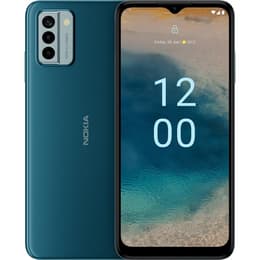
In contrast, the Nokia G22, released in February 2023, comes with a promise of two Android operating system upgrades and three years of security updates. This provides a shorter software longevity compared to the Pixel 9. The G22 is equipped with Gorilla Glass 3 for display protection and carries an IP52 rating, offering splash and dust resistance rather than full submersion protection. A key differentiator for the Nokia G22 is its QuickFix design, which allows users to perform certain repairs, such as battery and screen replacements, with readily available parts and tools, potentially extending its practical hardware lifespan through user intervention.
Release year
Compatible with latest Update
Operating system
Foldable
Performance in daily use is a critical factor for smartphone users, encompassing everything from app responsiveness to multitasking efficiency and battery endurance. The Google Pixel 9 is powered by a current-generation processor designed to handle demanding applications and complex tasks smoothly, with a focus on integrating advanced artificial intelligence features. This results in quick app loading times and fluid navigation, even when multiple applications are running simultaneously. It typically comes with a substantial amount of RAM, further enhancing its multitasking capabilities. The Pixel 9's battery, with a capacity of approximately 4700 mAh, is optimized by its efficient processor and software, often providing a full day of mixed usage for many users.
The Nokia G22, on the other hand, features a processor that is well-suited for everyday tasks such as web browsing, social media, and light applications. While it provides a responsive experience for these common activities, it may exhibit slower performance with more intensive applications or extensive multitasking compared to higher-end devices. The G22 typically includes 4GB of RAM, which is adequate for general use but can be a limiting factor for heavy multitasking. A notable strength of the Nokia G22 is its large 5050 mAh battery, which is frequently reported to offer extended usage, often lasting up to three days on a single charge for moderate users.
The visual experience on a smartphone is largely defined by its display, encompassing factors like technology, resolution, brightness, and refresh rate. The Google Pixel 9 features a 6.3-inch OLED display with a resolution of 2424x1080 pixels, resulting in sharp and detailed visuals. Its OLED technology delivers deep blacks and vibrant colors, enhancing media consumption and overall viewing. The display boasts an adaptive refresh rate of up to 120Hz, providing smooth scrolling and fluid animations. With a high peak brightness of up to 2700 nits, the Pixel 9's screen remains easily visible even in bright outdoor conditions.
The Nokia G22 comes with a 6.5-inch IPS LCD display, offering a resolution of 720x1600 pixels. While it provides clear visuals for general use, the pixel density is lower than that of the Pixel 9, meaning fine details may appear less sharp. The G22 also features a 90Hz refresh rate, which offers a smoother experience than standard 60Hz displays, particularly noticeable during scrolling. Its typical brightness of 500 nits is suitable for indoor use but may present challenges for visibility under direct sunlight.
Resolution
Screen type
Camera capabilities are a significant consideration for many smartphone users, influencing the quality of photos and videos captured in various conditions. The Google Pixel 9 features a dual-camera system on the rear, comprising a 50-megapixel main sensor with optical image stabilization and a 48-megapixel ultrawide lens that also supports macro photography. This setup is designed to capture detailed images with accurate colors and strong low-light performance. It supports 4K video recording at 60 frames per second for both front and rear cameras. The Pixel 9 also integrates advanced computational photography features, including AI-powered editing tools that enhance image quality and offer creative options. The front-facing camera is a 10.5-megapixel sensor, capable of capturing detailed selfies and supporting 4K video recording.
The Nokia G22 is equipped with a triple-camera system on its rear, featuring a 50-megapixel main sensor, complemented by 2-megapixel macro and 2-megapixel depth sensors. This configuration is suitable for everyday photography, performing well in good lighting conditions. Video recording on the Nokia G22 is available at 1080p resolution at 30 frames per second. The front camera is an 8-megapixel sensor, designed for video calls and selfies. Users generally find the camera performance to be adequate for its segment, though it may struggle in challenging low-light environments.
Main camera
Front camera
Beyond core specifications, several practical elements contribute to the overall user experience, including connectivity, physical design, and additional features. The Google Pixel 9 supports modern connectivity standards, including 5G for fast mobile data, Wi-Fi 7 with MIMO for robust wireless internet, and Bluetooth 5.3 for efficient accessory pairing. It features a USB-C 3.2 port for data transfer and charging. For security and convenience, it incorporates an under-display ultrasonic fingerprint sensor and supports face recognition. The device has an aluminum frame and is designed with a focus on a premium feel, weighing approximately 188 grams and featuring dimensions that make it comfortable for one-handed use for many.
The Nokia G22 offers 4G connectivity, Wi-Fi 5 (802.11 a/b/g/n/ac), and Bluetooth 5.0. It includes a USB-C port for charging and data, and notably retains a 3.5mm headphone jack, which is a practical feature for users with wired audio accessories. Security is handled by a side-mounted fingerprint sensor. The G22 features a plastic body, with some components made from recycled materials, and weighs around 195-196 grams. Its dimensions are slightly larger than the Pixel 9, which may impact one-handed usability for some users.
Weight
Screen size (in)
Network
SIM card
Carrier compatibility
The Google Pixel 9 and Nokia G22 cater to distinct user needs and priorities within the smartphone market. User feedback for the Pixel 9 often highlights its exceptional camera performance, smooth software experience, and the integration of useful AI features as significant advantages. Many users appreciate its improved battery life compared to previous Pixel generations and the long-term software support commitment from Google. Some minor criticisms have been noted regarding the consistency of the fingerprint reader and the occasional imperfect execution of certain AI camera features.
For the Nokia G22, common praise points revolve around its impressive battery life, with many users reporting multi-day usage, and its unique user-repairable design, which is seen as a practical and sustainable feature. Its clean Android interface is also frequently mentioned positively. However, criticisms often point to its more modest processing power, which can lead to slower performance with demanding applications, and its camera's limitations in low-light conditions. The shorter software update commitment compared to some rivals is also a consideration for users prioritizing long-term software longevity.
Users prioritizing a cutting-edge camera system, high-performance processing for demanding applications, a vibrant OLED display, and extended software support will find the Google Pixel 9 well-suited to their needs. Its advanced features and premium build are designed for a sophisticated user experience. Conversely, users who value exceptional battery life, the ability to perform basic repairs themselves, and a more budget-conscious approach to smartphone ownership may prefer the Nokia G22. It offers a practical and sustainable choice, particularly for those who intend to keep their device for an extended period through self-maintenance. Both devices, whether new or as a quality-assured refurbished option, provide distinct advantages depending on individual user priorities.