iPhone 15 vs Motorola Razr 40

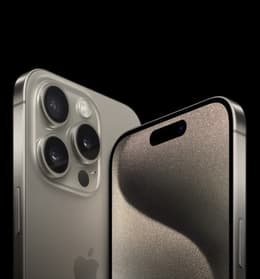
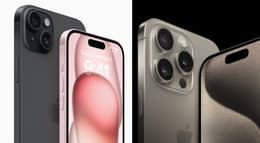
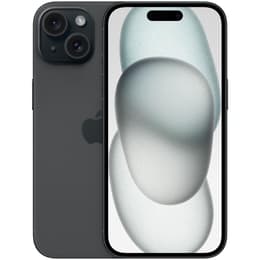
iPhone 15
iPhone 15
Starting at

Refurbished price:A$680.00

Versus A$1,249.00 new

See options
Motorola Razr 40
Motorola Razr 40
See options

Ratings

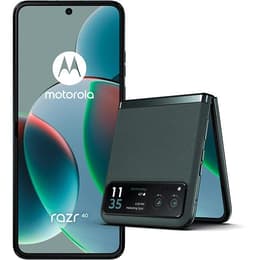
The iPhone 15, a traditional slab-style smartphone, was released by Apple in September 2023, while the Motorola Razr 40, a foldable clamshell device, launched in June 2023. These two devices offer distinct user experiences, primarily differing in their form factor and operating systems. The iPhone 15 runs on Apple's iOS, known for its integrated ecosystem, whereas the Motorola Razr 40 operates on Android, offering greater customisation.

Scores

Durability

The expected practical lifespan and software support differ between these two smartphones, influencing their long-term usability.

  • Release Timeline: The iPhone 15 was introduced in September 2023, succeeding the iPhone 14 series. The Motorola Razr 40 was officially released a few months earlier, in June 2023.
  • OS Support Duration: Apple typically provides iOS updates for its devices for approximately 5-6 years from their release. The iPhone 15 launched with iOS 17 and is compatible with iOS 18 and iOS 26. Motorola has clarified that the Razr 40 is expected to receive three major Android OS upgrades and four years of bi-monthly security updates. This means the Razr 40, which launched with Android 13, is expected to receive updates up to Android 16.
  • Repairability: The iPhone 15 series initially received a repairability score of four out of ten from iFixit, but this was later updated to seven out of ten due to improvements in repair assistance features, allowing users to install parts from other identical iPhones and calibrate them directly on the device. The Motorola Razr 40 has a lower repairability score of four out of ten, with challenges noted in accessing components like the battery and screen due to strong adhesives and the folding design.

Release year

2023

2023

Compatible with latest Update

Yes

Yes

Operating system

iOS

Android

Foldable

No

Yes

Performance

Both devices are designed to handle daily tasks efficiently, but their underlying hardware approaches lead to different performance characteristics.

  • Storage Options: The iPhone 15 offers storage capacities of 128GB, 256GB, and 512GB. The Motorola Razr 40 is available with 128GB or 256GB of internal storage.
  • Battery Behavior: The iPhone 15 features a 3349 mAh battery, providing up to 20 hours of video playback. The Motorola Razr 40 is equipped with a larger 4200 mAh battery. User reports suggest the Razr 40 offers top-tier battery life compared to similar models, capable of mixed use for a full day.
  • Overall System Responsiveness: The iPhone 15 is powered by a current-generation processor, enabling smooth multitasking, quick app loading, and efficient handling of demanding applications and games. The Motorola Razr 40 features a processor that provides mid-range performance, suitable for everyday use and general smartphone tasks.
  • RAM Implications: The iPhone 15 comes with 6GB of RAM. The Motorola Razr 40 offers 8GB or 12GB of RAM, which can contribute to smoother multitasking, especially with multiple applications open simultaneously.

Memory (GB)

6 GB

8 GB

Screen quality

The display experience is a key differentiator, with each device offering distinct technologies and form factors.

  • Display Technology and Practical Benefits: The iPhone 15 features a 6.1-inch Super Retina XDR OLED display, known for its deep blacks and vibrant colors. The Motorola Razr 40 boasts a 6.9-inch foldable LTPO AMOLED main display, which allows the device to fold in half, and a smaller 1.5-inch AMOLED cover display for quick interactions when closed.
  • Resolution and Clarity: The iPhone 15 has a resolution of 2556 x 1179 pixels at approximately 460 pixels per inch (ppi). The Razr 40's main display offers a resolution of 1080 x 2640 pixels, with a pixel density of around 413 ppi.
  • Brightness Levels: The iPhone 15 can reach a typical maximum brightness of 1000 nits, with peak HDR brightness up to 1600 nits and peak outdoor brightness up to 2000 nits, ensuring good visibility in various lighting conditions. The Motorola Razr 40's main display has a peak brightness of 1400 nits, while its cover display reaches 1000 nits.
  • Refresh Rate and Smoothness: The iPhone 15 features a standard 60Hz refresh rate. The Motorola Razr 40's main display offers a higher 144Hz refresh rate, which provides a smoother visual experience, particularly when scrolling and gaming.

Resolution

1179 x 2556

1080 x 2640

Screen type

Super Retina XDR OLED

Foldable LTPO AMOLED

Audiovisual

Both smartphones offer capable camera systems, but with different specifications and photographic approaches.

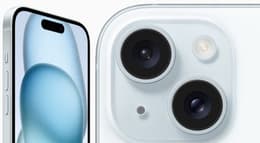
  • Camera System Capabilities: The iPhone 15 features an advanced dual-camera system with a 48MP main camera and a 12MP ultra-wide camera. The 48MP main camera includes sensor-shift optical image stabilization and supports super-high-resolution photos. The Motorola Razr 40 also has a dual rear camera setup, consisting of a 64MP wide-angle main camera with optical image stabilization and a 13MP ultra-wide camera that also functions for macro shots.
  • Low-light and Everyday Photography: The iPhone 15 leverages computational photography features like Photonic Engine and Smart HDR 5 to enhance image quality in various conditions, including low light. The Razr 40's 64MP main sensor aims to capture detailed images, with its larger megapixel count potentially offering more flexibility for cropping.
  • Video Recording Quality: The iPhone 15 supports 4K video recording at up to 60 frames per second (fps), with features like Cinematic mode in 4K HDR. The Motorola Razr 40 records 4K video at 30fps.
  • Front Camera: For selfies and video calls, the iPhone 15 includes a 12MP TrueDepth front camera with autofocus. The Motorola Razr 40 is equipped with a 32MP front camera.
  • Speaker Output: Both devices feature stereo speakers for media consumption.

Main camera

48 megapixels

64 megapixels

Front camera

12 megapixels

32 megapixels

Miscellaneous

Beyond core features, several practical elements contribute to the overall user experience and device utility.

  • Connectivity Options: Both the iPhone 15 and Motorola Razr 40 support 5G connectivity. The iPhone 15 includes Wi-Fi 6 and Bluetooth 5.3. The Razr 40 supports Wi-Fi 6E and Bluetooth 5.3.
  • Port Types: The iPhone 15 marks a transition to a USB-C port, replacing the proprietary Lightning connector. The Motorola Razr 40 also uses a USB-C port.
  • Useful Sensors: The iPhone 15 relies on Face ID for secure facial recognition. The Motorola Razr 40 features a side-mounted fingerprint sensor for biometric authentication. Both devices include standard sensors like accelerometers, gyroscopes, and proximity sensors.
  • Weight and Dimensions: The iPhone 15 measures 147.6 x 71.6 x 7.8 mm and weighs 171 grams. The Motorola Razr 40, when unfolded, measures 170.8 x 74 x 7.4 mm and weighs 188.6 grams. When folded, its dimensions are 88.2 x 74 x 15.8 mm, making it more compact for portability.
  • Build Materials and Durability: The iPhone 15 features an aluminum design with a Ceramic Shield front and color-infused glass back, offering IP68 dust and water resistance. The Motorola Razr 40 is built with an aluminum frame and a vegan leather back, featuring a water-repellent coating and an IP52 rating for splash resistance.

Weight

171 oz

189 oz

Screen size (in)

6.1

6,9

Network

5G

5G

SIM card

Physical SIM + eSIM

Dual Physical SIM + eSIM

Carrier compatibility

Unlocked

Unlocked

User sentiment for the iPhone 15 often praises its refined design, improved camera capabilities, and the integration of the Dynamic Island across the standard models. Common criticisms sometimes point to the 60Hz refresh rate, which some users feel is a limitation compared to other devices in its category. The Motorola Razr 40 is frequently lauded for its unique foldable form factor, which offers a compact design when closed, and its large main display. Users also appreciate its battery life for a foldable device. However, some concerns have been raised regarding the consistency and timeliness of software updates, with some users on forums noting delays compared to other Android devices.

Users who prioritise a consistent software experience, a robust ecosystem, and advanced computational photography in a traditional smartphone form factor may find the iPhone 15 well-suited to their needs. Its strong durability ratings and extended software support also appeal to those seeking a device for long-term use. Conversely, individuals who value a compact, pocketable design and the flexibility of a foldable screen, along with the customisation options of the Android operating system, might lean towards the Motorola Razr 40. Its higher refresh rate display also offers a smoother visual experience for media consumption and gaming. Both devices offer quality-assured refurbished options, providing an eco-friendly alternative for consumers.

See all articles

Our recent comparisons