
Compare models

Galaxy Z Flip7 vs Google Pixel 7 Pro

  • 1-year warranty
  • Free standard shipping
  • Free 30-day returns
Galaxy Z Flip7
Starting at

Refurbished price:A$800.00

Versus A$1,799.00 new

See options
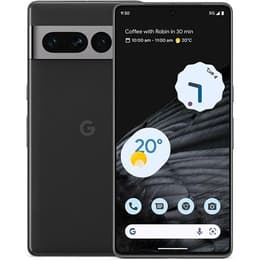
Google Pixel 7 Pro
Starting at

Refurbished price:A$329.00

Versus A$1,219.00 new

See options

Differences at a glance

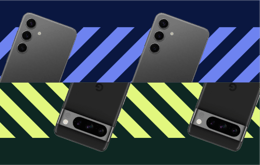
The Samsung Galaxy Z Flip7 (2025) and the Google Pixel 7 Pro (2022) represent two entirely different approaches to modern smartphone engineering. While the Galaxy Z Flip7 introduces a compact, foldable clamshell design with a versatile cover screen, the Google Pixel 7 Pro offers a traditional slab form factor focused on long-range photography and a traditional large display. Both devices run on the Android operating system, though they deliver distinct hardware form factors and user interfaces tailored to contrasting preferences.

Available Models

Colour

Storage

Scores

Durability

When evaluating hardware longevity and support timelines, these two devices reflect different generations and lifecycle stages.

  • Release timeline and age: The Google Pixel 7 Pro launched in late 2022, whereas the Galaxy Z Flip7 arrived in mid-2025, giving the Samsung model a newer manufacturing baseline.
  • Software support duration: Both platforms receive multi-year operating system upgrades, though the newer Galaxy Z Flip7 extends further into the future for security patches and system updates.
  • Expected practical lifespan: While the Pixel 7 Pro relies on a conventional glass and metal candybar build that has proven durable over time, the foldable nature of the Galaxy Z Flip7 introduces unique mechanical considerations for long-term daily wear.

Release year

2025

2022

Foldable

Yes

No

Performance

Underneath their outer shells, both devices manage daily multi-tasking, web browsing, and demanding mobile applications using their respective customized system processors paired with generous memory configurations.

  • Storage and multitasking: Both options include ample memory configurations to keep background apps active smoothly, alongside high-capacity storage tiers for media files.
  • Processor capabilities: Everyday tasks, app loading speeds, and graphics-heavy games run with high responsiveness on both devices, translating to fluid navigation without noticeable stutter.
  • Battery behavior: The Galaxy Z Flip7 utilizes a split-cell battery design adapted to its folding frame, while the Pixel 7 Pro houses a traditional larger cell that comfortably handles standard daily usage profiles before needing a recharge.

Screen quality

Visual output differs significantly due to the structural mechanics and display panel layouts chosen by each manufacturer.

  • Display technology: The Galaxy Z Flip7 features a flexible folding interior panel complemented by a large, functional exterior cover screen, whereas the Pixel 7 Pro employs a rigid curved glass panel with high pixel density.
  • Brightness and outdoor clarity: Both screens reach high peak luminance levels, ensuring that text and images remain legible under direct sunlight.
  • Refresh rate and smoothness: Both devices support high refresh rate technology, providing fluid scrolling through web pages and smooth animation transitions during regular system navigation.

Resolution

1080x2520

1440 x 3120

Audiovisual

Photography and media consumption setups cater to distinct shooting styles and audio preferences.

  • Camera system capabilities: The Pixel 7 Pro utilizes a versatile triple-lens array featuring a dedicated long-range telephoto zoom lens, while the Galaxy Z Flip7 relies on a dual-lens primary setup that leverages its folding angles for unique tripod-free framing.
  • Low-light and video performance: Both smartphones capture detailed images in challenging lighting environments and record stable, high-resolution video clips with effective stabilization.
  • Media consumption: Stereo speakers on both units deliver clear audio for phone calls, podcasts, and casual video playback.

Miscellaneous

Practical daily usability elements, connectivity standards, and physical dimensions shape how each phone fits into a pocket or bag.

  • Connectivity and ports: Both models support modern 5G cellular networks, Wi-Fi standards, and Bluetooth pairing, utilizing reversible USB-C ports for charging and data transfer.
  • Security sensors: Both devices incorporate biometric authentication via secure facial recognition and responsive fingerprint scanners for quick unlocking.
  • Handling and dimensions: The Pixel 7 Pro presents a larger, heavier traditional slab footprint, whereas the Galaxy Z Flip7 folds in half to occupy significantly less pocket space while carrying a lightweight profile.

Weight

188 oz

212 oz

Screen size (in)

6.9

67

SIM card

Physical SIM + eSIM

Physical SIM + eSIM

Carrier compatibility

Unlocked

Unlocked

What the community thinks

Users evaluating these models often note that the Google Pixel 7 Pro excels through its reliable traditional design, exceptional zoom photography capabilities, and clean software interface. At the same time, frequent discussions highlight concerns regarding its larger physical size and weight. Conversely, users frequently praise the Galaxy Z Flip7 for its pocket-friendly folding form factor and useful cover screen, though some note the inherent compromises of a folding screen crease over years of use.

Users prioritizing a compact, pocketable device with innovative form factors will find the Galaxy Z Flip7 well-suited to their daily routine. Meanwhile, users prioritizing a traditional large display and dedicated long-range optical zoom photography may lean toward the Google Pixel 7 Pro. Choosing a quality-assured refurbished option through Back Market allows consumers to make a sustainable choice that aligns with their personal technology preferences while reducing electronic waste.