

Compare models
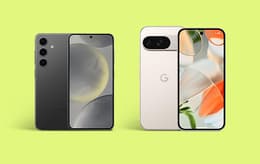
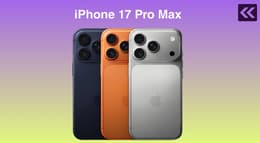
Google Pixel 9 Pro vs iPhone 17 Pro
- 1-year warranty
- Free standard shipping
- Free 30-day returns
Differences at a glance
The Google Pixel 9 Pro (2024) and the iPhone 17 Pro (2025) represent premium smartphone engineering from two major platform ecosystems. While both devices occupy the high-end tier and share a compact 6.3-inch form factor, they run on entirely different operating systems and approach software integration from distinct philosophies. The primary differences lie in their platform environments, processing architectures, and everyday user interface experiences.
Available Models
Colour
Storage (GB)
Scores
Durability
Both handsets are engineered for long-term daily use, though their software update timelines and hardware durability frameworks differ slightly based on their respective release years.
- Software Support: The Google Pixel 9 Pro features an extended commitment of major platform upgrades for seven years, while the iPhone 17 Pro follows Apple's traditional multi-year support cycle.
- Build Durability: Both models incorporate reinforced glass panels and robust metal frames with high water and dust resistance ratings for everyday protection.
- Lifespan Outlook: Users can expect strong structural longevity from both devices, supported by stable internal components and regular security updates.
Release year
2024
2025
Compatible with latest Update
Yes
Yes
Operating system
Android
iOS
Foldable
No
No
Performance
System responsiveness and everyday multitasking capabilities are handled differently across these two platforms, translating to unique daily user experiences.
- Multitasking and Memory: The Google Pixel 9 Pro relies on generous memory allocation to manage background processes smoothly, whereas the iPhone 17 Pro utilizes tightly optimized internal architecture for swift app switching.
- App Loading and Gaming: Both devices handle demanding applications and resource-heavy tasks fluidly, with current-generation processors minimizing stutter during extended use.
- Battery Behavior: Each smartphone manages power efficiently through adaptive software features, though heavy media consumption or navigation use will require daily recharging on both models.
Screen quality
Viewing experiences on both devices benefit from advanced display technologies designed for high clarity and outdoor visibility.
- Display Technology: Both smartphones utilize bright, high-resolution organic light-emitting diode panels that deliver deep contrast levels and rich color reproduction.
- Refresh Rate and Fluidity: Adaptive refresh technology scales smoothly up to 120Hz on both devices, ensuring fluid scrolling and responsive touch interactions.
- Outdoor Legibility: Peak brightness thresholds on both displays allow for clear content visibility even under direct sunlight.
Resolution
1280x2856
2622x1206
Screen type
LTPO OLED
Super Retina XDR
Audiovisual
Optics and media recording are central to both flagship models, offering versatile multi-lens configurations for everyday photography.
- Camera Systems: Both devices feature triple-lens setups incorporating high-resolution main, ultra-wide, and telephoto options for flexible framing.
- Low-Light Capture: Advanced image processing on both handsets preserves detail and minimizes noise in challenging lighting conditions.
- Video and Audio: Video recording remains stable and sharp across both models, supported by clear microphone arrays for calls and media creation.
Main camera
50 megapixels
48 megapixels
Front camera
42 megapixels
18 megapixels
Miscellaneous
Practical daily utility is shaped by connectivity standards, sensor integration, and physical handling characteristics.
- Connectivity and Ports: Both handsets support modern 5G networks and fast wireless standards, utilizing standard connector ports for charging and data transfer.
- Authentication: The Google Pixel 9 Pro offers secure under-display fingerprint sensing and facial recognition, while the iPhone 17 Pro relies exclusively on advanced facial mapping technology.
- Physical Handling: Weighing around 200 grams with slim profiles, both devices sit comfortably in the hand and pocket during daily travel.
Weight
199 oz
206 oz
Screen size (in)
6.3
6.3
Network
5G
5G
SIM card
Physical SIM + eSIM
eSIM
Carrier compatibility
Unlocked
Unlocked
What the community thinks
Deciding between the Google Pixel 9 Pro and the iPhone 17 Pro ultimately depends on user preference for operating systems and specific daily workflow needs. Users prioritizing deep integration with Google services and long-term software commitments will find the Pixel 9 Pro well-suited to their routine. Conversely, users invested in the Apple ecosystem who value specific hardware optimizations often lean toward the iPhone 17 Pro.
For those looking to make a sustainable purchase, exploring a quality-assured refurbished option provides an eco-friendly alternative that reduces electronic waste without compromising on core performance. Reviewing these practical aspects ensures a choice that aligns closely with individual daily usage preferences.