
Google Pixel 8a vs iPhone 16 Pro

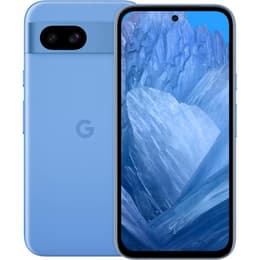
Google Pixel 8a
Google Pixel 8a
Starting at

Refurbished price:A$464.00

Versus A$938.69 new

See options
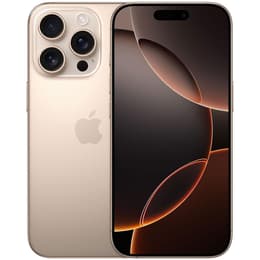
iPhone 16 Pro
iPhone 16 Pro
Starting at

Refurbished price:A$1,148.00

Versus A$1,999.00 new

See options

Ratings

The Google Pixel 8A (released May 2024) and the iPhone 16 Pro (released September 2024) represent distinct approaches to modern smartphone design and functionality. While the Pixel 8A focuses on delivering a strong user experience with advanced AI features within the Android ecosystem, the iPhone 16 Pro offers a premium experience with a powerful processor, advanced camera capabilities, and a refined iOS interface. Both devices aim to provide a seamless mobile experience, but they cater to different user priorities through their hardware and software philosophies.

Scores

Durability

When considering the long-term usability of these devices, their release timelines and software support policies are key factors.

  • Software Longevity: The Google Pixel 8A stands out with a commitment to seven years of operating system and security updates from its release date. This extended support ensures the device remains current with the latest features and security patches for a considerable period. The iPhone 16 Pro, while known for excellent long-term support, typically receives iOS updates for approximately five to six years from its launch. This means the Pixel 8A offers a longer guaranteed software lifespan.
  • Physical Durability: The iPhone 16 Pro features a durable titanium design with a Ceramic Shield front and a textured matte glass back, contributing to its robust build and IP68 water resistance. The Pixel 8A utilizes Corning Gorilla Glass 3 for its display and has an IP67 rating for dust and water resistance. Both devices are designed to withstand daily use, but the iPhone 16 Pro's materials and higher IP rating suggest a slightly more resilient construction against environmental factors.
  • Practical Lifespan: Both smartphones are built to offer a practical lifespan extending several years beyond their initial purchase. The Pixel 8A's longer software support commitment means it will receive new Android versions and security updates for a more extended duration, potentially making it a more future-proof option for users who prioritize the latest software features. The iPhone 16 Pro's robust build and consistent performance also contribute to a long practical life, even if its software update cycle is slightly shorter.

Release year

2024

2024

Compatible with latest Update

Yes

Yes

Foldable

No

No

Performance

The performance of a smartphone is crucial for handling daily tasks, from simple browsing to demanding applications and gaming.

  • Processing Power: The iPhone 16 Pro is equipped with a current-generation processor designed for high-end performance, enabling it to handle demanding applications, complex multitasking, and graphics-intensive games with fluidity. The Google Pixel 8A features a processor that provides adequate performance for most users, smoothly managing everyday activities like messaging, social media, and email. While capable, some users have noted that the Pixel 8A's processor can show signs of strain with resource-heavy features or in warmer conditions.
  • Multitasking and Responsiveness: Both devices offer 8GB of RAM, which is sufficient for smooth multitasking in typical usage scenarios. The iPhone 16 Pro's optimized software and powerful processor contribute to a highly responsive user interface, with apps launching quickly and transitions feeling seamless. The Pixel 8A also provides a smooth experience, though some users have observed slight hesitations when cold-opening apps.
  • Storage Options: The iPhone 16 Pro offers a wider range of storage configurations, starting from 128GB and extending up to 1TB, providing ample space for various user needs. The Google Pixel 8A comes with 128GB or 256GB storage options. Neither device supports expandable storage via microSD cards.

Memory (GB)

8 GB

8 GB

Screen quality

The display is a primary interface for smartphone interaction, and both devices offer high-quality viewing experiences with distinct characteristics.

  • Display Technology and Clarity: Both the Google Pixel 8A and the iPhone 16 Pro feature OLED displays, known for their deep blacks and vibrant colors. The Pixel 8A has a 6.1-inch OLED screen with a 2400 x 1080 resolution, resulting in a pixel density of approximately 430-431 pixels per inch (PPI). The iPhone 16 Pro boasts a slightly larger 6.3-inch Super Retina XDR OLED display with a 2622 x 1206 resolution, offering a higher pixel density of 460 PPI. This higher PPI on the iPhone 16 Pro translates to slightly sharper text and finer details.
  • Brightness and Outdoor Visibility: The Pixel 8A's display offers a peak brightness of 2000 nits, with a measured 2049 nits in natural light, ensuring good readability even in bright outdoor conditions. The iPhone 16 Pro also achieves a peak brightness of 2000 nits, with a typical SDR brightness of 1200 nits, enhancing visibility in various lighting environments. Both displays are well-suited for outdoor use.
  • Refresh Rate and Smoothness: The Pixel 8A features an adaptive 120Hz refresh rate, providing smooth scrolling and a responsive feel during navigation. The iPhone 16 Pro incorporates ProMotion technology, offering an adaptive refresh rate that can scale from 1Hz up to 120Hz, optimizing both smoothness and power efficiency. This dynamic adjustment ensures a fluid experience while conserving battery life when high refresh rates are not needed.

Resolution

1080 x 2400

1206 x 2622

Screen type

OLED

LTPO Super Retina XDR OLED

Audiovisual

Both smartphones offer capable camera systems, but they differ in their hardware configurations and computational photography approaches.

  • Rear Camera Systems: The Google Pixel 8A features a dual-camera setup with a 64MP wide-angle main sensor and a 13MP ultrawide lens. It relies heavily on Google's computational photography for image processing, delivering consistently good photos in various conditions, including impressive night mode capabilities. The iPhone 16 Pro sports a more versatile triple-camera system, including a 48MP main sensor, a 48MP ultrawide sensor, and a 12MP periscope telephoto lens with 5x optical zoom. This telephoto lens provides greater flexibility for zoomed-in shots.
  • Photography Performance: The Pixel 8A is praised for its dependable point-and-shoot photography, producing vivid and detail-rich images with accurate colors in good lighting. Its AI features enhance photos and offer editing tools. The iPhone 16 Pro's main and ultrawide cameras deliver excellent detail and quality, especially in good lighting, with a slightly more natural color rendition. The iPhone 16 Pro also supports ProRAW for greater editing flexibility.
  • Video Recording Capabilities: The Pixel 8A supports 4K video recording at 30 frames per second (fps). The iPhone 16 Pro offers more advanced video capabilities, including 4K video recording at up to 120fps in Dolby Vision or ProRes formats, making it a strong option for users who prioritize high-quality video capture. The iPhone 16 Pro also includes features like Cinematic mode and improved audio capabilities for video.

Main camera

64 megapixels

48 megapixels

Front camera

13 megapixels

12 megapixels

Miscellaneous

Beyond core performance and display, several practical elements contribute to the overall user experience of these devices.

  • Connectivity and Ports: Both smartphones support 5G connectivity for fast mobile data. The iPhone 16 Pro features Wi-Fi 7 and Bluetooth 5.3, along with a second-generation Ultra Wideband chip and Thread networking technology. The Pixel 8A includes Wi-Fi and Bluetooth, and both devices utilize a USB-C port for charging and data transfer. The iPhone 16 Pro's USB-C port supports faster data transfer speeds of up to 10Gbps, while the Pixel 8A's USB-C port is USB 3.2.
  • Biometric Security: The Google Pixel 8A incorporates an under-display optical fingerprint sensor and facial recognition for unlocking and authentication. The iPhone 16 Pro relies on Face ID, Apple's advanced facial recognition system, for secure unlocking and payments.
  • Design and Handling: The Pixel 8A has dimensions of 152.1 x 72.7 x 8.9 mm and weighs 188g, featuring a matte finish and more rounded corners. The iPhone 16 Pro is slightly more compact at 149.6 x 71.5 x 8.25 mm and weighs 199g, with a titanium frame and slimmer display borders. The iPhone 16 Pro also introduces a new Camera Control button for quick access to camera functions.

Weight

188 oz

199 oz

Screen size (in)

6.1

6.3

Network

5G

5G

SIM card

Physical SIM + eSIM

Physical SIM + eSIM

Carrier compatibility

Unlocked

Unlocked

The Google Pixel 8A and the iPhone 16 Pro cater to different user preferences, each excelling in specific areas. Users often praise the Pixel 8A for its exceptional camera performance in everyday scenarios, its bright and smooth display, and Google's commitment to seven years of software updates. However, some common criticisms include its battery life, which can be subpar for heavy users, slower charging speeds, and a tendency to warm up during intensive tasks.

Conversely, the iPhone 16 Pro receives acclaim for its powerful performance, advanced and versatile camera system, particularly for video recording, and its premium, durable design. Users appreciate its larger, brighter display and the seamless iOS experience. Criticisms sometimes point to the telephoto camera being less capable than the other lenses and the perception that its 8GB of RAM might be less than some competing Android flagships.

For users prioritizing an extended software support lifespan, a consistently reliable point-and-shoot camera, and a user-friendly Android experience with strong AI integration, the Google Pixel 8A may be a suitable choice. Its value proposition is strong for those who appreciate Google's software ecosystem and computational photography. On the other hand, individuals who require top-tier processing power, a highly advanced video recording system, a premium build, and a wider range of storage options will likely find the iPhone 16 Pro better suited to their needs. It is particularly appealing to those deeply integrated into the Apple ecosystem or professional content creators.

Both devices offer compelling features, and choosing between them often comes down to individual priorities regarding operating system preference, camera versatility, and long-term software commitment. For those considering a more sustainable choice, quality-assured refurbished options for both models are available, offering an eco-friendly alternative.


See all articles

Our recent comparisons