
Galaxy S23 vs Google Pixel 8

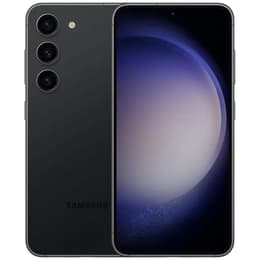
Galaxy S23
Galaxy S23
Starting at

Refurbished price:A$489.00

Versus A$1,349.00 new

See options
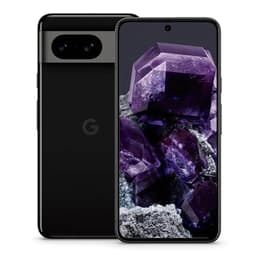
Google Pixel 8
Google Pixel 8
Starting at

Refurbished price:A$465.00

Versus A$1,245.00 new

See options

Ratings

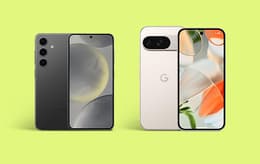
The Samsung Galaxy S23, released in February 2023, and the Google Pixel 8, launched in October 2023, represent two distinct approaches to the Android smartphone experience. While both devices offer premium features and capabilities, they differentiate themselves through their design philosophies, camera systems, and software commitments. The Galaxy S23 focuses on a refined hardware experience with Samsung's One UI, while the Pixel 8 emphasizes advanced computational photography and a long-term software support promise directly from Google.

Scores

Durability

When considering the long-term usability of a smartphone, factors like software support and physical resilience are key. The Galaxy S23 and Pixel 8 offer different timelines for software updates and feature robust build qualities designed for daily use.

  • Software Longevity: The Google Pixel 8 stands out with an industry-leading commitment of seven years of operating system and security updates, extending its software support significantly further than many competitors. The Samsung Galaxy S23, on the other hand, is promised four years of operating system updates and five years of security updates, with support expected to end around 2028. This means the Pixel 8 will receive new Android versions and security patches for a considerably longer period.
  • Physical Durability: Both devices feature an IP68 rating for dust and water resistance, indicating they can withstand immersion in shallow water for a limited time. The Galaxy S23 incorporates Corning Gorilla Glass Victus 2 on both its front and back, paired with an Armor Aluminum frame, offering enhanced scratch and drop protection. The Pixel 8 uses Corning Gorilla Glass Victus for its front and back, with an aluminum frame.
  • Repairability: The Pixel 8 has been noted for design choices that aim to make components, such as the battery, easier to replace, potentially extending its practical lifespan through simpler repairs.

Release year

2023

2023

Compatible with latest Update

Yes

Yes

Operating system

Android

Android

Foldable

No

No

Performance

Evaluating smartphone performance involves looking at how smoothly devices handle everyday tasks, demanding applications, and multitasking. Both the Galaxy S23 and Pixel 8 are equipped to deliver responsive experiences, though they achieve this through different hardware and software optimizations.

  • System Responsiveness: The Samsung Galaxy S23 provides a consistently fluid experience, handling demanding applications and multitasking with ease due to its optimized processor and 8GB of RAM. Users can expect quick app launches and smooth transitions between various tasks. The Google Pixel 8 also offers a responsive user experience, powered by its own custom-designed processor and 8GB of RAM, with a strong emphasis on efficient AI-driven features that enhance daily interactions.
  • Storage Options: The Galaxy S23 is available with 128GB, 256GB, or 512GB of internal storage. Notably, the 128GB variant uses UFS 3.1 storage, while the 256GB and 512GB options benefit from the faster UFS 4.0 technology. The Pixel 8 comes with 128GB or 256GB of internal storage, utilizing UFS 3.1 across its configurations. Neither device offers expandable storage via a microSD card.
  • Battery Behavior: The Galaxy S23 is equipped with a 3900 mAh battery, supporting 25W wired and 15W wireless charging. The Pixel 8 features a larger 4575 mAh battery, supporting 27W wired and 18W wireless charging. For heavy users, the Pixel 8's larger battery capacity may translate to longer usage times between charges.

Memory (GB)

8 GB

8 GB

Screen quality

The display is a primary interface for any smartphone, and both the Galaxy S23 and Pixel 8 offer high-quality viewing experiences with distinct characteristics.

  • Display Technology and Clarity: The Samsung Galaxy S23 features a 6.1-inch Dynamic AMOLED 2X display, providing deep blacks and vibrant colors with a resolution of 1080x2340 pixels. The Google Pixel 8 sports a 6.2-inch OLED display, marketed as an 'Actua' display, also offering rich colors and a resolution of 1080x2400 pixels. Both displays deliver sharp images suitable for various content.
  • Brightness and Refresh Rate: The Galaxy S23's display can reach a peak brightness of 1750 nits, ensuring good visibility even in bright outdoor conditions, and features an adaptive refresh rate that ranges from 48Hz to 120Hz for smooth scrolling and animations. The Pixel 8's display offers a peak brightness of 2000 nits, providing excellent outdoor visibility, and also has an adaptive refresh rate from 60Hz to 120Hz.
  • Viewing Experience: The slightly larger screen of the Pixel 8 offers a marginally more expansive viewing area, while both phones provide excellent color accuracy and contrast. The high refresh rates on both devices contribute to a fluid user experience, particularly noticeable during gaming or scrolling through content.

Resolution

1080 x 2340

1080 x 2400

Screen type

Dynamic AMOLED 2X

OLED

Audiovisual

Both the Samsung Galaxy S23 and Google Pixel 8 are recognized for their advanced camera capabilities, each leveraging different strengths to capture high-quality photos and videos.

  • Rear Camera Systems: The Samsung Galaxy S23 features a versatile triple-camera setup, including a 50MP wide-angle lens with optical image stabilization (OIS), a 12MP ultra-wide lens with a 120-degree field of view, and a 10MP telephoto lens offering 3x optical zoom with OIS. The Google Pixel 8 comes with a dual-camera system, comprising a 50MP wide-angle lens with OIS and a 12MP ultra-wide lens with autofocus and a 126-degree field of view. The Pixel 8's ultra-wide camera also gains macro capabilities due to its autofocus feature.
  • Photography Performance: The Galaxy S23 is known for producing bright, high-resolution photos, even in challenging low-light conditions. Its dedicated telephoto lens provides clear zoomed-in shots. The Pixel 8 excels in computational photography, delivering images with impressive dynamic range and color accuracy, particularly in low light, and offers advanced AI-powered editing features.
  • Video Recording and Front Camera: Both devices support 4K video recording at 60 frames per second from their main cameras. The Galaxy S23 has a 12MP front camera, while the Pixel 8 features a 10.5MP front camera, which is an ultrawide lens with a fixed focus.

Main camera

50 megapixels

50 megapixels

Front camera

12 megapixels

10.5 megapixels

Miscellaneous

Beyond core features, several practical elements contribute to the overall user experience of a smartphone. The Galaxy S23 and Pixel 8 offer modern connectivity, biometric security, and distinct physical designs.

  • Connectivity and Ports: Both smartphones support 5G networks for fast mobile data speeds and feature Wi-Fi 6E for high-speed wireless internet connectivity. The Pixel 8 also supports the newer Wi-Fi 7 standard. Both include Bluetooth 5.3 for connecting to accessories and utilize a USB-C 3.2 port for charging and data transfer. Neither device includes a traditional 3.5mm headphone jack.
  • Biometric Security and Sensors: Both the Galaxy S23 and Pixel 8 incorporate in-display fingerprint sensors for secure unlocking. The Pixel 8 also features advanced facial recognition. Both devices include a standard array of sensors such as accelerometers, gyroscopes, and compasses.
  • Design and Handling: The Galaxy S23 measures 146.3 x 70.9 x 7.6 mm and weighs 168g, offering a compact and lightweight feel. The Pixel 8 is slightly larger and heavier at 150.5 x 70.8 x 8.9 mm and 187g, but still maintains a comfortable form factor. The Galaxy S23 features a flat display, while the Pixel 8 has a more rounded design.

Weight

227 oz

187 oz

Screen size (in)

6.1

6.2

Network

5G

5G

SIM card

Physical SIM + eSIM

Physical SIM + eSIM

Carrier compatibility

Unlocked

Unlocked

Connector

USB-C

USB-C

Choosing between the Samsung Galaxy S23 and the Google Pixel 8 involves weighing priorities in software longevity, camera capabilities, and overall user experience. Users often praise the Galaxy S23 for its consistent performance, vibrant display, and versatile camera system that includes a dedicated telephoto lens. Some common criticisms might revolve around its battery life compared to some larger devices, or the software update policy being shorter than Google's offering. The Pixel 8, conversely, frequently receives acclaim for its exceptional computational photography, unique AI features, and an unparalleled seven-year software update commitment, which provides significant future-proofing. User feedback sometimes points to its battery life as being average for its class, and some might miss a dedicated telephoto lens on the standard model.

Users prioritizing a compact design with a dedicated optical zoom lens and a highly customizable Android experience through Samsung's One UI may find the Galaxy S23 well-suited to their needs. Its robust build and bright display make it a reliable daily driver. On the other hand, users who value cutting-edge AI features, a longer software support timeline, and a camera system that excels with computational enhancements will likely lean towards the Google Pixel 8. Its focus on a pure Android experience and innovative software tools offers a distinct advantage for those who prioritize Google's ecosystem.

Both devices represent excellent choices in the premium smartphone segment. For those looking for an eco-friendly alternative, considering a quality-assured refurbished option for either the Galaxy S23 or Pixel 8 can provide a sustainable choice without compromising on performance or features.
See all articles

Our recent comparisons