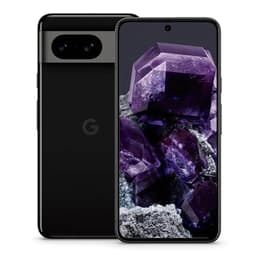


Google Pixel 8 vs Google Pixel 8 Pro

Google Pixel 8
Google Pixel 8
Starting at

Refurbished price:A$465.00

Versus A$1,245.00 new

See options
Google Pixel 8 Pro
Google Pixel 8 Pro
Starting at

Refurbished price:A$564.00

Versus A$2,015.00 new

See options

Ratings

The Google Pixel 8 and Google Pixel 8 Pro, both released in October 2023, represent Google's flagship Android smartphone offerings. While they share a common operating system and core design philosophy, the Pro model distinguishes itself with a larger, more advanced display, a more versatile camera system, and additional features designed for users seeking enhanced capabilities.

Scores

Durability

Both the Pixel 8 and Pixel 8 Pro were launched in October 2023, and Google has committed to providing an extensive seven years of software updates, including OS upgrades, security patches, and feature drops, extending their support until October 2030. This commitment suggests a longer practical lifespan for both devices compared to many other smartphones.

  • Software Longevity: Both models benefit from Google's industry-leading promise of seven years of software and security updates, ensuring they remain current and secure for an extended period.
  • Physical Durability: The Pixel 8 features Corning Gorilla Glass Victus on the front, while the Pixel 8 Pro upgrades to Gorilla Glass Victus 2 for enhanced screen protection. Both devices are built with aluminum frames and glass backs, and carry an IP68 rating for dust and water resistance, indicating robust construction.
  • Repairability: The Pixel 8 has received a repairability score of 7 out of 10, while the Pixel 8 Pro scored 6 out of 10, indicating they are moderately repairable. This suggests that common repairs are feasible, though some components may require careful handling due to adhesives.

Release year

2023

2023

Compatible with latest Update

Yes

Yes

Operating system

Android

Android

Foldable

No

No

Performance

Both the Google Pixel 8 and Pixel 8 Pro are powered by Google's Tensor G3 processor, designed to handle a wide range of tasks efficiently, with differences primarily emerging in memory configurations and battery capacity.

  • Processing Power: The Tensor G3 processor in both devices enables smooth navigation, quick app loading, and capable handling of demanding applications and multitasking. This processor also underpins many of the advanced AI-powered features found across both models.
  • Memory and Storage: The Pixel 8 comes with 8GB of RAM, suitable for typical daily usage and multitasking. The Pixel 8 Pro, however, includes 12GB of RAM, which can provide a noticeable advantage for users who frequently engage in heavy multitasking, extensive gaming, or professional-grade applications. Both models offer 128GB and 256GB storage options, with the Pixel 8 Pro also providing 512GB and 1TB variants for those requiring more space.
  • Battery Performance: The Pixel 8 is equipped with a 4575 mAh battery, while the Pixel 8 Pro features a larger 5050 mAh battery. In real-world use, both generally offer a full day of power for average users. However, some users have reported that cellular connectivity issues can occasionally impact battery performance on both devices.

Memory (GB)

8 GB

12 GB

Screen quality

The displays on the Pixel 8 and Pixel 8 Pro offer distinct viewing experiences, primarily differing in size, resolution, and adaptive refresh rate capabilities.

  • Display Technology and Size: Both phones feature vibrant OLED displays, with the Pixel 8 sporting a 6.2-inch Actua display and the Pixel 8 Pro featuring a larger 6.7-inch Super Actua LTPO OLED display. The Pixel 8 Pro's LTPO technology allows for more dynamic refresh rate adjustments.
  • Resolution and Brightness: The Pixel 8 offers a Full HD+ resolution of 1080 x 2400 pixels, providing clear visuals for everyday content. The Pixel 8 Pro steps up to a Quad HD+ resolution of 1344 x 2992 pixels, resulting in a sharper image, particularly noticeable on its larger screen. In terms of brightness, the Pixel 8 can reach a peak of 2000 nits, while the Pixel 8 Pro achieves an even higher peak brightness of 2400 nits, enhancing visibility in bright outdoor conditions.
  • Refresh Rate: The Pixel 8 features a variable refresh rate that can adjust between 60Hz and 120Hz, providing smooth scrolling and responsiveness when needed. The Pixel 8 Pro offers a more advanced adaptive refresh rate, ranging from 1Hz to 120Hz, which can contribute to smoother visuals and potentially better power efficiency by adjusting more precisely to on-screen content.

Resolution

1080 x 2400

1344 x 2992

Screen type

OLED

LTPO OLED

Audiovisual

The camera systems are a significant differentiator between the Pixel 8 and Pixel 8 Pro, with the Pro model offering a more comprehensive and versatile setup.

  • Rear Camera System: The Pixel 8 features a dual-camera setup with a 50MP main sensor and a 12MP ultrawide lens, capable of capturing detailed photos in various conditions. The Pixel 8 Pro elevates this with a triple-camera system, including a 50MP main sensor, a 48MP ultrawide lens, and a 48MP telephoto lens offering 5x optical zoom, providing greater flexibility for different photographic scenarios, including distant subjects.
  • Photography Features: Both models benefit from Google's computational photography, including features like Night Sight for improved low-light performance and Magic Editor for advanced photo manipulation. The Pixel 8 Pro further enhances the photography experience with Pro controls, allowing manual adjustments for ISO, shutter speed, and focus, and the ability to capture full 50MP resolution images.
  • Video and Front Camera: Both devices support 4K video recording at up to 60 frames per second. The Pixel 8 Pro introduces features like Video Boost and Night Sight for video, enhancing video quality, especially in challenging lighting. For selfies and video calls, both phones are equipped with a 10.5MP ultrawide front camera, with the Pixel 8 Pro's front camera also featuring autofocus.

Main camera

50 megapixels

50 megapixels

Front camera

10.5 megapixels

10.5 megapixels

Miscellaneous

Beyond core performance and camera capabilities, several practical elements differentiate the Pixel 8 and Pixel 8 Pro, impacting daily usability and specialized functions.

  • Connectivity and Ports: Both devices support 5G cellular networks and Bluetooth 5.3. For Wi-Fi, the Pixel 8 supports Wi-Fi 6E, while the Pixel 8 Pro extends this to include Wi-Fi 7 (802.11be), offering potentially faster and more stable wireless connections. Both models utilize a USB-C 3.2 port for charging and data transfer and do not include a traditional 3.5mm headphone jack.
  • Biometrics and Sensors: Both the Pixel 8 and Pixel 8 Pro feature an in-display optical fingerprint sensor and secure Face Unlock for convenient and secure authentication. A unique addition to the Pixel 8 Pro is a temperature sensor located on the camera bar, allowing users to measure the surface temperature of objects.
  • Physical Design and Materials: The Pixel 8 is the more compact device, measuring 150.5 x 70.8 x 8.9 mm and weighing 187g, making it easier for one-handed use. It features a polished glass back and satin metal finishes. The Pixel 8 Pro is larger at 162.6 x 76.5 x 8.8 mm and heavier at 213g, offering a more expansive screen. It sports a matte glass back with a polished aluminum frame, contributing to a distinct tactile feel.

Weight

187 oz

213 oz

Screen size (in)

6.2

6.7

Network

5G

5G

SIM card

Physical SIM + eSIM

Physical SIM + eSIM

Carrier compatibility

Unlocked

Unlocked

Connector

USB-C

USB-C

The Google Pixel 8 and Pixel 8 Pro, both released in late 2023, have garnered praise for their advanced AI features, robust camera capabilities, and Google's commitment to extended software support. Users frequently commend the clean Android experience and the consistent quality of photos produced by both devices. However, some users have noted occasional cellular connectivity issues that can impact battery performance. Additionally, the Pixel 8 Pro's display resolution, while high, is a slight numerical downgrade from its predecessor, though this is often not noticeable in daily use.

For users prioritizing a more compact device that still delivers a strong core smartphone experience with excellent photography and long-term software support, the Google Pixel 8 is a well-suited choice. Its smaller form factor makes it easier to handle and carry. Conversely, users who demand the most advanced camera features, including a telephoto lens and manual controls, a larger and brighter display, and additional RAM for intensive multitasking, will find the Pixel 8 Pro better aligns with their needs. The Pro model also offers unique features like the temperature sensor and Wi-Fi 7 connectivity.

Ultimately, the decision between these two devices hinges on individual priorities regarding screen size, camera versatility, and the need for Pro-exclusive features. Both models represent a solid investment, especially when considering quality-assured refurbished options, which provide an eco-friendly alternative for accessing these capable smartphones.


See all articles

Our recent comparisons