
Google Pixel 8 vs iPhone 12

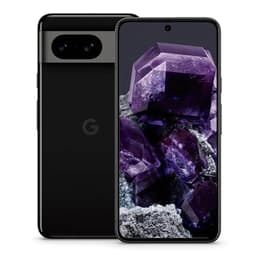
Google Pixel 8
Google Pixel 8
Starting at

Refurbished price:A$465.00

Versus A$1,245.00 new

See options
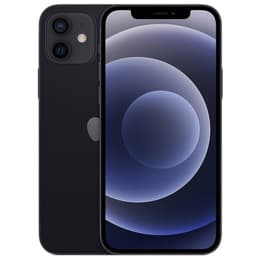
iPhone 12
iPhone 12
Starting at

Refurbished price:A$305.00

Versus A$1,129.00 new

See options

Ratings

The Google Pixel 8, released in October 2023, and the iPhone 12, launched in October 2020, represent different generations of flagship smartphones. While both offer a premium smartphone experience, the Pixel 8 introduces more recent advancements in processing power, camera capabilities, and display technology. Both devices operate on their respective proprietary operating systems, Android for the Pixel and iOS for the iPhone, each offering distinct user interfaces and ecosystem integrations.

Scores

Durability

The Google Pixel 8, released in October 2023, benefits from a more recent launch, offering a longer expected period of software updates compared to the iPhone 12, which was released in October 2020. This difference in release timelines means the Pixel 8 is projected to receive major operating system updates for several more years, extending its practical lifespan for users who prioritize the latest software features and security patches.

  • Software Longevity: The Pixel 8 is expected to receive major Android updates and security patches for up to seven years from its release, significantly extending its software support. The iPhone 12 typically receives iOS updates for five to six years from its launch, meaning its update cycle is nearing its end.
  • Physical Protection: Both devices feature robust build materials and an IP68 rating for dust and water resistance, indicating they can withstand immersion in water up to 1.5 meters for 30 minutes. The Pixel 8 utilizes Corning Gorilla Glass Victus on the front and back, while the iPhone 12 features Apple's Ceramic Shield on the front and a glass back, designed for enhanced drop performance.
  • Repairability: Both models are designed with a degree of repairability in mind, though specific scores can vary. Users considering a quality-assured refurbished option for either device can benefit from thorough testing and component replacement, ensuring continued functionality.

Release year

2023

2020

Compatible with latest Update

Yes

Yes

Operating system

Android

iOS

Foldable

No

No

Performance

The performance capabilities of the Google Pixel 8 and iPhone 12 reflect their respective release years, with the Pixel 8 offering more recent hardware advancements. These differences translate into varying levels of responsiveness and efficiency for demanding applications and multitasking.

  • Everyday Responsiveness: The Pixel 8 handles demanding applications, complex games, and intensive multitasking with notable smoothness and efficiency, thanks to its more current-generation processor. The iPhone 12 also provides a fluid user experience for daily tasks and most applications, though it may show its age with the most graphically intensive games or heavy multitasking.
  • Multitasking Efficiency: The Pixel 8's 8GB of internal memory allows for more applications to remain open in the background without needing to reload, contributing to a seamless multitasking experience. The iPhone 12, with 4GB of internal memory, may occasionally reload background applications more frequently when switching between many apps.
  • Storage Options: Both devices offer various storage configurations to suit different user needs. The Pixel 8 is available with 128GB or 256GB of internal storage, while the iPhone 12 offers 64GB, 128GB, and 256GB options.

Memory (GB)

8 GB

4 GB

Screen quality

The display technologies in the Google Pixel 8 and iPhone 12 both deliver vibrant visuals, but the Pixel 8 incorporates more recent advancements that enhance the viewing experience, particularly in terms of brightness and smoothness.

  • Display Technology: Both phones feature OLED displays, which provide deep blacks and excellent contrast. The Pixel 8's Actua display offers higher peak brightness of up to 2000 nits, making it more comfortable to view content outdoors or in brightly lit environments. The iPhone 12 has a peak brightness of 1200 nits.
  • Smoothness and Clarity: The Pixel 8 boasts a 120Hz refresh rate, resulting in noticeably smoother scrolling and more fluid animations compared to the iPhone 12's standard 60Hz refresh rate. Both devices offer sharp resolutions, ensuring text and images appear clear and detailed.
  • Screen Size: The Pixel 8 features a 6.2-inch display, while the iPhone 12 has a 6.1-inch display. This slight difference in size provides a marginally larger viewing area on the Pixel 8, though both offer an immersive experience for media consumption and daily use.

Resolution

1080 x 2400

1170 x 2532

Screen type

OLED

Super Retina XDR OLED

Audiovisual

The camera systems and audio capabilities of the Google Pixel 8 and iPhone 12 reflect their different design philosophies and technological generations, with the Pixel 8 emphasizing computational photography and the iPhone 12 offering reliable performance.

  • Photography Capabilities: The Pixel 8 features a 50MP main camera and a 12MP ultrawide lens, excelling in detail capture and low-light performance, often enhanced by its advanced computational photography features like Magic Eraser and Photo Unblur. The iPhone 12 also provides a capable dual-camera system with a 12MP main and 12MP ultrawide lens, delivering consistent and natural-looking photos in various conditions, with strong performance in its Night mode.
  • Video Recording: Both devices are capable of recording high-quality video up to 4K resolution at 60 frames per second, offering smooth and detailed footage. The Pixel 8 includes additional video features and stabilization enhancements due to its newer hardware and software, such as Dual Exposure technology for improved video in challenging lighting.
  • Audio Experience: Both smartphones provide stereo speakers for an immersive audio experience when consuming media. Microphone quality on both devices is suitable for clear calls and voice recordings, capturing sound effectively in most environments.

Main camera

50 megapixels

12 megapixels

Front camera

10.5 megapixels

12 megapixels

Miscellaneous

Beyond core features, the Google Pixel 8 and iPhone 12 present differences in connectivity, physical ports, and biometric security, which can influence daily usability and integration with other devices.

  • Connectivity Standards: The Pixel 8 supports Wi-Fi 7 and Bluetooth 5.3, offering more advanced and potentially faster wireless connections compared to the iPhone 12's Wi-Fi 6 and Bluetooth 5.0. Both devices support 5G cellular connectivity for high-speed mobile data.
  • Charging Port: The Pixel 8 utilizes a USB-C 3.2 port, a widely adopted standard for charging and data transfer across many modern electronic devices. The iPhone 12 features Apple's proprietary Lightning port, which requires specific cables and accessories.
  • Biometric Security: The Pixel 8 offers both an in-display fingerprint sensor and Face Unlock for secure authentication. The iPhone 12 relies solely on Face ID, its facial recognition system, for unlocking and secure payments.
  • Physical Design: The Pixel 8 measures 150.5 x 70.8 x 8.9 mm and weighs 187g, while the iPhone 12 measures 146.7 x 71.5 x 7.4 mm and weighs 164g. The Pixel 8 features a more rounded design with a matte aluminum frame and glossy glass back, while the iPhone 12 has flat edges and an aluminum frame with a glass back.

Weight

187 oz

164 oz

Screen size (in)

6.2

6.1

Network

5G

5G

SIM card

Physical SIM + eSIM

Physical SIM + eSIM

Carrier compatibility

Unlocked

Unlocked

Connector

USB-C

Lightning

User feedback often highlights the Google Pixel 8's advanced camera features and extended software support as significant advantages. Many users praise its ability to produce detailed and vibrant photos, especially with its computational photography enhancements. Some common criticisms, though less frequent, occasionally point to battery life being good but not exceptional for heavy users. The iPhone 12 is frequently lauded for its consistent performance, robust build quality, and the intuitive nature of its iOS ecosystem. Users appreciate its reliable camera and the long-term support Apple provides for its devices, though its update cycle is now shorter than the Pixel 8's. Some users have noted that its 60Hz display feels less fluid compared to newer phones with higher refresh rates.

Users prioritizing cutting-edge camera technology, a longer software support window, and the latest Android features will find the Google Pixel 8 well-suited to their needs. Its higher refresh rate display and more modern connectivity standards also appeal to those seeking a more current smartphone experience. Conversely, users who value the established iOS ecosystem, consistent performance for everyday tasks, and a familiar user interface may lean toward the iPhone 12. Both devices offer a solid smartphone experience, and choosing a quality-assured refurbished option for either can be an eco-friendly alternative to purchasing new. The decision ultimately depends on individual preferences for operating system, camera priorities, and desired longevity of software updates.
See all articles

Our recent comparisons