
Google Pixel 8 vs Google Pixel 9 Pro Fold

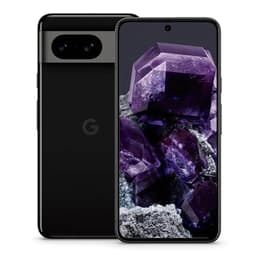
Google Pixel 8
Google Pixel 8
Starting at

Refurbished price:A$465.00

Versus A$1,245.00 new

See options
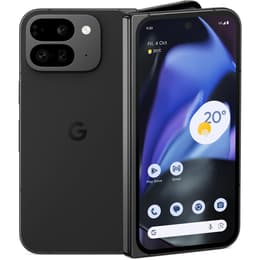
Google Pixel 9 Pro Fold
See options

Ratings

The Google Pixel 8, released in October 2023, and the Google Pixel 9 Pro Fold, launched in September 2024, represent distinct approaches within Google's smartphone lineup. While the Pixel 8 offers a traditional smartphone experience, the Pixel 9 Pro Fold introduces a foldable design, providing a larger, adaptable display. Both devices operate on the Android platform, but their form factors and hardware configurations cater to different user preferences and usage scenarios.

Scores

Durability

The longevity of a smartphone is influenced by its release timeline, software support, and physical resilience. Both the Pixel 8 and Pixel 9 Pro Fold are designed with extended software support in mind, though their physical designs present different considerations for long-term use.

  • Software Support: The Pixel 8, released in October 2023, and the Pixel 9 Pro Fold, released in September 2024, both benefit from Google's commitment to seven years of operating system and security updates, ensuring prolonged software relevance. The Pixel 9 Pro Fold, being newer, will receive support for an additional year, extending its software lifespan until 2031.
  • Physical Durability: The Pixel 8 features Gorilla Glass Victus on its front and back, along with an aluminum frame, offering a robust build with IP68 dust and water resistance. The Pixel 9 Pro Fold, with its foldable design, utilizes Gorilla Glass Victus 2 on its outer display and back, and boasts an IPX8 water resistance rating, meaning it can withstand submersion but is not rated for dust ingress. The folding mechanism introduces a moving part that requires careful handling over time.
  • Repairability: While specific repairability scores can vary, the traditional design of the Pixel 8 generally presents fewer complexities for component replacement compared to the intricate engineering of a foldable device like the Pixel 9 Pro Fold. Users seeking a quality-assured refurbished option for either device can find models that have undergone thorough inspections and repairs.

Release year

2023

2024

Compatible with latest Update

Yes

Yes

Operating system

Android

Android

Foldable

No

Yes

Performance

Performance in modern smartphones is not solely about raw processing power but also about how efficiently the device handles everyday tasks, demanding applications, and multitasking. Both Pixel devices leverage Google's custom-designed processors, optimized for AI and machine learning tasks.

  • Processing Power: The Pixel 8 is equipped with the Google Tensor G3, providing capable performance for daily applications, gaming, and AI-driven features. The Pixel 9 Pro Fold, featuring the newer Google Tensor G4, offers enhanced efficiency and performance, particularly beneficial for more intensive tasks and advanced on-device AI functionalities.
  • Multitasking and Storage: The Pixel 8 comes with 8GB of RAM, which is sufficient for smooth multitasking and app management. The Pixel 9 Pro Fold steps up with 16GB of RAM, providing greater headroom for running numerous applications simultaneously and handling more complex operations without slowdowns. Both devices offer storage options starting at 128GB, with the Pixel 9 Pro Fold also available in a 512GB configuration.
  • Battery Behavior: The Pixel 8 houses a 4575 mAh battery, generally providing a full day of use for many users, though heavy usage, especially with 5G, may require more frequent charging. The Pixel 9 Pro Fold has a 4650 mAh battery, and its larger, more power-hungry displays mean its real-world battery performance will depend heavily on usage patterns, particularly how often the main foldable screen is utilized.

Memory (GB)

8 GB

16 GB

Screen quality

The display is a primary interface for smartphone interaction, and both the Pixel 8 and Pixel 9 Pro Fold offer high-quality viewing experiences, albeit through different form factors and technologies.

  • Display Technology and Size: The Pixel 8 features a 6.2-inch FHD+ OLED Actua Display, known for its vibrant colors and deep blacks. The Pixel 9 Pro Fold offers a dual-screen setup: a 6.3-inch OLED cover display and an expansive 8.0-inch foldable OLED main display, providing a significantly larger canvas for content consumption and productivity.
  • Resolution and Clarity: The Pixel 8's display has a resolution of 2400 x 1080 pixels, delivering sharp visuals for its size. The Pixel 9 Pro Fold's main display boasts a higher resolution of 2076 x 2152 pixels, offering exceptional clarity across its larger surface, while its cover display has a resolution of 1080 x 2424 pixels.
  • Brightness and Refresh Rate: Both devices offer high brightness levels, with the Pixel 8 reaching up to 2000 nits peak brightness and the Pixel 9 Pro Fold's displays achieving up to 2700 nits peak brightness, ensuring good visibility in various lighting conditions. The Pixel 8 features a variable refresh rate of 60-120Hz, providing smooth scrolling and responsiveness. The Pixel 9 Pro Fold's main display offers an adaptive refresh rate from 1-120Hz, optimizing power consumption while maintaining fluidity, and its cover display also supports 60-120Hz.

Resolution

1080 x 2400

2076 x 2152

Screen type

OLED

Foldable LTPO OLED

Audiovisual

Google Pixel phones are recognized for their computational photography capabilities, and both the Pixel 8 and Pixel 9 Pro Fold continue this tradition, offering advanced camera systems tailored to their respective designs.

  • Rear Camera Systems: The Pixel 8 features a dual-camera setup with a 50 MP main sensor and a 12 MP ultrawide lens, capable of capturing detailed photos with impressive dynamic range, especially in low-light conditions. The Pixel 9 Pro Fold elevates this with a triple-lens rear camera system, including a 48 MP main sensor, a 10.5 MP ultrawide lens, and a 10.8 MP telephoto lens with 5x optical zoom, providing greater versatility for different photographic scenarios.
  • Photography Features: Both devices benefit from Google's AI-powered camera features, such as Magic Editor and enhanced low-light processing. The Pixel 9 Pro Fold's additional telephoto lens allows for clearer zoomed-in shots without significant loss of detail, a capability not present on the standard Pixel 8.
  • Video Recording and Front Cameras: Both the Pixel 8 and Pixel 9 Pro Fold support video recording up to 4K at 60 frames per second, offering strong stabilization and clear audio. The Pixel 8 has a 10.5 MP front camera. The Pixel 9 Pro Fold features two 10 MP front cameras, one on the cover display and another on the inner foldable screen, catering to different selfie and video call needs.

Main camera

50 megapixels

48 megapixels

Front camera

10.5 megapixels

10 megapixels

Miscellaneous

Beyond core specifications, several practical elements contribute to the overall user experience, including connectivity, physical design, and security features.

  • Connectivity and Ports: Both the Pixel 8 and Pixel 9 Pro Fold support 5G connectivity and Wi-Fi 7, ensuring fast and reliable wireless communication. They both utilize a USB-C port for charging and data transfer. The Pixel 9 Pro Fold also incorporates a new Exynos Modem 5400, which is expected to improve cellular connectivity and enable satellite-based text services.
  • Design and Handling: The Pixel 8 is a compact device, weighing 187g, making it comfortable for one-handed use. The Pixel 9 Pro Fold, as a foldable, has a more substantial build, weighing 257g. Its folded dimensions are 155.2 x 77.1 x 10.5mm, and when unfolded, it measures 155.2 x 150.2 x 5.1mm, offering a larger screen experience in a device that is thicker when closed but thinner when open compared to a traditional smartphone.
  • Security and Biometrics: Both devices offer secure unlocking methods, including an under-display optical fingerprint sensor and Face Unlock. The Pixel 9 Pro Fold's design allows for a larger screen area, which can enhance the experience of using certain apps or viewing content, while the Pixel 8's traditional form factor offers a more straightforward and pocketable design.

Weight

187 oz

257 oz

Screen size (in)

6.2

8.0

Network

5G

5G

SIM card

Physical SIM + eSIM

Physical SIM + eSIM

Carrier compatibility

Unlocked

Unlocked

The Google Pixel 8 and Google Pixel 9 Pro Fold cater to distinct user needs, each excelling in different areas. The Pixel 8 is frequently praised for its impressive camera system, delivering high-quality photos, especially in challenging lighting conditions. Users also appreciate its clean Android experience with timely updates and its comfortable, compact design. However, some users have noted that its battery life, while improved, can still be a concern for heavy usage, and its charging speed is not the fastest.

The Pixel 9 Pro Fold, on the other hand, is lauded for its innovative foldable design, offering an expansive main display that transforms the user experience for media consumption, multitasking, and productivity. Its advanced camera system with a telephoto lens and the newer processor also receive positive attention. Potential considerations for foldable devices often revolve around the long-term durability of the folding screen and the increased weight and thickness when folded.

Users prioritizing a traditional, compact smartphone with a highly capable camera and long-term software support will find the Pixel 8 well-suited to their needs. Its straightforward design and robust build make it a reliable daily driver. Conversely, users who desire a versatile device with a significantly larger screen for immersive content, enhanced multitasking, and advanced photographic capabilities, and who are comfortable with a foldable form factor, may lean toward the Pixel 9 Pro Fold. Both devices offer a compelling Android experience, and choosing between them depends on whether a traditional compact design or an adaptable, large-screen foldable is a higher priority. For those considering either model, exploring a quality-assured refurbished option can provide an eco-friendly alternative.


See all articles

Our recent comparisons