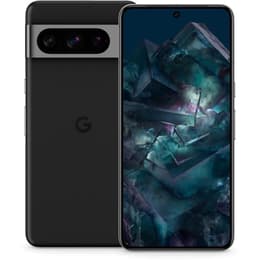
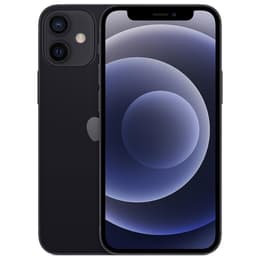

Google Pixel 8 Pro vs iPhone 12 mini

Google Pixel 8 Pro
Google Pixel 8 Pro
Starting at

Refurbished price:A$565.00

Versus A$1,859.00 new

See options
iPhone 12 mini
iPhone 12 mini
Starting at

Refurbished price:A$277.00

Versus A$929.00 new

See options

Ratings

The Google Pixel 8 Pro, released in October 2023, and the iPhone 12 Mini, launched in November 2020, represent distinct approaches to smartphone design and functionality. While the Pixel 8 Pro offers a large display and advanced camera system running on Android, the iPhone 12 Mini provides a compact iOS experience with a focus on portability. These devices cater to different user preferences, primarily differing in their physical size, software longevity, and photographic capabilities.

Scores

Durability

The expected practical lifespan of a smartphone is influenced by its release date, the duration of software support, and its overall build quality.

  • Release Timeline: The Google Pixel 8 Pro is a much newer device, having been released in October 2023. The iPhone 12 Mini, on the other hand, was released three years earlier in November 2020. This age difference significantly impacts their remaining support cycles.
  • OS Support Duration: Google has committed to an extensive seven years of operating system and security updates for the Pixel 8 Pro, ensuring long-term software relevance. The iPhone 12 Mini, while still receiving updates, typically follows Apple's pattern of 5-6 years of major iOS updates from its release date. This means the Pixel 8 Pro offers a considerably longer period of guaranteed software support.
  • Build and Repairability: Both devices feature durable designs. The iPhone 12 Mini introduced Ceramic Shield on its front display for enhanced drop performance. The Pixel 8 Pro uses Gorilla Glass Victus 2 for screen protection. While specific repairability scores can vary, both manufacturers design their devices with a certain level of robustness.

Release year

2023

2020

Compatible with latest Update

Yes

Yes

Foldable

No

No

Performance

Performance in daily use, from app handling to multitasking, is a key differentiator between these two smartphones, influenced by their internal components and software optimization.

  • Processor Capabilities: The Google Pixel 8 Pro features a current-generation processor designed for efficient handling of demanding applications and advanced AI tasks, resulting in smooth performance for most users. The iPhone 12 Mini is powered by an older, though still capable, processor that provides a responsive experience for everyday tasks and many games. However, the Pixel 8 Pro's newer architecture offers more headroom for future software and more intensive computational demands.
  • Multitasking and Responsiveness: With 12GB of RAM, the Pixel 8 Pro is well-equipped for extensive multitasking, allowing users to switch between numerous applications without noticeable slowdowns. The iPhone 12 Mini comes with 4GB of RAM, which is sufficient for typical smartphone usage and multitasking within the iOS ecosystem, though it may manage fewer active background applications compared to the Pixel 8 Pro.
  • Battery Behavior: The Pixel 8 Pro houses a larger 5050 mAh battery, generally providing all-day power for most users, with some reporting 5-7 hours of screen-on time. The iPhone 12 Mini has a smaller 2227 mAh battery, which means heavy users may find themselves needing to recharge more frequently throughout the day. Both support fast charging, with the Pixel 8 Pro offering 30W wired and 23W wireless charging, while the iPhone 12 Mini supports 20W wired and 15W wireless charging.

Memory (GB)

12 GB

4 GB

Screen quality

The visual experience on a smartphone is largely defined by its display, with differences in technology, size, and refresh rate impacting user interaction.

  • Display Technology and Clarity: Both devices feature OLED displays, offering deep blacks and vibrant colors. The Pixel 8 Pro boasts a larger 6.7-inch LTPO OLED display with a resolution of 1344 x 2992 pixels (489 ppi). The iPhone 12 Mini has a more compact 5.4-inch Super Retina XDR OLED display with a resolution of 2340 x 1080 pixels (476 ppi). The Pixel 8 Pro's larger size and slightly higher resolution contribute to a more expansive and detailed viewing area.
  • Brightness and Refresh Rate: The Pixel 8 Pro's display can reach a peak brightness of up to 2400 nits, making it highly visible even in bright outdoor conditions. It also features an adaptive refresh rate that can dynamically adjust from 1Hz to 120Hz, providing smoother scrolling and more fluid animations while conserving power. The iPhone 12 Mini offers a peak HDR brightness of 1200 nits and a standard 60Hz refresh rate, which is consistent but less fluid than the Pixel 8 Pro's adaptive display.
  • Screen Size and Viewing Experience: The Pixel 8 Pro's 6.7-inch screen provides an immersive experience for media consumption, gaming, and productivity. The iPhone 12 Mini's 5.4-inch screen is designed for one-handed use and portability, appealing to users who prefer a smaller form factor.

Resolution

1344 x 2992

1080 x 2340

Screen type

LTPO OLED

Super Retina XDR OLED

Audiovisual

The camera systems on these devices offer different capabilities and features, catering to various photography and videography needs.

  • Rear Camera System: The Google Pixel 8 Pro features a versatile triple-camera setup, including a 50MP wide lens, a 48MP ultrawide lens with autofocus, and a 48MP telephoto lens capable of 5x optical zoom. This allows for greater flexibility in capturing different scenes and subjects, from expansive landscapes to distant details. The iPhone 12 Mini has a dual-camera system with a 12MP wide lens and a 12MP ultrawide lens. While capable of producing quality images, it lacks a dedicated telephoto lens, relying on digital zoom for closer shots.
  • Photography Performance and Features: The Pixel 8 Pro excels in computational photography, offering advanced features like Night Sight for low-light conditions, Magic Editor for photo manipulation, and Best Take for group photos. Its main sensor and ultrawide camera have larger megapixel counts and wider apertures, contributing to better light gathering and detail. The iPhone 12 Mini also features Night mode, Deep Fusion, and Smart HDR 3, providing good performance in various lighting conditions. Both can record 4K video, with the Pixel 8 Pro offering more advanced video features and the iPhone 12 Mini supporting Dolby Vision HDR video recording up to 4K at 30 fps.
  • Front Camera and Audio: The Pixel 8 Pro includes a 10.5MP front camera with autofocus and a wider field of view, suitable for high-quality selfies and video calls. The iPhone 12 Mini has a 12MP front camera, also capable of 4K video recording. Both devices offer stereo speakers for media consumption, with the Pixel 8 Pro generally providing a richer audio experience.

Main camera

50 megapixels

12 megapixels

Front camera

10.5 megapixels

12 megapixels

Miscellaneous

Beyond core performance and camera, several practical elements contribute to the overall user experience, including connectivity, physical design, and security features.

  • Connectivity Options: Both smartphones support 5G connectivity for faster mobile data speeds. The Pixel 8 Pro supports Wi-Fi 6E and Bluetooth 5.3, offering newer standards for wireless communication. The iPhone 12 Mini supports Wi-Fi 6 and Bluetooth 5.0.
  • Port Types and Biometrics: The Pixel 8 Pro uses a USB-C port for charging and data transfer, a common standard across many modern devices. The iPhone 12 Mini utilizes Apple's proprietary Lightning port. For security, the Pixel 8 Pro offers both an under-display fingerprint sensor and an enhanced face unlock system. The iPhone 12 Mini relies on Face ID for secure authentication.
  • Weight, Dimensions, and Materials: The Pixel 8 Pro is a larger and heavier device, measuring 162.6 x 76.5 x 8.8 mm and weighing 213 grams, featuring a glass back with a satin finish and a metal frame. The iPhone 12 Mini is significantly more compact and lighter, at 131.5 x 64.2 x 7.4 mm and 135 grams, with a Ceramic Shield front, glass back, and an aluminum frame. This size difference is a primary factor for users prioritizing either screen real estate or portability.

Weight

213 oz

133 oz

Screen size (in)

6.7

5.4

Network

5G

5G

SIM card

Physical SIM + eSIM

Physical SIM + eSIM

Carrier compatibility

Unlocked

Unlocked

User feedback for the Google Pixel 8 Pro often highlights its exceptional camera capabilities, particularly its advanced computational photography features and long-term software support. Many users appreciate the clean Android experience and the device's large, vibrant display. Criticisms sometimes point to its processor performance not always matching the raw power of some competitors, especially under sustained heavy loads, and its battery life, while improved, may not always outperform all flagship alternatives.

The iPhone 12 Mini is frequently praised for its highly compact form factor, making it ideal for one-handed use and easy pocketability. Users also commend its bright OLED display and the consistent performance of its camera system for everyday photography. Common concerns revolve around its battery life, which can be a limitation for heavy users, and its smaller screen size may not be suitable for extensive media consumption or productivity tasks.

Users prioritizing a large, feature-rich display, an advanced and versatile camera system with extensive AI capabilities, and a long software support window will find the Google Pixel 8 Pro well-suited to their needs. It is an excellent choice for those who value cutting-edge Android features and a powerful photographic tool. Conversely, users who prioritize extreme portability, comfortable one-handed use, and a streamlined iOS experience will likely lean toward the iPhone 12 Mini. It remains a strong option for those who prefer a smaller device for communication and casual use. Both devices, whether new or as quality-assured refurbished options, offer distinct advantages depending on individual user priorities.

See all articles

Our recent comparisons