
Google Pixel 7a vs iPhone SE (2020)

Google Pixel 7a
Google Pixel 7a
Starting at

Refurbished price:A$337.00

Versus A$749.00 new

See options
iPhone SE (2020)
iPhone SE (2020)
Starting at

Refurbished price:A$108.00

Versus A$529.00 new

See options

Ratings

The Google Pixel 7a, released in May 2023, and the iPhone SE 2020, launched in April 2020, represent distinct approaches to smartphone design and functionality. While both offer capable performance in compact forms, they differ significantly in their operating systems, display technology, and camera capabilities. The Pixel 7a runs on Android, offering a modern, full-screen experience, whereas the iPhone SE 2020 operates on iOS, retaining a classic design with a physical home button.

Scores

Durability

When considering the longevity of these devices, several factors come into play, including their release timelines and software support.

  • Software Updates: The Google Pixel 7a is expected to receive Android OS updates until at least May 2026 and security updates until at least May 2028, offering a solid period of software support from its 2023 release. The iPhone SE 2020, released in 2020, typically receives iOS updates for approximately 5 to 7 years from its launch, with security patches continuing for a couple of additional years, meaning it could receive major OS updates until around 2025-2027 and security updates until 2027-2029.
  • Build Quality: Both devices feature an IP67 rating for dust and water resistance, indicating they can withstand immersion in up to 1 meter of water for 30 minutes. The Pixel 7a incorporates Corning Gorilla Glass 3 for screen protection.
  • Expected Lifespan: Users can generally expect several years of practical use from both smartphones, with the Pixel 7a potentially offering a slightly longer period of active major OS updates due to its more recent release.

Release year

2022

2020

Compatible with latest Update

Yes

Yes

Operating system

Android

iOS

Foldable

No

No

Performance

The performance of a smartphone is crucial for daily tasks, app usage, and multitasking. These two devices offer different underlying architectures that impact their responsiveness.

  • Processing Power: The Google Pixel 7a is equipped with Google's Tensor G2 processor, which is designed for efficient handling of demanding applications and smooth multitasking. The iPhone SE 2020 features the Apple A13 Bionic chip, known for its robust performance in handling apps and gaming.
  • Multitasking and Storage: The Pixel 7a comes with 8 GB of RAM, which contributes to its ability to manage multiple applications simultaneously without significant slowdowns. The iPhone SE 2020 typically includes 3 GB of RAM, which is sufficient for general use and app switching within the iOS ecosystem. Both devices offer 128 GB storage options, with the iPhone SE 2020 also available in 64 GB and 256 GB configurations.
  • Battery Behavior: The Pixel 7a houses a 4385 mAh battery, which can provide a full day of use for many users, though heavy usage might require more frequent charging. The iPhone SE 2020 has an 1821 mAh battery, and its battery life is often noted as requiring daily charging, especially for moderate to heavy users.

Memory (GB)

8 GB

3 GB

Screen quality

The visual experience is a key differentiator, with both phones offering distinct display technologies and sizes.

  • Display Technology and Size: The Google Pixel 7a features a 6.1-inch OLED display, which provides deep blacks and vibrant colors, enhancing the viewing experience for media and general use. In contrast, the iPhone SE 2020 has a smaller 4.7-inch IPS LCD display, offering good color accuracy and brightness.
  • Resolution and Clarity: The Pixel 7a's screen has a resolution of 2400 x 1080 pixels, resulting in a pixel density of approximately 431 pixels per inch (ppi), contributing to sharp text and detailed images. The iPhone SE 2020 offers a resolution of 1334 x 750 pixels, with a pixel density of about 326 ppi, which provides clear visuals for its size.
  • Refresh Rate and Brightness: The Pixel 7a supports a 90 Hz refresh rate, leading to smoother scrolling and more fluid animations. The iPhone SE 2020 has a standard 60 Hz refresh rate. For brightness, the iPhone SE 2020 can reach up to 625 nits, providing good visibility in various lighting conditions.

Resolution

1080 x 2400

750 x 1334

Screen type

OLED

Retina IPS LCD

Audiovisual

Camera capabilities are a significant consideration for many users, and these devices offer different strengths in photography and videography.

  • Rear Camera Systems: The Google Pixel 7a features a dual-camera setup on the rear, including a 64 MP wide-angle lens with optical image stabilization (OIS) and a 13 MP ultrawide lens. The iPhone SE 2020 has a single 12 MP wide-angle camera with OIS.
  • Photography Features: The Pixel 7a excels in computational photography with features like Night Sight for improved low-light performance and Magic Eraser for object removal. The iPhone SE 2020 offers Portrait mode and Smart HDR, but it lacks a dedicated Night Mode. In daylight, both can produce good photos, but the Pixel 7a's ultrawide lens adds versatility.
  • Video Recording: Both phones are capable of recording 4K video at up to 60 frames per second with their main rear cameras. The Pixel 7a's front camera can also record 4K video at 30fps, while the iPhone SE 2020's front camera records at 1080p 30fps. The Pixel 7a's low-light video performance has been noted to struggle, while the iPhone SE 2020's low-light video improves at 1080p 30fps.

Main camera

64 megapixels

12 megapixels

Front camera

13 megapixels

7 megapixels

Miscellaneous

Beyond core features, practical elements like connectivity, ports, and physical design contribute to the overall user experience.

  • Connectivity and Ports: The Google Pixel 7a supports 5G connectivity, offering faster mobile data speeds, and uses a USB-C 3.2 port for charging and data transfer. The iPhone SE 2020 is limited to 4G LTE and features Apple's proprietary Lightning port. Both devices support modern Wi-Fi standards (Wi-Fi 6E for Pixel 7a, Wi-Fi 6 for iPhone SE 2020) and Bluetooth for wireless accessories.
  • Biometric Security: The Pixel 7a incorporates an in-display fingerprint sensor for secure unlocking. The iPhone SE 2020 utilizes Touch ID, a fingerprint sensor integrated into its physical home button.
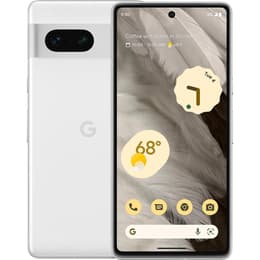
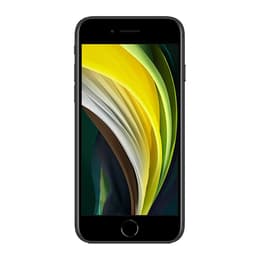
  • Design and Handling: The Pixel 7a measures 152 mm in height, 72.9 mm in width, and 9 mm in depth, weighing 193.5 grams. The iPhone SE 2020 is more compact and lighter, with dimensions of 138.4 x 67.3 x 7.3 mm and a weight of 148 grams. The Pixel 7a has a more contemporary full-screen design, while the iPhone SE 2020 retains the classic iPhone aesthetic with bezels and a home button.

Weight

212 oz

148 oz

Screen size (in)

6.1

4.7

Network

5G

4G

SIM card

Physical SIM + eSIM

Physical SIM + eSIM

Carrier compatibility

Unlocked

Unlocked

Connector

USB-C

Lightning

The Google Pixel 7a and iPhone SE 2020 cater to different user preferences, each with its own set of advantages. Users often praise the Pixel 7a for its advanced camera capabilities, particularly its computational photography features like Night Sight, and its vibrant OLED display with a smoother refresh rate. Some users, however, have noted initial concerns regarding battery life and potential overheating during heavy use, though software updates and recalibration can mitigate some of these issues.

The iPhone SE 2020 is frequently lauded for its compact size, the familiarity of its iOS operating system, and its robust processing power for its class. Common criticisms often revolve around its smaller, lower-refresh-rate LCD display, its single rear camera setup lacking features like Night Mode, and its battery life, which typically requires daily charging for many users.

Users prioritizing a modern, full-screen experience with advanced camera features and a higher refresh rate display may find the Google Pixel 7a better suited to their needs. Conversely, users who prefer a more compact device, the familiarity of a physical home button with Touch ID, and the iOS ecosystem may lean toward the iPhone SE 2020. Both devices offer a quality-assured refurbished option, providing an eco-friendly alternative for those seeking to extend the life cycle of electronic products.


See all articles

Our recent comparisons