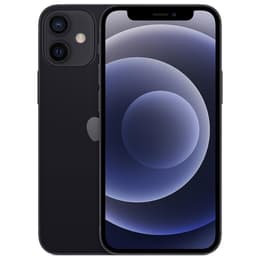

Google Pixel 7a vs iPhone 12 mini

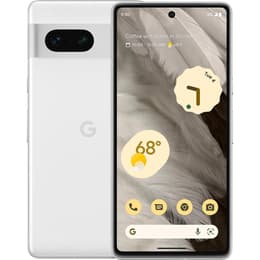
Google Pixel 7a
Google Pixel 7a
Starting at

Refurbished price:A$336.00

Versus A$604.50 new

See options
iPhone 12 mini
iPhone 12 mini
Starting at

Refurbished price:A$242.00

Versus A$929.00 new

See options

Ratings

The Google Pixel 7a, released in May 2023, and the iPhone 12 Mini, launched in November 2020, represent distinct approaches to smartphone design and user experience. While the Pixel 7a offers a more recent Android experience with advanced computational photography, the iPhone 12 Mini provides a compact iOS option. The primary differentiators lie in their operating systems, physical size, and camera philosophies.

Scores

Durability

When considering the long-term usability of these devices, their release timelines and software support policies are key factors.

  • Release Timeline: The Google Pixel 7a is a more recent device, released in May 2023, making it approximately two and a half years newer than the iPhone 12 Mini, which debuted in November 2020. This difference in age directly impacts their remaining software support.
  • Software Longevity: The Pixel 7a is guaranteed to receive OS updates until at least May 2026 and security updates until May 2028. The iPhone 12 Mini, running iOS, typically receives 5 to 7 years of major iOS updates, with expectations for support extending until around 2027, potentially receiving iOS 18 or 19. This suggests the iPhone 12 Mini may have comparable or slightly longer OS update support remaining, despite its earlier release.
  • Repairability: The Pixel 7a received an iFixit repairability score of 5 out of 10, with genuine replacement parts for components like the screen and battery available through iFixit. The iPhone 12 Mini scored 6 out of 10 on iFixit's repairability scale, praised for its modular design that simplifies common repairs such as display and battery replacement.

Release year

2022

2020

Compatible with latest Update

Yes

Yes

Operating system

Android

iOS

Foldable

No

No

Performance

Both devices offer capable performance for daily tasks, though their underlying hardware and software optimizations lead to different user experiences.

  • Processor Capabilities: The Pixel 7a is equipped with a current-generation processor designed by Google, which efficiently handles demanding applications and multitasking. The iPhone 12 Mini features a powerful processor that, at its release, offered significant performance for gaming and complex tasks. While the iPhone's processor remains capable, the Pixel's newer chip may offer more headroom for future software demands.
  • Battery Behavior: The Pixel 7a has a larger battery capacity at 4385 mAh. However, some users have reported concerns regarding its battery life, with some experiencing faster-than-expected drain and heating issues, particularly with heavy use or after certain software updates. The iPhone 12 Mini, with a smaller 2227 mAh battery, is frequently cited by users for its limited battery life, often requiring more frequent charging, especially for those with moderate to heavy usage patterns.
  • System Responsiveness: Both devices offer smooth and responsive user interfaces. The Pixel 7a benefits from its 90Hz display refresh rate, contributing to a fluid scrolling and interaction experience. The iPhone 12 Mini, with its optimized iOS, maintains a high level of responsiveness, though some users have reported occasional lagging or stuttering after certain iOS updates, particularly with an aging battery.

Memory (GB)

8 GB

4 GB

Screen quality

The visual experience on both smartphones is delivered through high-quality OLED displays, but they differ in size and refresh rate.

  • Display Technology and Clarity: Both the Pixel 7a and iPhone 12 Mini feature OLED displays, which provide deep blacks and vibrant colors. The Pixel 7a has a 6.1-inch display with a resolution of 1080 x 2400 pixels, resulting in a pixel density of approximately 431 ppi. The iPhone 12 Mini offers a 5.4-inch Super Retina XDR OLED display with a resolution of 1080 x 2340 pixels, yielding a higher pixel density of around 476 ppi due to its smaller size.
  • Brightness and Refresh Rate: The Pixel 7a's display supports HDR and offers a 90Hz refresh rate, contributing to smoother visuals during scrolling and gaming. The iPhone 12 Mini also supports HDR10 and can reach a peak brightness of 1200 nits, but it has a standard 60Hz refresh rate.
  • Screen Size and Viewing Experience: The Pixel 7a's larger 6.1-inch screen provides a more expansive viewing area for media consumption and productivity. The iPhone 12 Mini's 5.4-inch display is notably compact, making it ideal for one-handed use and pocketability, though some users find it less suitable for extended video watching or detailed content creation.

Resolution

1080 x 2400

1080 x 2340

Screen type

OLED

Super Retina XDR OLED

Audiovisual

Both smartphones are recognized for their camera capabilities, employing different hardware and software strategies to capture images and videos.

  • Rear Camera Systems: The Pixel 7a features a dual-camera system with a 64 MP main sensor with optical image stabilization (OIS) and a 13 MP ultrawide lens. The iPhone 12 Mini also has a dual-camera setup, consisting of two 12 MP lenses: a wide-angle with OIS and an ultrawide lens. The Pixel 7a's higher megapixel count on its main sensor allows for greater detail and more aggressive digital zoom capabilities.
  • Photography Performance: Google's Pixel phones are known for their computational photography, which enhances image quality, particularly in challenging lighting conditions. The Pixel 7a's camera is generally praised for its ability to produce detailed and color-accurate photos. The iPhone 12 Mini's camera system delivers consistent and reliable image quality, with strong performance in everyday photography and good color reproduction.
  • Video Recording and Front Camera: Both devices are capable of recording 4K video at 60 frames per second. For selfies, the Pixel 7a has a 13 MP front camera, while the iPhone 12 Mini features a 12 MP front camera.
  • Audio Experience: Both phones offer stereo speakers for media consumption. The iPhone 12 Mini's microphone quality is generally good for calls and recordings.

Main camera

64 megapixels

12 megapixels

Front camera

13 megapixels

12 megapixels

Miscellaneous

Beyond core features, several practical elements differentiate the user experience of these two devices.

  • Connectivity: Both smartphones support 5G connectivity, enabling faster mobile data speeds. The Pixel 7a includes Wi-Fi 6E and Bluetooth 5.3, offering more advanced wireless standards. The iPhone 12 Mini supports Wi-Fi 6 and Bluetooth 5.0.
  • Ports and Biometrics: The Pixel 7a uses a USB-C 3.2 port for charging and data transfer, and features an under-display fingerprint sensor for biometric authentication. The iPhone 12 Mini utilizes Apple's proprietary Lightning port and relies on Face ID for secure unlocking and authentication. Some Pixel 7a users have reported inconsistencies with the fingerprint sensor.
  • Physical Design and Durability: The Pixel 7a has an aluminum frame with a plastic back and Gorilla Glass 3 on the front, and is rated IP67 for dust and water resistance. The iPhone 12 Mini features an aluminum frame with a glass back and a Ceramic Shield front cover, which offers enhanced drop performance, and is rated IP68 for dust and water resistance. The iPhone 12 Mini is significantly smaller and lighter, weighing 135g compared to the Pixel 7a's 193.5g.

Weight

212 oz

135 oz

Screen size (in)

6.3

5.4

Network

5G

5G

SIM card

Physical SIM + eSIM

Physical SIM + eSIM

Carrier compatibility

Unlocked

Unlocked

User feedback for the Google Pixel 7a often highlights its strong camera performance and smooth user interface as praise points. However, common criticisms include concerns about battery life, potential heating during intensive use, and occasional inconsistencies with the fingerprint sensor.

The iPhone 12 Mini is frequently praised for its exceptionally compact size, making it comfortable for one-handed use and easy to carry. Users appreciate its ability to run the latest iOS versions smoothly and its capable camera for everyday photos and videos. The most common criticism for the iPhone 12 Mini revolves around its battery life, which many users find insufficient for a full day of heavy use. Some also note that the small screen can be less ideal for media consumption, and a few reports mention connectivity issues with Wi-Fi hotspot and Bluetooth.

Users prioritizing a compact form factor and the iOS ecosystem will find the iPhone 12 Mini well-suited to their needs, especially if they are light to moderate users or have convenient access to charging. Those who value a larger display, a more recent Android experience with advanced computational photography, and potentially longer security updates may lean towards the Google Pixel 7a. Both devices offer a quality-assured refurbished option, providing a sustainable choice for consumers.