
Galaxy S23 vs Motorola Moto G14

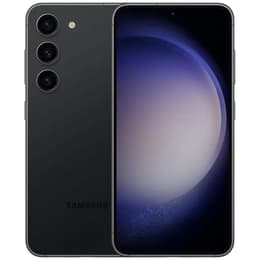
Galaxy S23
Galaxy S23
Starting at

Refurbished price:A$489.00

Versus A$1,349.00 new

See options
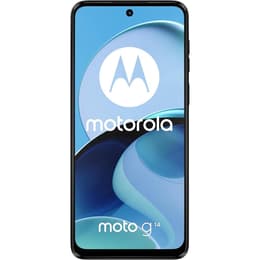
Motorola Moto G14
Motorola Moto G14
Starting at

Refurbished price:A$182.00

Versus A$271.00 new

See options

Ratings

The Samsung Galaxy S23 (2023) and the Motorola Moto G14 (2023) are both Android smartphones released in the same year, yet they cater to different user expectations. The Galaxy S23 is positioned as a compact flagship device, offering advanced performance and camera capabilities, while the Moto G14 focuses on delivering essential smartphone features with a strong emphasis on battery life and multimedia consumption. Both run on the Android operating system, but their software support timelines and overall user experiences diverge significantly.

Scores

Durability

When considering the practical lifespan of these devices, several factors come into play, including their release timelines, software support, and physical durability.

  • Release Timeline and OS Support: The Samsung Galaxy S23, released in February 2023, launched with Android 13 and is promised four years of operating system updates and five years of security updates, extending its support well into 2028. In contrast, the Motorola Moto G14, released in August 2023, also launched with Android 13 but is guaranteed only one major OS update (to Android 14) and three years of bi-monthly security updates. This means the Galaxy S23 offers a significantly longer period of software relevance and security.
  • Physical Durability: The Galaxy S23 features a more robust build with Gorilla Glass Victus 2 on both the front and back, coupled with an aluminum frame, and boasts an IP68 rating for dust and water resistance. The Moto G14, while offering a water-repellent design, does not have the same level of ingress protection and uses Panda Glass for screen protection, with a PMMA or vegan leather back and plastic frame. Users prioritizing maximum protection against environmental elements may find the Galaxy S23 more reassuring.
  • Expected Practical Lifespan: Given its extended software support and higher-grade materials, the Galaxy S23 is designed for a longer practical lifespan, particularly for users who keep their devices for several years. The Moto G14, with its more limited update policy and less robust physical construction, is better suited for users who may upgrade more frequently or have less demanding longevity requirements.

Release year

2023

2023

Compatible with latest Update

Yes

Yes

Operating system

Android

Android

Foldable

No

No

Performance

The performance of a smartphone is largely determined by its internal components, influencing how smoothly applications run and how efficiently it handles daily tasks.

  • Processing Power: The Samsung Galaxy S23 is equipped with a custom-tuned processor designed for high-end performance, featuring higher clock speeds than standard versions of its generation. This allows it to handle demanding applications, intensive multitasking, and graphic-heavy games with ease, providing a fluid and responsive user experience. The Motorola Moto G14 utilizes a mid-range processor, which is sufficient for everyday tasks like browsing, social media, and light gaming. However, it may exhibit slower loading times and less seamless multitasking compared to the Galaxy S23.
  • Memory and Storage: The Galaxy S23 comes with 8GB of RAM, ensuring smooth transitions between multiple open applications. Its storage options include faster UFS 4.0 technology for configurations above 128GB, contributing to quicker app launches and data transfers. The Moto G14 typically offers 4GB of RAM and 128GB of internal storage, which can be expanded via a microSD card. While expandable storage is a benefit, the lower RAM and UFS 2.2 storage (for its 128GB variant) mean it will not match the Galaxy S23's speed in handling large files or numerous background processes.
  • Battery Behavior: The Galaxy S23 features a 3900 mAh battery, which, combined with its efficient processor and adaptive display, generally provides a full day of use for moderate users. The Moto G14, with its larger 5000 mAh battery and less power-intensive components, is noted for its strong battery life, often lasting more than a full day even with heavy usage.

Memory (GB)

8 GB

4 GB

Screen quality

The display is a primary interface for smartphone interaction, and the quality of the screen significantly impacts the visual experience.

  • Display Technology and Clarity: The Samsung Galaxy S23 features a 6.1-inch Dynamic AMOLED 2X display, known for its deep blacks, vibrant colors, and excellent contrast. Its FHD+ resolution (2340 x 1080 pixels) results in a sharp image with a high pixel density. The Motorola Moto G14 has a larger 6.5-inch IPS LCD screen with an FHD+ resolution (2400 x 1080 pixels). While offering good sharpness, IPS LCD technology typically provides less vibrant colors and lower contrast compared to AMOLED panels.
  • Brightness and Refresh Rate: The Galaxy S23's display can reach a peak brightness of 1750 nits, ensuring excellent visibility even in bright outdoor conditions. It also features an adaptive refresh rate that scales from 1Hz to 120Hz, providing smooth scrolling and animations while conserving battery life. The Moto G14 offers respectable brightness for its class, but it does not reach the same peak levels as the Galaxy S23. Its display has a standard 60Hz refresh rate, which is adequate for general use but will not offer the same fluidity as a higher refresh rate screen.
  • Viewing Experience: Users prioritizing a compact device with a premium, highly responsive, and visually striking display for media consumption and detailed work will find the Galaxy S23 more appealing. The Moto G14 provides a larger screen area, which can be beneficial for general browsing and video viewing, though with a less dynamic visual quality.

Resolution

1080 x 2340

1080 x 2400

Screen type

Dynamic AMOLED 2X

IPS LCD

Audiovisual

For many users, the camera system is a crucial component, influencing how they capture and share moments.

  • Rear Camera System: The Samsung Galaxy S23 features a versatile triple-camera setup on the rear, including a 50MP main sensor with optical image stabilization (OIS), a 12MP ultrawide lens, and a 10MP telephoto lens with 3x optical zoom. This configuration allows for a wide range of photographic possibilities, from expansive landscapes to detailed zoomed-in shots, performing well in various lighting conditions. The Motorola Moto G14 comes with a dual-camera system, comprising a 50MP main sensor and a 2MP macro lens. Its main camera performs decently in optimal lighting, but its capabilities diminish in low-light environments, and the macro lens offers limited utility.
  • Front Camera and Video: The Galaxy S23 includes a 12MP front-facing camera that captures detailed selfies and supports high-quality video recording. Its video recording capabilities are robust, offering stable and clear footage. The Moto G14 has an 8MP front camera, which is suitable for casual selfies and video calls in good lighting. Both devices are capable of recording 1080p video at 30 frames per second from their front and rear cameras, but the Galaxy S23 offers more advanced video features and higher resolution options for its main cameras.
  • Overall Photography Experience: Users who prioritize advanced photography features, including optical zoom, superior low-light performance, and consistent image quality across different lenses, will find the Galaxy S23 to be a more capable device. The Moto G14 offers a serviceable camera for everyday snapshots, particularly in well-lit conditions.

Main camera

50 megapixels

50 megapixels

Front camera

12 megapixels

8 megapixels

Miscellaneous

Beyond the core specifications, various practical elements contribute to the overall user experience and device utility.

  • Connectivity and Ports: The Samsung Galaxy S23 supports 5G connectivity, offering faster mobile data speeds where available, along with the latest Wi-Fi 6E and Bluetooth standards. It features a USB-C port for charging and data transfer. The Motorola Moto G14 is limited to 4G LTE connectivity, which may be a consideration for users seeking the fastest network speeds. It also includes a USB-C port and, notably, retains a 3.5mm headphone jack, which is absent on the Galaxy S23.
  • Biometric Security and Audio: The Galaxy S23 incorporates an under-display fingerprint sensor and face recognition for secure unlocking. It offers a premium audio experience, though specific details on speaker output are less emphasized than its display and camera. The Moto G14 features a side-mounted fingerprint sensor integrated into the power button, which many users find convenient. It also boasts stereo speakers with Dolby Atmos support, providing an enhanced audio experience for media consumption.
  • Design and Handling: The Galaxy S23 is a compact device, weighing 168 grams, making it comfortable for one-handed use. Its premium build materials contribute to a refined feel. The Moto G14 is slightly larger and weighs 177 grams, with a design that aims for comfortable handling. Its choice of back materials, including vegan leather, offers a distinct tactile experience.

Weight

227 oz

177 oz

Screen size (in)

6.1

6.5

Network

5G

4G

SIM card

Physical SIM + eSIM

Dual Physical SIM

Carrier compatibility

Unlocked

Unlocked

Connector

USB-C

USB-C + Jack 3.5mm

The Samsung Galaxy S23 and Motorola Moto G14 offer distinct propositions in the smartphone market, each excelling in different areas based on user priorities.

Users frequently praise the Galaxy S23 for its powerful performance, vibrant and bright AMOLED display, and its versatile camera system, particularly its ability to capture high-quality photos in various conditions. Its compact size is also a recurring positive, making it comfortable for one-handed use. However, some users have noted that the 50MP camera mode can sometimes over-process images, leading to less natural results. The battery life, while improved over its predecessor, is generally considered sufficient for a day but not exceptional for heavy users.

The Moto G14 is often lauded for its impressive battery life, which can easily last a full day or more, and its inclusion of stereo speakers with Dolby Atmos, enhancing the multimedia experience. Its large display is also appreciated for content viewing. Criticisms often point to its less powerful processor, which can lead to slower performance with demanding applications, and its limited software update policy. The camera performance is generally considered adequate for daylight but struggles in low-light scenarios.

Users prioritizing a compact, high-performance device with a top-tier display and a versatile camera system, along with extended software support, may find the Samsung Galaxy S23 well-suited to their needs. This device is ideal for those who engage in mobile gaming, intensive multitasking, and advanced photography. Conversely, users who prioritize exceptional battery life, a larger screen for media consumption, and a more budget-conscious approach to smartphone ownership, and who do not require the absolute latest in performance or camera technology, may lean toward the Motorola Moto G14. It serves as a reliable option for everyday communication and entertainment.

Both devices, whether new or as quality-assured refurbished options, provide a pathway to informed and sustainable choices in electronic products.


See all articles

Our recent comparisons