
Smartphones
Compare models
Differences at a glance
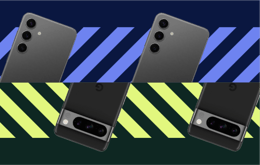
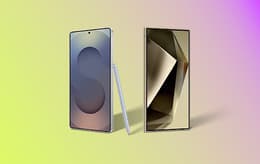
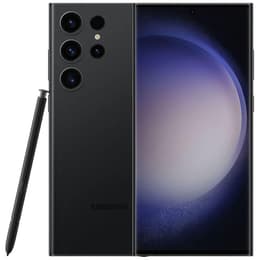
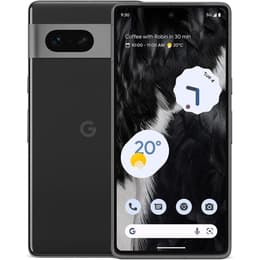
The Samsung Galaxy S23 Ultra, released in February 2023, and the Google Pixel 7, launched in October 2022, are both prominent Android smartphones. The S23 Ultra is positioned as a premium device with advanced features and a versatile camera system, while the Pixel 7 focuses on a streamlined Android experience with strong computational photography. Both devices run on the Android operating system.
Colour
Storage
The longevity of a smartphone is influenced by its release timeline, software support, and physical durability. The Galaxy S23 Ultra, released in February 2023, is set to receive four major Android OS updates and five years of security updates, extending support until at least February 2028. The Google Pixel 7, launched in October 2022, receives three major Android OS updates and five years of security updates, with support expected until October 2027. This gives the S23 Ultra a slight advantage in major OS upgrade duration. Both devices feature an IP68 rating for dust and water resistance. The S23 Ultra uses Gorilla Glass Victus 2 on its front and back, offering enhanced protection over the Pixel 7's Gorilla Glass Victus.
Release year
Compatible with latest Update
Foldable
When evaluating performance, both devices handle daily tasks efficiently, but they cater to different user demands. The Galaxy S23 Ultra is equipped with a processor designed for high-intensity tasks, offering robust performance for demanding applications and graphics-intensive gaming. The Pixel 7, while capable for everyday use, prioritizes smooth operation and efficient processing for its AI-driven features.
The visual experience on both smartphones is distinct, primarily due to differences in display technology and specifications. The Galaxy S23 Ultra features a larger 6.8-inch Dynamic AMOLED 2X display with QHD+ resolution (3088 x 1440 pixels) and an adaptive 1-120Hz refresh rate. The Pixel 7 offers a 6.3-inch AMOLED display with Full HD+ resolution (1080 x 2400 pixels) and a fixed 90Hz refresh rate.
Resolution
Screen type
Both smartphones offer capable camera systems, but they approach photography with different philosophies and hardware configurations. The Galaxy S23 Ultra features a versatile quad-camera setup, including a 200MP main sensor, a 12MP ultrawide, and two 10MP telephoto lenses (3x and 10x optical zoom). The Pixel 7 relies on a dual-camera system with a 50MP main sensor and a 12MP ultrawide lens, heavily leveraging computational photography.
Main camera
Front camera
Beyond core performance and display, several practical elements differentiate these two devices, impacting daily usability and user interaction.
Weight
Screen size (in)
SIM card
Carrier compatibility
User feedback for the Galaxy S23 Ultra frequently praises its exceptional battery life, powerful performance, and the versatility of its camera system, especially the advanced zoom capabilities. The integrated S Pen is a significant draw for productivity-focused users. Criticisms sometimes mention its large size and weight, impacting one-handed use.
The Google Pixel 7 is consistently lauded for its outstanding camera quality, particularly its computational photography for natural photos and strong low-light performance. Users appreciate its clean Android experience and timely software updates. Common criticisms include inconsistent fingerprint sensor performance, occasional heating during heavy use, and battery life that may not satisfy power users.
Users prioritizing a comprehensive feature set, a large, vibrant display, and a highly versatile camera with extensive zoom will find the Galaxy S23 Ultra well-suited. Its robust performance appeals to mobile gamers and those running demanding applications. Users valuing a streamlined Android experience, exceptional point-and-shoot photography, and a more compact form factor may prefer the Google Pixel 7. Both devices offer compelling experiences, and choosing depends on specific priorities. Exploring quality-assured refurbished options can provide an eco-friendly alternative.