
Samsung
Compare models
Differences at a glance
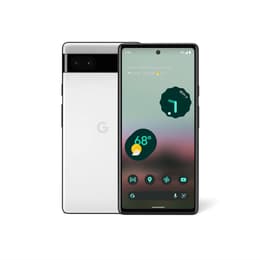
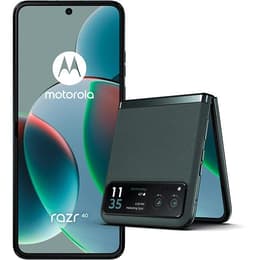
The Google Pixel 6A, released in July 2022, is a traditional slab-style smartphone, while the Motorola Razr 40, launched in June 2023, offers a distinct foldable clamshell design. These devices cater to different user preferences, with the Pixel 6A focusing on a streamlined Android experience and advanced computational photography, and the Razr 40 prioritizing portability and a unique form factor. Both run on the Android operating system, providing access to a wide ecosystem of applications.
Colour
Storage
The durability and expected lifespan of these two smartphones differ significantly due to their design philosophies. The Google Pixel 6A, released in July 2022, is a conventional smartphone with a solid build, featuring Corning Gorilla Glass 3 on its display and an IP67 rating for dust and water resistance, meaning it can withstand immersion in up to 1 meter of water for 30 minutes. Google has committed to providing five years of security updates from its release, extending its software longevity. The Motorola Razr 40, released in June 2023, is a foldable device with a plastic front when opened, a plastic back, and an aluminum frame with a stainless steel hinge. It features a water-repellent coating and an IP52 rating, offering protection against dust and light splashes, but not full water immersion. Motorola typically provides up to three major Android OS upgrades, a shorter software support period compared to the Pixel 6A. The foldable design introduces a visible crease on the main display and may have different considerations for long-term scratch resistance.
Release year
The performance of these two devices is driven by different processors, impacting their responsiveness and handling of various tasks. The Google Pixel 6A is equipped with Google's Tensor processor, designed for efficient on-device AI processing and smooth multitasking. This allows for quick app loading and a fluid user experience across everyday applications and demanding tasks. The Motorola Razr 40 utilizes a current-generation processor that handles daily operations effectively. While capable, its performance profile is generally suited for mainstream usage rather than intensive, sustained high-performance demands.
The display experience is a primary differentiator between these two smartphones, largely due to the Razr 40's foldable design. The Google Pixel 6A features a 6.1-inch OLED display with a resolution of 2400x1080 pixels, offering vibrant colors and deep blacks. It operates at a standard 60Hz refresh rate, providing a consistent visual experience for everyday use. The Motorola Razr 40 boasts a larger 6.9-inch foldable LTPO AMOLED main display with a resolution of 1080x2640 pixels, capable of a smoother 144Hz refresh rate for fluid scrolling and animations. It also includes a smaller 1.5-inch AMOLED cover display, which can show notifications and quick information without unfolding the device.
Both devices offer capable camera systems, though with different strengths and features. The Google Pixel 6A is known for its computational photography, delivering consistent and high-quality still images, particularly in everyday scenarios and with features like Night Sight and Portrait Mode. It features a dual-camera setup with a 12.2 MP main sensor and a 12 MP ultrawide sensor. The Motorola Razr 40 comes with a 64 MP main camera with optical image stabilization (OIS) and a 13 MP ultrawide camera, offering higher megapixel counts. Its main camera can also be utilized for high-quality selfies when the phone is folded.
These devices offer distinct physical characteristics and connectivity options that influence daily use. The Google Pixel 6A is a compact and lightweight traditional smartphone, measuring 152.2 x 71.8 x 8.9 mm and weighing 178 grams. It features an in-screen optical fingerprint sensor for secure unlocking. The Motorola Razr 40, with its foldable design, is significantly more compact when closed (88.2 x 74 x 15.8 mm) and expands to a taller profile when unfolded (170.8 x 74 x 7.4 mm), weighing 188 grams. It incorporates a side-mounted fingerprint sensor.
Screen size (in)
SIM card
Carrier compatibility
User feedback for the Google Pixel 6A often praises its consistent camera performance, particularly for still photography, and its smooth software experience. Common criticisms sometimes point to its 60Hz display and average battery life for heavy users. The Motorola Razr 40 is frequently lauded for its unique and compact foldable design, its vibrant and high refresh rate main display, and the utility of its external cover screen. Some users note the visible crease on the main display and its water resistance rating being less robust than some traditional smartphones.
Users prioritizing a reliable camera experience, consistent software updates, and a traditional, compact smartphone form factor may find the Google Pixel 6A well-suited to their needs. Its focus on computational photography and a streamlined Android interface makes it a strong contender for those who value a straightforward and capable device. Conversely, individuals who seek a distinctive design, enhanced portability, and a highly fluid display experience might lean towards the Motorola Razr 40. Its foldable nature and secondary external screen offer a different interaction model, appealing to users who appreciate innovation in form factor. Considering a quality-assured refurbished option for either model can be an eco-friendly alternative.