
Google Pixel 6a vs iPhone 14 Pro

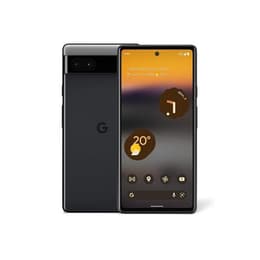
Google Pixel 6a
Google Pixel 6a
Starting at

Refurbished price:A$237.00

Versus A$569.00 new

See options
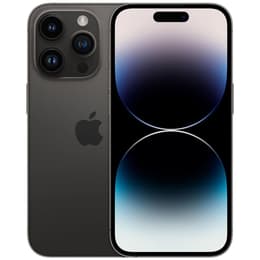
iPhone 14 Pro
iPhone 14 Pro
Starting at

Refurbished price:A$622.00

Versus A$1,749.00 new

See options

Ratings

The Google Pixel 6A (released July 2022) and the iPhone 14 Pro (released September 2022) represent distinct offerings in the smartphone market. While both devices provide a compact form factor, they cater to different user priorities, with the Pixel 6A focusing on an accessible Android experience and strong computational photography, and the iPhone 14 Pro delivering a premium iOS ecosystem with advanced display and camera technologies.

Scores

Durability

When considering the long-term usability of these devices, their release timelines, software support, and repairability are key factors.

  • Software Longevity: The Google Pixel 6A is expected to receive Android operating system updates and security patches until at least July 2027. The iPhone 14 Pro, typical for Apple's flagship devices, generally receives iOS updates for five to six years from its release, suggesting support likely extending into late 2027 or 2028.
  • Repairability: The Pixel 6A has been noted for its relatively straightforward repair process for components like the display and battery, earning scores around 6.5-7 out of 10 from independent evaluators. In contrast, while the iPhone 14 Pro initially received praise for some design changes that made certain repairs easier, its overall repairability score was later downgraded to 4 out of 10 due to Apple's parts pairing policies, which can complicate repairs with non-official components.
  • Build Durability: The Pixel 6A features Corning Gorilla Glass 3 on the front and a plastic back, combined with an aluminum frame, offering IP67 dust and water resistance. The iPhone 14 Pro utilizes a Ceramic Shield front cover, a glass back, and a stainless steel frame, providing IP68 dust and water resistance, indicating a higher level of protection against immersion.

Release year

2022

2022

Compatible with latest Update

Yes

Yes

Foldable

No

No

Performance

The performance of a smartphone impacts everything from app responsiveness to multitasking efficiency and gaming experiences.

  • Processing Power: The Google Pixel 6A offers smooth performance for everyday applications and handles demanding tasks and multitasking effectively, providing a responsive user experience. The iPhone 14 Pro delivers a very high level of performance, ensuring demanding applications, complex games, and intensive multitasking run with exceptional fluidity and speed.
  • Storage Configurations: The Pixel 6A is available with 128GB of internal storage, which is non-expandable. The iPhone 14 Pro offers a wider range of storage options, including 128GB, 256GB, 512GB, and 1TB, catering to users with varying storage needs.
  • Battery Performance: The Pixel 6A, with its 4410 mAh battery, generally provides a full day of use for most users, with some reporting up to a day and a half with lighter usage. The iPhone 14 Pro, equipped with a 3200 mAh battery, typically offers a full day of power, though heavy users might find themselves needing to recharge before the end of a very demanding day.

Memory (GB)

6 GB

6 GB

Screen quality

The display is a primary interface for any smartphone, influencing visual clarity, color reproduction, and overall user interaction.

  • Display Technology and Clarity: Both devices feature OLED displays, providing deep blacks and vibrant colors. The Pixel 6A has a 6.1-inch FHD+ (2400 x 1080 pixels) OLED display with a pixel density of approximately 429 ppi. The iPhone 14 Pro features a 6.1-inch Super Retina XDR OLED display with a resolution of 2556 x 1179 pixels and a pixel density of 460 ppi, offering slightly sharper visuals.
  • Brightness and Outdoor Visibility: The Pixel 6A can reach a peak brightness of around 778 nits, which is generally sufficient for outdoor use, though direct sunlight may require adjusting the brightness. The iPhone 14 Pro boasts higher brightness levels, with a typical maximum of 1000 nits, 1600 nits for HDR content, and a peak outdoor brightness of up to 2000 nits, ensuring excellent visibility even in bright conditions.
  • Refresh Rate and Smoothness: The Pixel 6A operates at a standard 60Hz refresh rate, providing a smooth experience for typical usage, though some reports indicate the panel is capable of 90Hz. The iPhone 14 Pro features ProMotion technology, offering an adaptive refresh rate that can scale from 1Hz to 120Hz, resulting in exceptionally fluid scrolling and highly responsive interactions.

Resolution

1080 x 2400

1179 x 2556

Screen type

OLED

LTPO Super Retina XDR OLED

Audiovisual

Camera capabilities are a significant consideration for many users, encompassing photo and video quality across various conditions.

  • Rear Camera System: The Google Pixel 6A includes a dual-camera setup with a 12.2MP main sensor and a 12MP ultrawide lens, leveraging Google's computational photography for strong image processing. The iPhone 14 Pro features a more versatile triple-camera system, including a 48MP main sensor, a 12MP ultrawide, and a 12MP telephoto lens, along with a LiDAR scanner for enhanced depth sensing.
  • Photography Performance: The Pixel 6A excels in everyday photography and offers good low-light performance, often producing detailed and color-accurate images due to its software optimization. The iPhone 14 Pro delivers excellent image quality across various lighting conditions, with its larger sensor and Photonic Engine contributing to superior low-light performance and detail retention, especially with features like ProRAW.
  • Video Recording Capabilities: The Pixel 6A supports 4K video recording at up to 60 frames per second, with optical and electronic image stabilization. The iPhone 14 Pro offers advanced video features, including 4K video recording at up to 60 frames per second, Cinematic Mode for shallow depth-of-field effects in 4K HDR, Action Mode for highly stabilized footage, and ProRes video recording for professional-grade workflows.

Main camera

12.2 megapixels

48 megapixels

Front camera

8 megapixels

12 megapixels

Miscellaneous

Beyond core performance and display, several practical elements contribute to the overall user experience and device utility.

  • Connectivity and Ports: Both devices support 5G connectivity. The Pixel 6A features Wi-Fi 6 (802.11ax) and Bluetooth 5.2, utilizing a USB-C port for charging and data transfer. The iPhone 14 Pro includes Wi-Fi 6E and Bluetooth 5.3, and uses Apple's proprietary Lightning port.
  • Biometric Security: The Pixel 6A incorporates an in-display fingerprint sensor for secure unlocking and authentication. The iPhone 14 Pro relies on Face ID, Apple's facial recognition system, for biometric security.
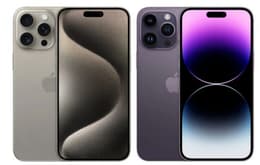
  • Design and Handling: The Pixel 6A weighs 178 grams and has dimensions of 152.2 x 71.8 x 8.9 mm, offering a comfortable in-hand feel. The iPhone 14 Pro is slightly heavier at 206 grams, with dimensions of 147.5 x 71.5 x 7.85 mm, contributing to a more substantial feel. The iPhone 14 Pro also introduces the Dynamic Island, an interactive area around the front camera cutout that displays alerts and background activities.

Weight

250 oz

206 oz

Screen size (in)

6.1

6,1

SIM card

Physical SIM + eSIM

Physical SIM + eSIM

Carrier compatibility

Unlocked

Unlocked

The Google Pixel 6A and iPhone 14 Pro cater to different segments of the smartphone market, each with distinct strengths and user experiences. User feedback for the Pixel 6A often praises its exceptional camera performance for its category, the clean and intuitive Android software experience, and the solid performance delivered by its processor for everyday tasks. Common criticisms sometimes point to its 60Hz display, which can feel less fluid compared to higher refresh rate screens, and its slower charging speeds.

The iPhone 14 Pro is frequently lauded for its highly versatile and advanced camera system, its vibrant and adaptive display, and its powerful performance that handles any task with ease. The introduction of the Dynamic Island was also a notable feature. Some users, particularly those coming from previous Pro models, have occasionally noted that its battery life, while generally good for a full day, might not always match the longevity of its immediate predecessor under heavy use.

Users prioritizing a strong camera experience, a pure Android operating system, and reliable performance for daily use in a compact and durable design may find the Google Pixel 6A well-suited to their needs. For individuals seeking top-tier performance, a highly advanced and versatile camera system, a premium and exceptionally bright display with adaptive refresh rates, and integration within the Apple ecosystem, the iPhone 14 Pro aligns more closely with those requirements. Both devices offer compelling features, and considering a quality-assured refurbished option can be an eco-friendly alternative for acquiring either model.
See all articles

Our recent comparisons