
Compare models

Google Pixel 10 vs iPhone 15

  • 1-year warranty
  • Free standard shipping
  • Free 30-day returns
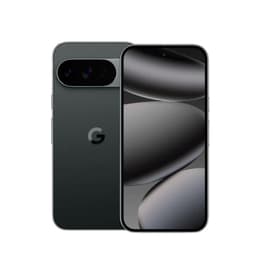
Google Pixel 10
Starting at

Refurbished price:A$944.00

Versus A$1,349.00 new

See options
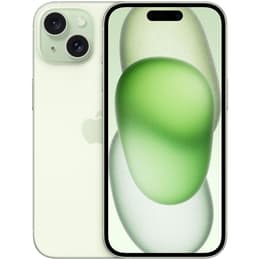
iPhone 15
Starting at

Refurbished price:A$663.00

Versus A$1,249.00 new

See options

Differences at a glance

The Google Pixel 10 (2025) and the Apple iPhone 15 (2023) are contemporary smartphones representing distinct approaches to mobile computing. While both devices occupy similar market segments as flagship-tier handsets, they differ fundamentally in their operating systems, hardware configurations, and ecosystem experiences. Choosing between them depends heavily on whether you prefer the open customization of Android or the integrated software environment of iOS.

Available Models

Colour

Storage (GB)

Scores

Durability

When evaluating long-term usability and physical resilience, both models offer solid structural longevity while differing in software update commitments and release timelines.

  • Software support timeline: The Google Pixel 10 benefits from an extended multi-year update policy providing operating system refreshes and security patches for up to seven years. The Apple iPhone 15 follows a traditional support window typical of its generation, ensuring dependable updates over several years.
  • Repairability and physical build: Both handsets feature robust aluminum and glass constructions with high dust and water resistance ratings. Parts replacement availability and independent repair options vary by regional service networks for each brand.
  • Expected practical lifespan: Generous memory capacities and efficient system processors ensure both devices maintain daily reliability well into the future under standard usage conditions.

Release year

2025

2023

Operating system

Android

iOS

Foldable

No

No

Performance

Underneath their exterior shells, these devices handle day-to-day computing tasks, heavy multitasking, and mobile applications through distinct hardware architectures.

  • Multitasking and memory headroom: The Google Pixel 10 utilizes generous random access memory allocation to keep numerous background applications active simultaneously. The Apple iPhone 15 relies on optimized software-hardware integration to deliver fluid multitasking experiences with its standard memory configuration.
  • App loading and gaming speeds: Both smartphones handle demanding mobile games and intensive productivity software smoothly, featuring fast internal storage options that minimize loading times for large files.
  • Battery behavior and endurance: The Google Pixel 10 integrates a larger capacity power cell capable of sustaining heavy daily usage patterns. The Apple iPhone 15 employs an efficient processor architecture to stretch its smaller battery reserve through a standard day of moderate tasks.

Screen quality

Display characteristics shape everyday interactions, influencing media consumption, reading comfort, and visibility under diverse lighting conditions.

  • Panel technology and resolution: Both devices utilize vibrant organic light-emitting diode displays yielding deep contrast levels, rich colors, and sharp text rendering for daily reading and messaging.
  • Outdoor visibility and peak luminance: High maximum brightness outputs on both screens ensure content remains legible when used directly under bright sunlight or outdoor environments.
  • Refresh rate and smoothness: The Google Pixel 10 offers a high refresh rate panel for fluid scrolling animations, while the Apple iPhone 15 utilizes a standard refresh rate configured for consistent energy conservation.

Resolution

1080x2424

1179 x 2556

Screen type

OLED

Super Retina XDR OLED

Audiovisual

Imaging capabilities vary significantly between the two models, offering distinct toolsets for casual photography, video capture, and audio recording.

  • Rear camera configurations: The Google Pixel 10 features a versatile triple-lens setup including a dedicated telephoto optical zoom lens. The Apple iPhone 15 employs a dual-lens camera system backed by advanced computational processing for everyday snapshots and portraits.
  • Video recording quality: Both handsets capture stable, detailed video footage with clear audio pickup from integrated multi-microphone arrays, though stabilization algorithms differ slightly in motion heavy scenarios.
  • Media and speaker output: Built-in stereo speakers on both models deliver clear sound reproduction suitable for casual podcast listening, hands-free calls, and short video playback.

Miscellaneous

Practical physical attributes and connectivity standards determine how seamlessly each device integrates into daily routines and accessory ecosystems.

  • Connectivity standards: Both devices support modern fifth-generation cellular networks, rapid Wi-Fi protocols, and precise satellite navigation systems for reliable mapping and communication.
  • Port hardware and charging: The Apple iPhone 15 and Google Pixel 10 both adopt standard reversible USB connection ports for wired power delivery and data transfers, complemented by modern wireless charging capabilities.
  • Physical dimensions and handling: The Google Pixel 10 features a slightly larger footprint and weight compared to the more compact and lightweight chassis of the Apple iPhone 15.

Weight

204 oz

171 oz

Screen size (in)

6.3

6.1

Network

5G

5G

SIM card

Physical SIM + eSIM

Physical SIM + eSIM

Carrier compatibility

Unlocked

Unlocked

What the community thinks

User discussions across community forums highlight distinct preference trends for each device. Owners of the Google Pixel 10 frequently praise its versatile multi-lens camera versatility, smooth high-refresh-rate display, and deep integration of artificial intelligence helpers. Conversely, users of the Apple iPhone 15 often highlight its comfortable one-handed ergonomics, reliable everyday battery efficiency, and the seamless simplicity of the iOS ecosystem.

Users prioritizing expanded screen fluidity, flexible zoom photography, and deep customizability may find the Google Pixel 10 well-suited to their preferences. Meanwhile, users who value a compact form factor, long-term ecosystem consistency, and straightforward operation often lean toward the Apple iPhone 15. For those seeking a quality-assured refurbished option, exploring sustainably restored models via Back Market offers an eco-friendly way to acquire either device with verified functional performance.