
Galaxy A35 vs Motorola Edge 30 Neo

Galaxy A35
Galaxy A35
See options
Motorola Edge 30 Neo
Starting at

Refurbished price:A$306.00

Versus A$414.00 new

See options

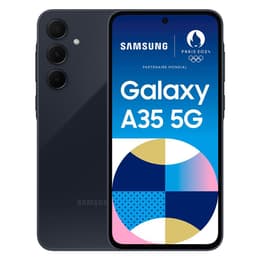
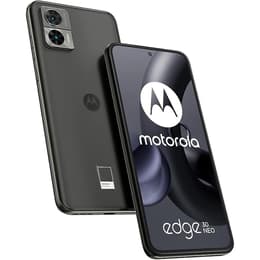
The Samsung Galaxy A35, released in March 2024, and the Motorola Edge 30 Neo, launched in September 2022, are both Android smartphones designed for everyday use. While the Galaxy A35 is a more recent offering, the Edge 30 Neo presents a compact alternative. Key differentiators include their release timelines, software support policies, and overall physical design, influencing user experience in terms of longevity and handling. Both devices run on the Android operating system, offering a familiar interface for many users.

Scores

Durability

The practical lifespan of a smartphone is significantly influenced by its release date and the manufacturer's commitment to software updates. The Galaxy A35, being a newer device, generally offers a longer period of guaranteed software support compared to the Edge 30 Neo.

  • Release Timeline: The Galaxy A35 was released in March 2024, making it a more current device. The Motorola Edge 30 Neo was launched in September 2022, positioning it as an older model in the market.
  • OS Support Duration: Samsung has committed to providing four major Android OS upgrades and five years of security updates for the Galaxy A35. In contrast, the Motorola Edge 30 Neo was promised two major OS upgrades and three years of security updates from its launch. This means the Galaxy A35 will receive software support for a considerably longer duration.
  • Durability Features: The Galaxy A35 features an IP67 rating for dust and water resistance and a Gorilla Glass Victus+ front, offering enhanced protection against environmental elements and accidental damage. The Edge 30 Neo has an IP52 rating, indicating protection against limited dust ingress and splashing water.

Performance

When evaluating performance, both devices are capable of handling daily tasks, but their underlying hardware and battery capacities lead to different real-world experiences, particularly for demanding applications and extended use.

  • Everyday Responsiveness: The Galaxy A35 is equipped with a more recent processor, which contributes to smooth navigation, quicker app loading times, and efficient multitasking. Users generally report a snappy experience for daily tasks, though occasional lag can occur with heavier applications. The Edge 30 Neo, with its processor, provides adequate performance for general use, but may show limitations with graphically intensive games or numerous applications running simultaneously.
  • Multitasking and Storage: Both phones offer various RAM configurations, with the Galaxy A35 typically available with 6GB or 8GB of RAM, and the Edge 30 Neo also offering 6GB or 8GB options, with some variants extending to 12GB. Both devices come with 128GB or 256GB of internal storage, with the Galaxy A35 supporting expandable storage via a microSD card up to 1TB, providing flexibility for users with large media libraries.
  • Battery Behavior: The Galaxy A35 houses a larger 5000 mAh battery, which users report can comfortably last through a full day of heavy use and often extend to a day and a half with moderate usage. The Edge 30 Neo has a 4020 mAh battery, which is generally sufficient for a full day of typical use, though heavy users might find themselves needing to recharge before the day ends. The Edge 30 Neo supports faster wired charging at 68W and also offers 5W wireless charging, a feature not present on the Galaxy A35.

Memory (GB)

6 GB

8 GB

Screen quality

The visual experience on both smartphones is a key aspect, with both offering vibrant displays, but differing in size, technology nuances, and outdoor visibility.

  • Display Technology and Size: The Galaxy A35 features a 6.6-inch Super AMOLED display, known for its deep blacks and vibrant colors, providing an immersive viewing experience. The Edge 30 Neo comes with a slightly smaller 6.28-inch pOLED display, which also delivers rich colors and excellent contrast.
  • Resolution and Smoothness: Both devices offer Full HD+ resolution (1080 x 2340 pixels for A35, 1080 x 2400 pixels for Edge 30 Neo), ensuring sharp and clear visuals for text and media. Both also boast a 120Hz refresh rate, contributing to smoother scrolling and a more fluid user interface experience.
  • Brightness for Outdoor Use: The Galaxy A35's display can reach up to 1000 nits in High Brightness Mode (HBM) and includes a Vision Booster feature, enhancing visibility in bright outdoor conditions. The Edge 30 Neo's display can achieve a peak brightness of up to 923 nits outdoors, which is also quite bright for comfortable viewing under sunlight.

Audiovisual

Photography capabilities are a significant consideration for many users, and both the Galaxy A35 and Edge 30 Neo offer versatile camera systems with distinct strengths in different scenarios.

  • Rear Camera System: The Galaxy A35 features a triple camera setup with a 50MP main sensor with Optical Image Stabilization (OIS), an 8MP ultrawide lens, and a 5MP macro camera. The Edge 30 Neo has a dual camera system, comprising a 64MP main sensor with OIS and a 13MP ultrawide lens that also handles macro shots.
  • Photography Performance: In daylight, the Galaxy A35's main camera captures detailed images with natural color tones. Its low-light performance is generally acceptable, though some users note blurriness and noise in very dim conditions. The Edge 30 Neo's main camera also performs well in good lighting, producing sharp images with good color balance. Its low-light performance is considered below average by some, despite OIS.
  • Video Recording and Front Camera: Both phones are capable of recording video at 4K resolution at 30 frames per second with their main rear cameras. The Galaxy A35 also supports 4K@30fps for its 13MP front camera. The Edge 30 Neo's video recording is limited to 1080p, even for its 32MP front camera.

Miscellaneous

Beyond core specifications, several practical elements contribute to the overall user experience, including connectivity, physical design, and additional features.

  • Connectivity and Ports: Both smartphones support 5G connectivity, ensuring access to faster mobile networks. They also include modern Wi-Fi standards and Bluetooth for wireless connections. Neither device features a 3.5mm headphone jack. The Galaxy A35 uses a USB-C port for charging and data transfer, as does the Motorola Edge 30 Neo.
  • Design and Handling: The Galaxy A35 has a larger form factor, measuring 161.7 x 78 x 8.2 mm and weighing 209g, featuring a glass back and a flat side frame. The Edge 30 Neo is more compact and lighter at 152.9 x 71.2 x 7.8 mm and 155g, with a polished metal frame. The smaller size of the Edge 30 Neo makes it easier for one-handed use and carrying.
  • Security and Audio: Both phones incorporate a fingerprint sensor for secure unlocking. The Galaxy A35 includes Samsung's Knox Vault for enhanced security of sensitive data. For audio, both devices feature stereo speakers, with the Edge 30 Neo also benefiting from Dolby Atmos support for an enhanced sound experience.

Screen size (in)

6.6

6.28

Network

5G

5G

SIM card

Physical SIM + eSIM

Dual Physical SIM

Carrier compatibility

Unlocked

Unlocked

The Samsung Galaxy A35 and Motorola Edge 30 Neo cater to slightly different user preferences, primarily due to their release dates and design philosophies. Users often praise the Galaxy A35 for its robust battery life, vibrant Super AMOLED display, and Samsung's commitment to extended software updates. Criticisms sometimes point to its larger size and the inclusion of a macro camera that some users find less practical. The Motorola Edge 30 Neo, on the other hand, is frequently lauded for its compact and lightweight design, making it comfortable for one-handed use, and its inclusion of wireless charging. Common concerns for the Edge 30 Neo include its shorter software support timeline and video recording limitations.

Users prioritizing long-term software support, a larger display, and superior dust and water resistance may find the Galaxy A35 well-suited to their needs. Its substantial battery capacity also appeals to those who require extended usage between charges. Conversely, individuals who value a more compact and lightweight device, faster wired charging, and the convenience of wireless charging might lean towards the Motorola Edge 30 Neo. Both devices offer a quality-assured refurbished option, providing an eco-friendly alternative for consumers looking to make informed and sustainable choices.


See all articles

Our recent comparisons