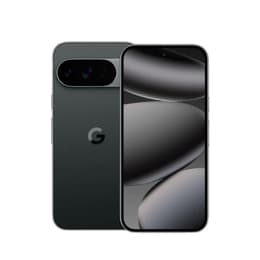

Compare models
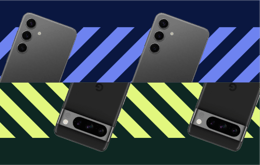
Google Pixel 10 vs Google Pixel 9a
- 1-year warranty
- Free standard shipping
- Free 30-day returns
Differences at a glance
The Google Pixel 10 (2025) and the Google Pixel 9a (2025) represent two distinct approaches to modern smartphone engineering from Google. While both devices offer a 6.3-inch display size and core software features, they differ significantly in processing architecture, camera configuration, and hardware positioning. The Pixel 10 runs on Android 16 with advanced system capabilities, whereas the Pixel 9a originally launched with Android 15. Both handsets provide distinct everyday experiences tailored to different preferences without relying on overly complex jargon.
Available Models
Colour
Storage
Scores
Durability
When examining longevity, both smartphones are backed by extensive software support windows, though their physical hardware build and release timelines introduce minor variances in practical lifespan.
- Software longevity: Both models benefit from long-term operating system updates and security patches spanning multiple years from their respective launch dates.
- Build durability: Each device features robust dust and water resistance ratings alongside protective glass layers to withstand daily environmental exposure.
- Repairability factors: Internal component access varies slightly between the mainline series and its streamlined variant, influencing ease of professional maintenance over extended use.
Release year
2025
2025
Operating system
Android
Android
Foldable
No
No
Performance
Under everyday workloads, these devices handle multitasking, web browsing, and demanding mobile applications smoothly, though they utilize different generations of internal processing hardware.
- Multitasking capacity: The Pixel 10 features higher random access memory capacity, helping manage numerous background applications simultaneously, while the Pixel 9a provides balanced multitasking performance for standard daily use.
- Battery behavior: Both units deliver reliable all-day power for typical usage patterns, though differences in battery capacity and processor efficiency influence how long they last under heavy workloads.
- App responsiveness: Applications launch swiftly and transition fluidly on both devices, with the newer processor generation in the Pixel 10 offering additional overhead for intensive tasks.
Screen quality
Visual output and screen interactions are remarkably similar on paper, featuring matching panel dimensions and smooth high refresh rates for fluid scrolling.
- Display technology: Both models utilize vibrant OLED panels with sharp resolution, ensuring deep contrast levels and clear text rendering for reading or media consumption.
- Outdoor visibility: High peak brightness capabilities on both screens allow content to remain legible even under direct sunlight.
- Refresh rate smoothness: Dynamic refresh rates scaling up to 120 Hz ensure that animations, navigation, and supported gaming sequences appear consistently smooth.
Resolution
1080x2424
1080x2424
Screen type
OLED
P-OLED
Audiovisual
Optics and media handling differ notably, with one device prioritizing a versatile multi-lens array and the other focusing on streamlined everyday photography.
- Camera hardware: The Pixel 10 incorporates a triple-lens setup including a dedicated telephoto zoom lens, whereas the Pixel 9a relies on a dual-lens wide and ultra-wide configuration.
- Low-light photography: Advanced image processing software on both models ensures clear, balanced photos in dimly lit environments.
- Audio and video: Built-in microphone arrays capture crisp speech for calls and video recording, paired with stereo speakers that deliver clear media playback for daily listening.
Miscellaneous
Practical daily usability is shaped by physical dimensions, connectivity standards, and hardware integration features shared across Google's device ecosystem.
- Connectivity standards: Both smartphones support modern 5G networks, fast Wi-Fi protocols, and Bluetooth for reliable accessory pairing.
- Physical handling: Each phone offers an ergonomic form factor with balanced weight distribution, making them comfortable for one-handed operation during travel or commuting.
- Security sensors: Responsive biometric authentication methods ensure quick and secure device unlocking.
Weight
204 oz
186 oz
Screen size (in)
6.3
6.3
Network
5G
5G
SIM card
Physical SIM + eSIM
Physical SIM + eSIM
Carrier compatibility
Unlocked
Unlocked
What the community thinks
Online discussions and user feedback indicate that community members appreciate both devices for their reliable software ecosystems and clean interface design. Users frequently praise the Pixel 10 for its versatile multi-camera array and performance headroom, though some note that its physical footprint is heavier. Conversely, users highlight the Pixel 9a for its solid battery endurance and balanced everyday usability, while noting its simpler dual-camera arrangement. For those seeking an eco-friendly alternative, choosing a quality-assured refurbished option provides a sustainable way to access either of these capable Google handsets.
Users prioritizing extended zoom flexibility and high-tier multitasking capability will find the Pixel 10 well-suited to their daily routine. Meanwhile, users prioritizing straightforward photography, efficient battery behavior, and streamlined operation may lean toward the Pixel 9a. Evaluating these distinct hardware differences allows consumers to align their choice with specific personal usage habits.