
Compare models

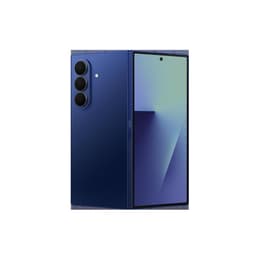
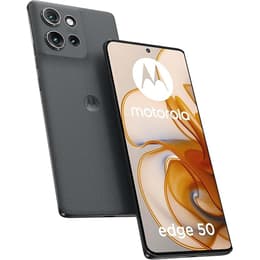
Galaxy Z Fold7 vs Motorola Edge 50

  • 1-year warranty
  • Free standard shipping
  • Free 30-day returns
Galaxy Z Fold7
Starting at

Refurbished price:A$1,229.00

Versus A$2,499.00 new

See options
Motorola Edge 50
Starting at

Refurbished price:A$400.00

Versus A$832.00 new

See options

Differences at a glance

The Samsung Galaxy Z Fold7 (2025) and the Motorola Edge 50 (2024) represent two distinct approaches to modern smartphone engineering, balancing form factor versatility with everyday performance. While the Galaxy Z Fold7 introduces a book-style foldable design featuring dual screens and expansive multitasking capabilities, the Motorola Edge 50 offers a conventional, slim profile built around curved display aesthetics and lightweight ergonomics. Both devices run on the Android operating system, though they apply different software interfaces tailored to their respective hardware layouts. Choosing between them depends largely on whether a user prefers a transformable large-screen workspace or a traditional, streamlined smartphone experience.

Available Models

Colour

Storage

Scores

Durability

When examining longevity and durability, both devices offer solid software support timelines and structural integrity, though their unique designs present different maintenance considerations.

  • Software longevity: The Galaxy Z Fold7 provides extended OS update commitments matching its newer release year, while the Motorola Edge 50 delivers reliable multi-year security patches aligned with its mid-2024 launch.
  • Structural resilience: The Motorola Edge 50 relies on a fixed rigid frame with water and dust resistance, whereas the Galaxy Z Fold7 incorporates specialized folding hinge engineering that requires careful handling over years of daily opening and closing.
  • Repairability and lifespan: Traditional slab phones like the Motorola model generally offer simpler structural maintenance, while foldables involve complex display layers that influence long-term upkeep.

Release year

2025

2024

Operating system

Android

Android

Foldable

Yes

No

Performance

Daily operation and hardware efficiency vary significantly between these two models due to differences in internal architecture and battery management.

  • System responsiveness: The Galaxy Z Fold7 handles demanding multitasking, heavy gaming, and split-screen workflows effortlessly, whereas the Motorola Edge 50 smoothly manages everyday messaging, social media, and moderate application loads.
  • Battery behavior: The Motorola Edge 50 features a larger single-cell capacity that easily sustains a full day of mixed use, while the Galaxy Z Fold7 distributes power across dual displays, resulting in faster energy consumption during extended main-screen sessions.
  • Storage configuration: Both devices offer generous baseline internal storage capacities paired with high-speed memory configurations to keep apps running fluidly in the background.

Screen quality

Display technology is a primary differentiator, contrasting a dual-screen transforming canvas with a curved single-panel design.

  • Display versatility: The Galaxy Z Fold7 features a wide cover screen for quick tasks and an 8.0-inch foldable inner display that opens up into a tablet-sized viewing area, while the Motorola Edge 50 presents a single, curved OLED panel suited for traditional media consumption.
  • Brightness and outdoor visibility: Both models achieve high peak brightness levels to maintain legibility under bright sunlight, utilizing adaptive refresh rates for smooth scrolling.
  • Clarity and immersion: High-resolution organic light-emitting diode panels on both devices deliver deep black levels and vibrant color reproduction for photos and videos.

Resolution

1968x2184

1220x2712

Audiovisual

Photography and multimedia output cater to different content-capturing preferences across both device styles.

  • Camera systems: The Galaxy Z Fold7 equips a high-megapixel main sensor alongside optical zoom lenses and versatile cover-screen selfie framing, while the Motorola Edge 50 utilizes a balanced triple-camera layout featuring dedicated telephoto and stabilization capabilities.
  • Low-light and video performance: Both smartphones handle nighttime environments effectively through automated image processing, supporting sharp video capture for casual recording and video calls.
  • Media and audio output: Stereo speakers on both units provide clear sound reproduction for hands-free calls, podcasts, and video playback without requiring external accessories.

Miscellaneous

Practical daily usability elements highlight distinct physical traits in terms of handling and connectivity.

  • Build and weight: The Motorola Edge 50 maintains a lightweight, slim profile that rests comfortably in one hand, whereas the Galaxy Z Fold7 carries a heavier footprint due to its complex dual-screen and hinge mechanics.
  • Connectivity standards: Both models support modern 5G networks, fast Wi-Fi protocols, and Bluetooth standards for reliable peripheral pairing.
  • Security features: Quick biometric authentication is handled via responsive fingerprint sensors and facial recognition capabilities integrated into both designs.

Weight

215 oz

180 oz

Screen size (in)

8.0

6.7

Network

5G

5G

SIM card

Dual Physical SIM + eSIM

Physical SIM

Carrier compatibility

Unlocked

Unlocked

What the community thinks

User feedback from online communities highlights distinct preferences for each device. Owners of the Galaxy Z Fold7 frequently praise its expansive inner screen for productivity and media enjoyment, though some note the heavier weight and visible screen crease as ongoing design trade-offs. Conversely, users of the Motorola Edge 50 appreciate its comfortable ergonomics, slim aesthetic, and reliable daily battery endurance, while occasionally pointing out that it lacks the advanced multitasking versatility of a foldable device.

Users prioritizing maximum screen estate for multitasking and split-screen apps will find the Galaxy Z Fold7 well-suited to their workflow. Meanwhile, users prioritizing a lightweight, traditional form factor with straightforward handling may lean toward the Motorola Edge 50. For those exploring sustainable purchasing routes, opting for a quality-assured refurbished option provides an eco-friendly way to access advanced mobile technology without compromising on performance or reliability. Ultimately, the choice rests entirely on individual preferences regarding physical design and daily device interaction.