
Galaxy Z Fold6 vs Google Pixel 9 Pro XL

Galaxy Z Fold6
Galaxy Z Fold6
Starting at

Refurbished price:A$1,088.24

Versus A$2,749.00 new

See options
Google Pixel 9 Pro XL
Starting at

Refurbished price:A$853.00

Versus A$1,849.00 new

See options

Ratings

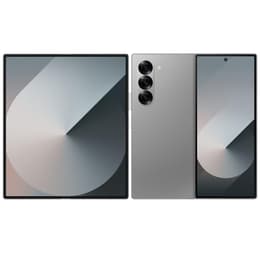
The Samsung Galaxy Z Fold6 (2024) and the Google Pixel 9 Pro XL (2024) represent distinct approaches to high-end smartphone design. The Galaxy Z Fold6 offers a unique foldable form factor that transforms from a traditional smartphone into a larger tablet-like display, while the Pixel 9 Pro XL provides a premium, large-screen experience in a conventional slab design. Both devices run on the Android operating system, offering extensive software support and advanced capabilities, but cater to different user preferences regarding screen utility and overall handling.

Scores

Durability

The expected practical lifespan of a smartphone is significantly influenced by its software support and physical resilience. Both the Galaxy Z Fold6 and the Pixel 9 Pro XL are designed for extended use, benefiting from long-term software commitments.

  • Software Longevity: Both devices are committed to receiving seven years of operating system and security updates, ensuring they remain current and secure for an extended period. This commitment means users can expect consistent access to new features and protection against vulnerabilities well into the future.
  • Physical Durability: The Galaxy Z Fold6 features an IP48 rating, indicating protection against dust particles larger than 1mm and water resistance. Its construction includes Corning Gorilla Glass Victus 2 on the cover screen and back, with an Ultra-Thin Flexible Glass (UTG) for the inner foldable display, and an enhanced Armor Aluminum frame. The Pixel 9 Pro XL, as a traditional smartphone, is expected to offer robust build quality typical of flagship devices, though specific IP ratings for the 'XL' variant were not consistently detailed across all sources. The foldable nature of the Z Fold6 introduces unique considerations regarding the hinge mechanism and the inner screen's resilience to scratches.
  • Repairability: While specific repairability scores vary, the Z Fold6's foldable design can present more complex repair scenarios compared to a standard smartphone. Samsung offers programs like discounted screen repairs for its foldable devices. The Pixel 9 Pro XL, with its conventional design, may offer a more straightforward repair process for common components.

Release year

2024

2024

Compatible with latest Update

Yes

Yes

Operating system

Android

Android

Foldable

Yes

No

Performance

Both the Galaxy Z Fold6 and the Pixel 9 Pro XL deliver robust performance suitable for demanding applications and multitasking, though they achieve this with different underlying hardware configurations.

  • Processing Power: The Galaxy Z Fold6 is equipped with a current-generation processor optimized for Samsung's Galaxy devices, enabling smooth operation across various tasks, from everyday browsing to intensive gaming and advanced AI features. The Pixel 9 Pro XL utilizes Google's custom-designed processor, which is engineered to handle demanding applications and multitasking with ease, providing a consistently fast and responsive user experience. While benchmark scores may differ, real-world usage indicates both devices offer ample power for current and future software.
  • Multitasking and Responsiveness: The Galaxy Z Fold6 comes with 12 GB of RAM, which supports efficient multitasking, especially when utilizing its larger inner display for multiple applications simultaneously. The Pixel 9 Pro XL features 16 GB of RAM, providing extensive headroom for running numerous applications concurrently and handling complex AI computations, contributing to its overall responsiveness.
  • Battery Behavior: The Galaxy Z Fold6 houses a 4400 mAh battery, generally providing a full day of use for many users, though heavy use of the larger inner screen or high brightness can lead to more frequent charging. The Pixel 9 Pro XL is equipped with a larger 5060 mAh battery, which users report delivers excellent endurance, often lasting up to two days on a single charge with moderate use. Both devices support fast wired and wireless charging, with the Pixel 9 Pro XL's charging speed noted as efficient, though some users desire faster rates.

Memory (GB)

12 GB

16 GB

Screen quality

The visual experience on both devices is characterized by high-quality displays, though they differ significantly in their form factor and presentation.

  • Display Technology and Clarity: The Galaxy Z Fold6 features two Dynamic AMOLED 2X displays, offering deep blacks, vibrant colors, and excellent contrast. The main foldable screen measures 7.6 inches with a resolution of 2160x1856 pixels, while the cover screen is 6.3 inches with a 2376x968 pixel resolution. The Pixel 9 Pro XL boasts a 6.8-inch QHD+ display, also delivering vibrant colors and high resolution for sharp text and detailed images.
  • Brightness and Refresh Rate: Both devices offer adaptive refresh rates up to 120Hz, ensuring smooth scrolling and fluid animations. The Galaxy Z Fold6's displays achieve a peak brightness of up to 2600 nits, providing good visibility even in bright outdoor conditions. The Pixel 9 Pro XL's display also reaches a peak brightness of 3000 nits, making it highly visible in various lighting environments.
  • Viewing Experience: The Galaxy Z Fold6's foldable design offers the versatility of a compact smartphone and an expansive tablet-like screen, ideal for immersive media consumption and productivity. The crease on the inner display is present but has become less noticeable over generations. The Pixel 9 Pro XL provides a large, uninterrupted display, offering a premium viewing experience for videos, games, and general content.

Resolution

1856 x 2160

1344 x 2992

Screen type

Foldable Dynamic LTPO AMOLED 2X

LTPO OLED

Audiovisual

Both the Galaxy Z Fold6 and the Google Pixel 9 Pro XL are equipped with advanced camera systems designed to capture high-quality images and videos, each with its own strengths in processing and hardware.

  • Rear Camera Systems: The Galaxy Z Fold6 features a triple rear camera setup: a 50 MP wide-angle main sensor with optical image stabilization (OIS), a 12 MP ultra-wide lens, and a 10 MP telephoto lens with 3x optical zoom and OIS. The Pixel 9 Pro XL also includes a versatile triple camera array, comprising a 50 MP main sensor with OIS, a 48 MP ultra-wide lens with autofocus for macro capabilities, and a 48 MP telephoto lens offering 5x optical zoom and OIS.
  • Photography Performance: The Z Fold6 is noted for competent performance in typical lighting conditions, with good dynamic range and exposure. Its ultrawide camera has seen improvements for brighter and more detailed shots, even in low light, compared to its predecessor. However, some users note that low-light performance, particularly with the ultrawide, can produce noisy results, and autofocus errors can occur in dim environments. The Pixel 9 Pro XL is praised for its consistent results across its cameras, delivering sharp, well-exposed images with natural color tones. Its main camera performs exceptionally well in low light, and its Super Res zoom is effective. Some user feedback mentions that portrait shots can sometimes exhibit issues with edge detection and skin smoothing.
  • Video Capabilities and Audio: Both devices offer high-quality video recording, with the Z Fold6 supporting up to 8K at 30fps and 4K at 60fps, and the Pixel 9 Pro XL also capable of 8K with Video Boost or 4K as standard. The Pixel 9 Pro XL's selfie camera is updated to 42 MP and offers a wider angle, making it suitable for group shots and vlogging, with good microphone quality.

Main camera

50 megapixels

50 megapixels

Front camera

4 megapixels

42 megapixels

Miscellaneous

Beyond core performance, several practical elements contribute to the overall user experience of these devices.

  • Connectivity and Ports: Both the Galaxy Z Fold6 and the Pixel 9 Pro XL support 5G connectivity, ensuring fast mobile data speeds. The Z Fold6 includes Wi-Fi 6E for advanced wireless networking. Both devices feature USB-C ports for charging and data transfer.
  • Biometric Security: The Galaxy Z Fold6 incorporates an ultrasonic fingerprint sensor and facial recognition for secure unlocking. The Pixel 9 Pro XL also features an upgraded, fast, and consistent ultrasonic fingerprint sensor, alongside face unlock capabilities.
  • Design and Handling: The Galaxy Z Fold6 weighs 239g and, when folded, measures 153.5 mm H x 68.1 mm W x 12.1 mm D, offering a compact form factor. Unfolded, it expands to 153.5 mm H x 132.6 mm W x 5.6 mm D, providing a larger workspace. The Pixel 9 Pro XL, a traditional slab phone, measures 162.8 x 76.6 x 8.5mm and is noted for its premium feel and balanced design in hand, though its weight (around 221g) can be noticeable for some users over extended periods. The Z Fold6 supports S Pen input, though the stylus is not integrated into the device.
  • Build Materials: The Z Fold6 uses Corning Gorilla Glass Victus 2 for its cover screen and back, with an Ultra-Thin Flexible Glass for the inner display, and an enhanced Armor Aluminum frame. The Pixel 9 Pro XL features a blend of glass and metal, contributing to its solid and refined feel.

Weight

239 oz

221 oz

Screen size (in)

7.6

6.8

Network

5G

5G

SIM card

Dual Physical SIM + eSIM

Physical SIM + eSIM

Carrier compatibility

Unlocked

Unlocked

The Samsung Galaxy Z Fold6 and the Google Pixel 9 Pro XL each offer compelling features for different user needs, reflecting their distinct design philosophies. User feedback for the Galaxy Z Fold6 often praises its innovative foldable display, which provides the versatility of a large screen for productivity and media consumption in a portable format. Its refined design, powerful performance, and extensive software support are frequently highlighted. Some common criticisms include the persistent, though less noticeable, crease on the inner display and battery life that, while generally sufficient, can be impacted by heavy use of the larger screen. The camera system is considered competent, especially for a foldable, but some users note that low-light performance on the ultrawide lens could be improved.

For the Google Pixel 9 Pro XL, users consistently commend its exceptional battery life, often extending to two days of use, and its highly capable camera system, which delivers consistent, natural-looking photos across various conditions, particularly excelling in low light with its main sensor. The device's smooth and responsive performance, coupled with Google's long-term software commitment and integrated AI features, are also strong points. Some users have expressed minor concerns regarding charging speeds and occasional software glitches, such as animation stuttering or connectivity issues in specific areas.

Users prioritizing a versatile, large-screen experience for multitasking and media consumption, who appreciate an innovative form factor, may find the Galaxy Z Fold6 well-suited to their needs. Its ability to transform from a compact phone to a tablet offers unique utility. Conversely, users who value a traditional, robust smartphone experience with exceptional battery life, a highly reliable camera for everyday and low-light photography, and a focus on AI-driven features will likely lean towards the Google Pixel 9 Pro XL. Both devices represent quality-assured options in the premium smartphone market, and considering a refurbished model can be an eco-friendly alternative for those seeking advanced technology with a reduced environmental footprint.
See all articles

Our recent comparisons