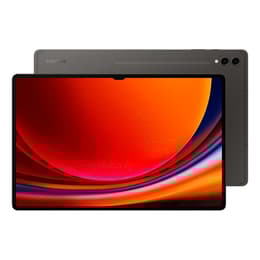

Galaxy Tab S9 Ultra (14.6", 2023) vs iPad Pro (2024, M4 series)

Galaxy Tab S9 Ultra (14.6", 2023)
Starting at

Refurbished price:A$1,230.00

Versus A$2,645.00 new

See options
iPad Pro (2024, M4 series)
Starting at

Refurbished price:A$1,359.00

Versus A$1,617.83 new

See options

The Samsung Galaxy Tab S9 Ultra, released in 2023, and the Apple iPad Pro M4 Series, launched in 2024, represent two distinct approaches to high-end tablet computing. Both devices offer expansive displays and powerful internal components, but they cater to different ecosystems and user preferences. The Galaxy Tab S9 Ultra operates on Android, while the iPad Pro M4 runs on iPadOS, influencing app availability and workflow integration. These tablets are designed for users seeking a premium experience for productivity, creativity, and entertainment.

Scores

Durability

When considering the long-term usability of these tablets, several factors come into play, including their release timelines and software support.

  • Release and Software Support: The Galaxy Tab S9 Ultra was released in August 2023, typically receiving around four to five years of major Android operating system updates and security patches. The iPad Pro M4, launched in May 2024, benefits from Apple's generally longer software support, often extending to five to seven years of iPadOS updates. This difference means the iPad Pro M4 is likely to receive software features and security updates for a longer duration.
  • Practical Lifespan and Durability: Both tablets feature premium build materials designed for durability. The Galaxy Tab S9 Ultra boasts an IP68 rating for dust and water resistance, offering robust protection against environmental elements. The iPad Pro M4, while also built with high-quality materials, does not carry an official IP rating for water and dust resistance. Both devices are constructed with aluminum frames, contributing to their overall sturdiness.
  • Repairability: The ease of repair can impact a device's practical lifespan. While specific repairability scores can vary, both manufacturers offer repair services. Users considering a quality-assured refurbished option for either device can benefit from thorough inspections and repairs that extend the product's life cycle.

Release year

2023

2024

Compatible with latest Update

Yes

Yes

Operating system

Android

iPadOS

Performance

Both the Galaxy Tab S9 Ultra and the iPad Pro M4 are equipped with advanced processing units designed to handle demanding tasks with efficiency and speed.

  • Processing Power: The Galaxy Tab S9 Ultra features a current-generation processor optimized for its Android ecosystem, enabling smooth multitasking, rapid app loading, and capable performance in graphically intensive applications and games. The iPad Pro M4 incorporates an advanced processing unit, which delivers substantial performance improvements, particularly noticeable in professional creative applications and complex computational tasks.
  • Multitasking and Responsiveness: The Galaxy Tab S9 Ultra offers various RAM configurations, supporting efficient multitasking across multiple applications. Its software features, like Samsung DeX, aim to provide a desktop-like experience for enhanced productivity. The iPad Pro M4 also comes with ample RAM options, ensuring fluid navigation and responsiveness even with numerous applications open simultaneously. Its iPadOS is optimized for touch-first interactions and supports advanced multitasking features.
  • Battery Behavior: The Galaxy Tab S9 Ultra is equipped with a large battery capacity, providing extended usage for mixed activities such as streaming, browsing, and productivity tasks, often lasting through a full day of use. The iPad Pro M4 also offers efficient power management, with users typically experiencing up to ten hours of web browsing or video playback on a single charge.

Memory (GB)

12 GB

8 GB

Screen quality

The visual experience on both tablets is a highlight, with each device featuring a high-quality display tailored for immersive viewing and detailed work.

  • Display Technology and Clarity: The Galaxy Tab S9 Ultra features a 14.6-inch Dynamic AMOLED 2X display, offering deep blacks, vibrant colors, and a high resolution of 2960 x 1848 pixels. The iPad Pro M4 (13-inch model) introduces an Ultra Retina XDR display, which utilizes Tandem OLED technology to achieve exceptional contrast, brightness, and color accuracy with a resolution of 2752 x 2064 pixels.
  • Brightness and Refresh Rate: Both tablets offer a smooth 120Hz adaptive refresh rate, which makes scrolling and animations appear fluid. The Galaxy Tab S9 Ultra can reach a peak brightness of 930 nits, providing good visibility indoors and in moderately bright outdoor conditions. The iPad Pro M4's Tandem OLED display can achieve a full-screen brightness of 1000 nits for SDR content and a peak of 1600 nits for HDR content, offering superior brightness for various lighting environments.
  • Screen Size and Aspect Ratio: The Galaxy Tab S9 Ultra provides a larger 14.6-inch screen with a 16:10 aspect ratio, which is well-suited for widescreen media consumption and side-by-side application usage. The 13-inch iPad Pro M4 has a slightly smaller display with a 4:3 aspect ratio, often preferred for document viewing, web browsing, and creative tasks.

Resolution

1848 x 2960

2420 x 1668

Screen type

Dynamic AMOLED 2X

Ultra Retina XDR display

Pixel density

240ppp

264ppp

Audiovisual

While tablets are not typically primary photography devices, both models offer capable camera systems for video calls, document scanning, and casual photography.

  • Rear Camera System: The Galaxy Tab S9 Ultra features a dual rear camera setup, including a 13-megapixel main camera and an 8-megapixel ultra-wide lens. These cameras perform well in bright lighting conditions, capturing details and offering good dynamic range, and can record 4K video. The iPad Pro M4 is equipped with a 12-megapixel wide camera on the rear, which includes a LiDAR scanner for enhanced depth sensing and improved low-light performance and augmented reality applications. It also supports 4K video recording and ProRes video for professional workflows.
  • Front Camera System: For video conferencing and selfies, the Galaxy Tab S9 Ultra includes a dual front camera system with two 12-megapixel lenses, one wide and one ultra-wide, positioned along the longer edge, which is beneficial for landscape video calls. The iPad Pro M4 features a 12-megapixel ultra-wide front camera, also positioned for landscape use, and supports Center Stage, which keeps the user in frame during video calls.
  • Audio Experience: Both tablets provide a robust audio experience. The Galaxy Tab S9 Ultra has quad stereo speakers tuned by AKG with Dolby Atmos support, delivering clear and immersive sound for media consumption. The iPad Pro M4 also features a four-speaker audio system and multiple studio-quality microphones, enhancing the audio output and input for calls and content creation.

Miscellaneous

Beyond core performance and display, several practical features differentiate these two high-end tablets, impacting daily usability and connectivity.

  • Connectivity Options: Both devices support modern wireless standards. The Galaxy Tab S9 Ultra offers Wi-Fi 6E and Bluetooth 5.3, with optional 5G connectivity. The iPad Pro M4 also supports Wi-Fi 6E and Bluetooth 5.3, with cellular models offering 5G capabilities.
  • Ports and Accessories: The Galaxy Tab S9 Ultra includes a USB-C 3.2 port for charging and data transfer, and it comes with an S Pen stylus in the box. The iPad Pro M4 features a Thunderbolt / USB 4 port, offering high-speed data transfer and external display support. The Apple Pencil Pro and a new Magic Keyboard are available as separate accessories.
  • Biometric Authentication and Design: The Galaxy Tab S9 Ultra incorporates an in-display fingerprint sensor for secure unlocking. The iPad Pro M4 utilizes Face ID for facial recognition, which works in both portrait and landscape orientations. In terms of physical design, the 13-inch iPad Pro M4 is notably thin and light, making it Apple's thinnest device. The Galaxy Tab S9 Ultra is also very thin, but its larger screen size contributes to a greater overall footprint and weight.

Weight

129 oz

444 oz

Screen size (in)

14.6

11

Network

Wi-Fi

Wi-Fi

Carrier compatibility

Unlocked

Without SIM Port

User feedback for the Samsung Galaxy Tab S9 Ultra often highlights its expansive and vibrant AMOLED display as a major draw, providing an immersive experience for media consumption and creative work. Users appreciate the included S Pen and the versatility offered by Samsung DeX for a more desktop-like environment. Some common criticisms include its large size, which can make it unwieldy for some, and the perception that Android's tablet app ecosystem, while improving, still lags behind iPadOS in terms of optimization for larger screens.

For the iPad Pro M4, users frequently praise its exceptional performance, driven by the advanced processing unit, which handles demanding professional applications with ease. The new Tandem OLED display receives high acclaim for its brightness, contrast, and color accuracy. A frequent point of discussion is the cost of accessories, such as the Apple Pencil Pro and Magic Keyboard, which are often considered essential for maximizing the tablet's potential but are sold separately. The iPad Pro's robust app ecosystem, particularly for creative professionals, is consistently cited as a significant advantage.

Users prioritizing a large, vibrant display for entertainment and a versatile Android experience with an included stylus may find the Galaxy Tab S9 Ultra well-suited to their needs. Those who require top-tier performance for creative and professional applications, a highly optimized tablet operating system, and a longer software support window may lean toward the iPad Pro M4. Both devices offer premium experiences, and choosing between them often comes down to ecosystem preference and specific workflow requirements. For those seeking a more sustainable choice, both models are available as quality-assured refurbished options, providing an eco-friendly alternative to purchasing new.

See all articles

Our recent comparisons