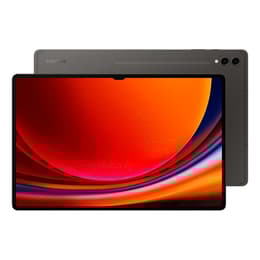
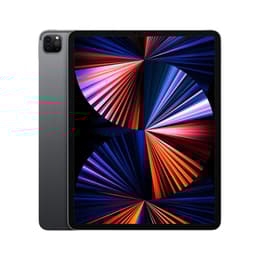

Galaxy Tab S9 Ultra (14.6", 2023) vs iPad Pro (2021, M1 series)

Galaxy Tab S9 Ultra (14.6", 2023)
Starting at

Refurbished price:A$1,230.00

Versus A$2,645.00 new

See options
iPad Pro (2021, M1 series)
Starting at

Refurbished price:A$929.00

Versus A$1,829.00 new

See options

The Samsung Galaxy Tab S9 Ultra, released in August 2023, and the Apple iPad Pro M1 Series, launched in May 2021, represent two distinct approaches to high-end tablet computing. While both offer expansive displays and powerful performance for demanding tasks, they differ significantly in their operating systems, design philosophies, and ecosystem integrations. This comparison will explore the practical differences between these devices, helping users understand which model aligns best with their specific needs.

Scores

Durability

When considering the longevity of a tablet, factors such as release timeline, software support, and physical durability are key. The Galaxy Tab S9 Ultra, being a 2023 release, benefits from a more recent launch, while the iPad Pro M1 Series dates back to 2021. Both manufacturers provide several years of software updates, which is crucial for security and access to new features.

  • Software Support: Apple typically provides major iPadOS updates for 5 to 7 years after an iPad's release, meaning the iPad Pro M1 (2021) can expect continued support for several more years. Samsung generally offers 4 generations of Android OS updates and 5 years of security updates for its flagship tablets, positioning the Tab S9 Ultra for a slightly longer update cycle from its release date.
  • Physical Durability: The Galaxy Tab S9 Ultra features an Armor Aluminum build and boasts an IP68 rating for dust and water resistance, offering a higher degree of protection against environmental elements. The iPad Pro M1 Series, while built with premium aluminum, does not carry an official IP rating.
  • Repairability: Both devices are complex, high-end electronics, and their repairability can vary. Users often find that specialized tools and expertise are required for internal repairs on either model.

Release year

2023

2021

Compatible with latest Update

Yes

Yes

Operating system

Android

iPadOS

Performance

Both the Galaxy Tab S9 Ultra and the iPad Pro M1 Series are engineered for high performance, capable of handling intensive applications and multitasking with ease. Their respective processors are designed to deliver a fluid user experience, whether for creative work, gaming, or productivity.

  • Processing Power: The Galaxy Tab S9 Ultra is equipped with a current-generation processor that allows for smooth operation across various demanding applications and efficient multitasking. The iPad Pro M1 Series features a powerful chip known for its exceptional performance, enabling seamless execution of professional-grade software and complex workflows.
  • Multitasking and RAM: The Tab S9 Ultra offers configurations with 12GB or 16GB of RAM, facilitating robust multitasking and efficient handling of numerous open applications. The iPad Pro M1 Series comes with either 8GB of RAM for lower storage configurations or 16GB for higher storage options, providing ample memory for intensive tasks and smooth app switching.
  • Storage Capabilities: The Galaxy Tab S9 Ultra provides internal storage options up to 1TB and includes a microSD card slot for expandable storage, offering flexibility for users with large media libraries or extensive project files. The iPad Pro M1 Series offers a wide range of internal storage from 128GB up to 2TB, but it does not support external memory expansion.

Memory (GB)

12 GB

8 GB

Screen quality

The visual experience on both tablets is a highlight, with each device featuring a large, high-resolution display designed for immersive viewing and detailed work. The choice between them often comes down to specific display technology preferences and screen size.

  • Display Technology and Size: The Galaxy Tab S9 Ultra features a 14.6-inch Dynamic AMOLED 2X display, known for its deep blacks, vibrant colors, and high contrast. The 12.9-inch iPad Pro M1 Series utilizes a Liquid Retina XDR display with Mini-LED backlighting, which also delivers excellent contrast and brightness, particularly for HDR content.
  • Resolution and Refresh Rate: The Tab S9 Ultra offers a resolution of 2960 x 1848 pixels, providing a sharp image, and supports a 120Hz refresh rate for fluid scrolling and responsive interactions. The iPad Pro M1 Series has a resolution of 2732 x 2048 pixels and incorporates ProMotion technology for an adaptive 120Hz refresh rate, ensuring smooth visuals.
  • Brightness and Clarity: The Tab S9 Ultra can reach a peak brightness of up to 930 nits, making it suitable for various lighting conditions. The iPad Pro M1 Series excels in brightness, offering 1000 nits typical and up to 1600 nits peak brightness for HDR content, which enhances visibility in bright environments and provides a striking HDR viewing experience.

Resolution

1848 x 2960

2732 x 2048

Screen type

Dynamic AMOLED 2X

Liquid Retina XDR

Pixel density

240ppp

264ppp

Audiovisual

While tablets are not typically primary photography devices, both the Galaxy Tab S9 Ultra and the iPad Pro M1 Series offer capable camera systems for video calls, document scanning, and casual photography. Each device emphasizes different aspects of its camera functionality.

  • Rear Camera System: The Galaxy Tab S9 Ultra includes a dual rear camera setup with a 13MP main sensor and an 8MP ultra-wide lens, capable of capturing detailed images and 4K video. The iPad Pro M1 Series features a pro camera system with a 12MP wide lens, a 10MP ultra-wide lens, and a LiDAR scanner, which enhances augmented reality experiences and low-light focusing.
  • Front Camera and Video Calls: The Tab S9 Ultra is equipped with dual 12MP ultra-wide front cameras, designed to provide clear and wide-angle views for video conferencing. The iPad Pro M1 Series features a 12MP ultra-wide TrueDepth front camera with Center Stage, a feature that automatically keeps the user centered in the frame during video calls, even as they move.
  • Video Recording Quality: Both tablets support 4K video recording with their main rear cameras. The Tab S9 Ultra's front cameras also support 4K video, while the iPad Pro M1 Series' front camera records in 1080p.

Miscellaneous

Beyond core specifications, several practical elements contribute to the overall user experience, including connectivity, physical design, and unique features that cater to different workflows.

  • Connectivity and Ports: The Galaxy Tab S9 Ultra supports Wi-Fi 6E and Bluetooth 5.3, with optional 5G connectivity, and features a USB-C 3.2 port. The iPad Pro M1 Series offers Wi-Fi 6, Bluetooth 5.0, optional 5G, and a Thunderbolt / USB 4 port, providing high-speed data transfer capabilities and broader accessory compatibility.
  • Stylus Integration: The Galaxy Tab S9 Ultra comes with an IP68-rated S Pen included in the box, which magnetically attaches and charges, offering a ready-to-use tool for note-taking and drawing. The iPad Pro M1 Series supports the Apple Pencil (2nd generation), which is sold separately, providing precise input for creative and productivity tasks.
  • Design and Handling: The Tab S9 Ultra is notably larger and slightly heavier at 14.6 inches and 732g, which can be advantageous for screen real estate but may feel unwieldy for some users. The 12.9-inch iPad Pro M1 Series is more compact and lighter at 682g, offering a balance between screen size and portability.

Weight

129 oz

682 oz

Screen size (in)

14.6

12.9

Network

Wi-Fi

Wi-Fi

Carrier compatibility

Unlocked

Without SIM Port

The Samsung Galaxy Tab S9 Ultra and the iPad Pro M1 Series cater to users with distinct preferences and needs. Users frequently praise the Galaxy Tab S9 Ultra for its expansive and vibrant AMOLED display, which is ideal for media consumption and multitasking, and its included S Pen. Its IP68 rating is also a common point of appreciation for those seeking enhanced durability. Some users, however, note that Android's tablet app ecosystem, while improving, still has fewer applications optimized for large screens compared to iPadOS. The tablet's large size, while a benefit for some, can also be a criticism for those prioritizing portability.

The iPad Pro M1 Series is often lauded for its exceptional performance, driven by its powerful chip, making it a favorite among creative professionals and power users. Its Liquid Retina XDR display is highly regarded for color accuracy and HDR content. The robust app ecosystem on iPadOS, with many applications specifically designed for tablets, is another frequent praise point. Conversely, some users express a desire for more desktop-like functionality within iPadOS to fully leverage the hardware's capabilities, and the separate purchase of the Apple Pencil is sometimes mentioned as a drawback.

Users prioritizing a vast, vibrant display for entertainment and productivity, coupled with expandable storage and an included stylus, may find the Galaxy Tab S9 Ultra well-suited to their needs. Those who require top-tier processing power for professional creative applications, a highly optimized tablet app ecosystem, and a premium display for color-critical work might lean toward the iPad Pro M1 Series. Both devices offer a premium tablet experience, and for those looking for a more sustainable choice, quality-assured refurbished options are available for both models.


See all articles

Our recent comparisons