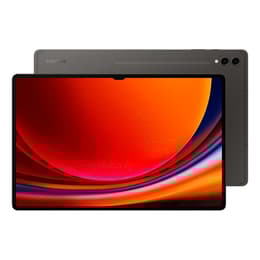
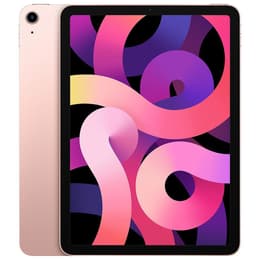

Galaxy Tab S9 Ultra (14.6", 2023) vs iPad Air 4 (2020, A14 series)

Galaxy Tab S9 Ultra (14.6", 2023)
Starting at

Refurbished price:A$1,230.00

Versus A$2,645.00 new

See options
iPad Air 4 (2020, A14 series)
Starting at

Refurbished price:A$500.00

Versus A$829.00 new

See options

The Samsung Galaxy Tab S9 Ultra, released in August 2023, and the Apple iPad Air (4th generation), launched in October 2020, represent distinct approaches to the tablet experience. While both are designed for productivity and entertainment, they differ significantly in screen size, operating system, and overall ecosystem. The Galaxy Tab S9 Ultra operates on Android with Samsung's One UI, offering a highly customizable interface, whereas the iPad Air runs on Apple's iPadOS, known for its streamlined user experience. These core differences influence their suitability for various user needs.

Scores

Durability

The longevity of a tablet is influenced by its release date, software support, and physical durability. The Galaxy Tab S9 Ultra, being a more recent device, benefits from a longer expected period of software updates compared to the iPad Air (4th generation).

  • Release Timeline and Age: The Galaxy Tab S9 Ultra was released in August 2023, making it a newer device. The iPad Air (4th generation) was released in October 2020, positioning it as an older model in the market. [2, 3, 25, 31]
  • OS Support Duration: Samsung typically provides up to four major Android OS upgrades for its flagship tablets, meaning the Tab S9 Ultra will receive updates for several years to come. The iPad Air (4th generation) launched with iPadOS 14 and has continued to receive updates, with its current operating system being iPadOS 26.4.1 as of April 2026, demonstrating Apple's consistent long-term software support. [3, 17]
  • Physical Durability: The Galaxy Tab S9 Ultra features an IP68 rating for dust and water resistance, offering a higher level of protection against environmental elements. The iPad Air (4th generation) does not carry an official IP rating, though it features a robust aluminum build. [16, 17, 19, 24, 26, 27]

Release year

2023

2020

Compatible with latest Update

Yes

Yes

Operating system

Android

iPadOS

Performance

Performance is a critical aspect for tablets, impacting everything from app responsiveness to multitasking capabilities. Both devices offer capable performance, but their underlying architectures and software optimizations lead to different user experiences.

  • Processor Capabilities: The Galaxy Tab S9 Ultra is equipped with a current-generation processor designed for demanding tasks, ensuring smooth operation across various applications and intensive workloads. The iPad Air (4th generation) features a powerful processor that handles everyday tasks, creative applications, and gaming with efficiency, though it is an older generation chip. [3, 4, 5, 6, 8, 10, 17, 18, 23, 26]
  • Multitasking and Responsiveness: The Galaxy Tab S9 Ultra, with its higher RAM configurations (12GB or 16GB), is well-suited for extensive multitasking, allowing users to run numerous applications simultaneously without noticeable slowdowns. The iPad Air (4th generation) comes with 4GB of RAM, providing a responsive experience for typical multitasking and app usage within iPadOS. [3, 7, 8, 9, 17, 21, 23]
  • Storage Options: The Galaxy Tab S9 Ultra offers flexible storage starting from 256GB, 512GB, or 1TB, with the added benefit of expandable storage via a microSD card slot. The iPad Air (4th generation) is available with 64GB or 256GB of internal storage, without an option for expansion. [2, 7, 9, 17, 21]
  • Battery Behavior: The Galaxy Tab S9 Ultra houses a large 11,200 mAh battery, providing extended usage times, with users reporting 9 to 12 hours of mixed use. The iPad Air (4th generation) features a 28.6Wh battery, typically offering up to 10 hours of web browsing or video playback on Wi-Fi. [4, 7, 8, 9, 16, 21, 23, 24, 29, 34]

Memory (GB)

12 GB

4 GB

Screen quality

The display is a primary interface for tablets, and both models offer high-quality viewing experiences, though with different technologies and characteristics.

  • Display Technology and Size: The Galaxy Tab S9 Ultra features a large 14.6-inch Dynamic AMOLED 2X display, known for its deep blacks, vibrant colors, and high contrast. The iPad Air (4th generation) has a 10.9-inch Liquid Retina IPS LCD display, which provides accurate colors and wide viewing angles. [1, 2, 3, 4, 5, 8, 9, 10, 12, 17, 18, 19, 23, 24, 28]
  • Resolution and Clarity: The Tab S9 Ultra offers a resolution of 2960 x 1848 pixels, resulting in a pixel density of approximately 239 pixels per inch (PPI). The iPad Air (4th generation) has a resolution of 2360 x 1640 pixels, with a pixel density of 264 PPI, providing sharp text and images on its smaller screen. [1, 2, 3, 4, 5, 8, 10, 12, 14, 17, 18, 19, 23, 24, 28]
  • Brightness and Refresh Rate: The Galaxy Tab S9 Ultra's display can reach a peak brightness of 930 nits and supports a 120Hz refresh rate, contributing to smoother scrolling and more fluid visuals. The iPad Air (4th generation) offers a typical brightness of 500 nits and a standard 60Hz refresh rate. [1, 5, 8, 12, 17, 19, 23]

Resolution

1848 x 2960

2360 x 1640

Screen type

Dynamic AMOLED 2X

Liquid Retina display

Pixel density

240ppp

264ppp

Audiovisual

While tablets are not typically primary photography devices, their camera systems are important for video calls, document scanning, and casual photography. Both tablets offer capable camera setups for their respective uses.

  • Rear Camera System: The Galaxy Tab S9 Ultra features a dual rear camera setup with a 13MP wide-angle lens and an 8MP ultra-wide lens, capable of capturing detailed photos and 4K video at 60 frames per second. The iPad Air (4th generation) includes a single 12MP wide-angle rear camera that also supports 4K video recording at various frame rates. [1, 3, 4, 6, 9, 12, 18, 19, 24, 27, 28, 30, 33]
  • Front Camera System: For video conferencing and selfies, the Tab S9 Ultra is equipped with a dual front camera system, featuring two 12MP lenses (one wide, one ultra-wide), providing versatility for different framing needs. The iPad Air (4th generation) has a 7MP FaceTime HD front camera, suitable for clear video calls and self-portraits. [1, 3, 4, 8, 9, 12, 18, 19, 23, 24, 27, 28, 30, 33]
  • Audio Experience: The Galaxy Tab S9 Ultra boasts quad stereo speakers tuned by AKG with Dolby Atmos support, delivering an immersive audio experience for media consumption. The iPad Air (4th generation) features stereo speakers, providing clear audio for videos and music. [3, 4, 8, 9, 12, 24, 26]

Miscellaneous

Beyond core specifications, several practical elements contribute to the overall user experience, including connectivity, physical design, and additional features.

  • Connectivity and Ports: The Galaxy Tab S9 Ultra supports Wi-Fi 6E and Bluetooth 5.3, along with optional 5G cellular connectivity, and features a USB Type-C 3.2 port. The iPad Air (4th generation) supports Wi-Fi 6 and Bluetooth 5.0, with cellular models offering LTE connectivity, and includes a USB-C port. [1, 3, 4, 8, 9, 12, 17, 23, 24, 26, 28, 35]
  • Design and Handling: The Tab S9 Ultra is a larger and slightly heavier device, measuring 326.4 x 208.6 x 5.5 mm and weighing 732g (Wi-Fi), which can make it better suited for desk use or two-handed operation. The iPad Air (4th generation) is more compact and lighter at 247.6 x 178.5 x 6.1 mm and 458g (Wi-Fi), offering greater portability and easier one-handed use. [1, 2, 3, 4, 7, 8, 9, 10, 11, 12, 14, 21, 23, 24, 32]
  • Unique Features: The Galaxy Tab S9 Ultra comes with an included S Pen, offering precise input for drawing and note-taking, and features an in-display fingerprint sensor. The iPad Air (4th generation) supports the Apple Pencil (2nd generation) and Magic Keyboard (both sold separately) and integrates Touch ID into its power button for secure authentication. [1, 3, 4, 5, 8, 9, 12, 14, 16, 19, 23, 26, 28]

Weight

129 oz

460 oz

Screen size (in)

14.6

10.9

Network

Wi-Fi

Wi-Fi + 4G

Carrier compatibility

Unlocked

Unlocked

Users often praise the Galaxy Tab S9 Ultra for its expansive and vibrant AMOLED display, making it ideal for media consumption and professional tasks requiring a large canvas. Its robust performance and included S Pen are frequently highlighted as strong points, though some users note that Android's tablet app ecosystem, while improving, still has areas for growth compared to iPadOS. The iPad Air (4th generation) is generally lauded for its balanced performance, premium design, and the mature app ecosystem of iPadOS, which offers a wide array of optimized applications. Some users, however, might find its screen size less immersive for certain media or multitasking compared to larger tablets.

Users prioritizing a large, high-refresh-rate OLED display, expandable storage, and an included stylus for creative or productivity tasks within the Android ecosystem may find the Galaxy Tab S9 Ultra well-suited to their needs. Its IP68 rating also offers peace of mind for use in various environments. Conversely, users who value a more compact and lighter design, a highly refined tablet operating system with a vast selection of optimized apps, and seamless integration within the Apple ecosystem may lean toward the iPad Air (4th generation). Both devices offer compelling experiences, and for those considering an eco-friendly alternative, quality-assured refurbished options are available for both models, providing a sustainable choice.

See all articles

Our recent comparisons