
Compare models

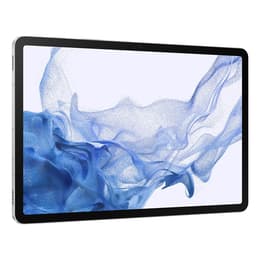
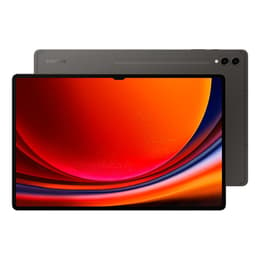
Galaxy Tab S8+ (12.4", 2022) vs Galaxy Tab S9 Ultra (14.6", 2023)

  • 1-year warranty
  • Free standard shipping
  • Free 30-day returns
Galaxy Tab S9 Ultra (14.6", 2023)
Starting at

Refurbished price:A$1,189.00

Versus A$2,645.00 new

See options

Differences at a glance

The Samsung Galaxy Tab S8+ (2022) and the Samsung Galaxy Tab S9 Ultra (2023) are high-performance Android tablets designed for multitasking, media consumption, and productivity. While both models feature vibrant touchscreens and include responsive styluses for notes or drawing, they differ significantly in physical footprint, screen estate, and hardware generation. Choosing between them depends on whether portability or an expansive workspace is the priority.

Available Models

Colour

Storage

Scores

Durability

When evaluating hardware longevity, both tablets offer robust build quality and extended software support schedules, though their release years introduce a slight timeline variance.

  • Release timeline and software support: The Galaxy Tab S9 Ultra benefits from a more recent release year, translating to an extended window of major operating system updates compared to the slightly older Galaxy Tab S8+.
  • Durability and construction: Both models feature rigid aluminum frames, but the Galaxy Tab S9 Ultra introduces an upgraded water and dust resistance rating for everyday peace of mind.
  • Expected practical lifespan: Both units handle routine security patches well, making quality-assured refurbished options from Back Market dependable choices for long-term daily use.

Release year

2022

2023

Compatible with latest Update

Yes

Yes

Operating system

Android

Android

Performance

Underneath the exterior, both devices manage demanding workloads smoothly, though the newer model provides additional headroom for heavy multitasking and intensive applications.

  • System responsiveness: Apps launch instantly and split-screen multitasking runs fluidly on both tablets, with the newer processor in the Tab S9 Ultra managing complex graphics with extra efficiency.
  • Memory and storage configurations: Both devices offer expandable storage via microSD slots alongside generous baseline internal capacities, accommodating large media libraries and offline files.
  • Battery behavior: The Galaxy Tab S9 Ultra features a larger physical battery capacity to support its massive screen, while the Tab S8+ relies on a smaller cell paired with a more compact display, resulting in comparable day-to-day endurance under mixed usage.

Screen quality

Display characteristics represent one of the most distinct differences between these two models, impacting how users interact with visual content and productivity apps.

  • Display technology: Both tablets utilize advanced OLED panels providing deep black levels and vivid contrast, though the Tab S9 Ultra adopts a refined panel generation for enhanced outdoor visibility.
  • Size and workspace: The Galaxy Tab S8+ offers a balanced 12.4-inch canvas well-suited for single-app focus and portable handling, whereas the Tab S9 Ultra provides a sprawling 14.6-inch workspace that comfortably mirrors a laptop replacement.
  • Refresh rate smoothness: Both screens support adaptive high refresh rates up to 120Hz, ensuring seamless scrolling and minimal latency when writing or sketching with the included stylus.

Resolution

1752 x 2800

1848 x 2960

Screen type

Super AMOLED

Dynamic AMOLED 2X

Pixel density

270ppp

240ppp

Audiovisual

While tablets are rarely primary cameras, both configurations are tailored effectively toward video conferencing, scanning documents, and casual media capture.

  • Front-facing setup: The Galaxy Tab S8+ features a single ultra-wide front camera, whereas the Tab S9 Ultra incorporates a dual front-facing camera system inside a discrete bezel notch for wider field-of-view options during video calls.
  • Rear camera performance: Both models include a capable main rear sensor accompanied by an ultra-wide lens, handling well-lit snapshots and document scanning with clarity.
  • Audio output: Quad stereo speakers tuned with spatial audio support deliver clear dialogue and rich sound dispersion for movies and music consumption on both devices.

Miscellaneous

Practical daily usability is shaped by physical dimensions, connectivity standards, and biometric security features built into each chassis.

  • Portability and handling: The Galaxy Tab S8+ is lighter and easier to hold in portrait orientation for reading, while the larger Tab S9 Ultra demands a two-handed approach or a dedicated stand.
  • Biometric security: Both tablets integrate reliable optical fingerprint sensors directly beneath the display glass alongside facial recognition options.
  • Connectivity and ports: Both models utilize universal USB-C ports for charging and data transfer, alongside support for fast Wi-Fi standards and optional cellular connectivity.

Weight

572 oz

129 oz

Screen size (in)

12.4

14.6

Network

Wi-Fi + 5G

Wi-Fi

Carrier compatibility

Without SIM Port

Unlocked

Connector

USB Type-C

USB Type-C

What the community thinks

User feedback from online communities highlights distinct preferences for each form factor. Owners of the Galaxy Tab S8+ frequently praise its balanced size, noting that it bridges the gap between laptop-replacement productivity and comfortable handheld reading. Conversely, users drawn to the Galaxy Tab S9 Ultra consistently emphasize the utility of its massive display for side-by-side app multitasking, digital art creation, and immersive video viewing, though some note its large footprint is less convenient for travel.

Users prioritizing mobility, comfortable one-handed holding, and a traditional tablet experience will find the Galaxy Tab S8+ well-suited to their needs. Meanwhile, users prioritizing a laptop-scale workspace, expansive canvas size, and multi-window multitasking may lean toward the Galaxy Tab S9 Ultra. Exploring quality-assured refurbished options provides a sustainable path to acquiring either device while supporting eco-friendly technology choices.

Our recent comparisons