
Compare models
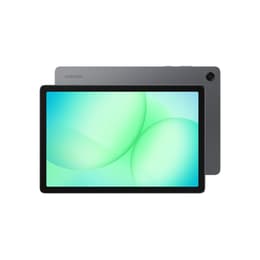
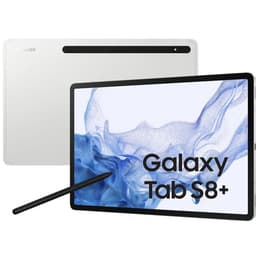
Galaxy Tab A11+ (11.0", 2025) vs Galaxy Tab S8 (11.0", 2022)
- 1-year warranty
- Free standard shipping
- Free 30-day returns
Differences at a glance
The Samsung Galaxy Tab A11+ (2025) and the Samsung Galaxy Tab S8 (2022) are 11-inch tablets designed for everyday productivity, media streaming, and casual browsing. While they share identical screen dimensions, they belong to different product tiers, with the Tab A11+ focusing on long-term software support and the Tab S8 prioritizing higher-tier processing capabilities. Both devices run on the Android operating system with Samsung's custom interface, though they launched with different software generations. This comparison examines how their practical differences influence daily usability for different user profiles.
Scores
Durability
When evaluating longevity, these two tablets offer different timelines regarding software updates and hardware design durability.
- Release timeline and software support: The Galaxy Tab A11+ launched in late 2025 and supports extended major operating system upgrades, whereas the Galaxy Tab S8 debuted in early 2022 and operates on an earlier software lifecycle schedule.
- Expected practical lifespan: Due to its newer release year, the Tab A11+ provides a longer window of security patches, while the Tab S8 relies on its robust physical build quality to maintain utility over time.
- Repairability and build: Both models feature standard aluminum frames that handle regular handling well, with repairability varying depending on component availability and professional service access.
Release year
2025
2022
Compatible with latest Update
Yes
Yes
Operating system
Android
Android
Performance
Performance capabilities vary noticeably between the two models, impacting how they handle multitasking, gaming, and daily application loading.
- Processor capabilities and responsiveness: The Galaxy Tab S8 handles demanding apps, heavy multitasking, and graphic-intensive gaming smoothly thanks to its high-tier processor, while the Galaxy Tab A11+ manages routine web browsing, video streaming, and lighter productivity tasks reliably.
- Memory and storage configurations: The Tab S8 typically features higher RAM allocations suited for intensive background tasks, whereas the Tab A11+ offers configurable storage options paired with microSD card expansion slots for media files.
- Battery behavior: Both tablets are equipped to deliver standard all-day use during mixed media consumption, though heavy gaming or continuous streaming will drain the batteries more rapidly on both devices.
Screen quality
Both tablets feature 11-inch displays, but they utilize different panel technologies and refresh rates that influence visual fluidity and clarity.
- Display technology and refresh rates: The Galaxy Tab S8 utilizes a higher refresh rate panel for smoother scrolling and animations, while the Galaxy Tab A11+ provides a standard refresh rate suited for everyday reading and video playback.
- Resolution and visual clarity: The Tab S8 offers a higher pixel density for sharper text rendering, whereas the Tab A11+ delivers balanced clarity for standard multimedia consumption.
- Brightness and outdoor use: Both screens feature adequate backlight levels for indoor environments, though direct sunlight usage requires manual brightness adjustments on both models.
Resolution
1200x1920
1600 x 2560
Pixel density
210ppp
280ppp
Audiovisual
Media consumption and camera utility differ depending on whether the primary focus is video calling or casual snapshot photography.
- Camera systems: The Galaxy Tab S8 includes a dual rear camera setup and a high-resolution front-facing sensor positioned for landscape video calls, while the Tab A11+ offers a simpler single rear configuration.
- Video recording and calls: Both devices handle video conferencing reliably with clear microphone input, though the front camera placement on the Tab S8 is optimized for horizontal orientation use.
- Audio output: Both models incorporate multi-speaker setups tuned for media playback, delivering clear dialogue during movie streaming and casual listening.
Miscellaneous
Practical physical traits and connectivity features shape how easily these tablets integrate into travel routines and workspace setups.
- Dimensions and handling: Both tablets share an 11-inch form factor, but the Tab S8 has a slightly slimmer profile, while the Tab A11+ offers a balanced weight distribution for handheld reading.
- Connectivity options: Both models support standard dual-band Wi-Fi networks and Bluetooth pairing, with select configurations offering cellular data connectivity.
- Ports and sensors: Each tablet utilizes a USB Type-C port for charging and data transfer, alongside biometric security sensors integrated either into the power key or via facial recognition.
Weight
477 oz
503 oz
Screen size (in)
11.0
11.0
Network
Wi-Fi
Wi-Fi + 5G
Carrier compatibility
Without SIM Port
Without SIM Port
Connector
USB Type-C
USB Type-C
What the community thinks
Users discussing these devices on community forums frequently praise the Galaxy Tab S8 for its fluid high-refresh-rate display and robust processing power, though some note that older models approach the end of their primary update window. Conversely, the Galaxy Tab A11+ receives appreciation for its extended software support timeline and reliable everyday utility, while reviewers observe that its display and processor are tailored more toward casual tasks than heavy gaming. Choosing a quality-assured refurbished option from Back Market provides an eco-friendly way to access these capabilities while supporting sustainable technology choices.
Users prioritizing high-end processing speeds and fluid screen animations for demanding applications will find the Galaxy Tab S8 well-suited to their needs. Meanwhile, users prioritizing a longer software update window and straightforward daily media consumption may lean toward the Galaxy Tab A11+. Evaluating personal workflow requirements will clarify which device aligns best with individual usage habits.