Compare models
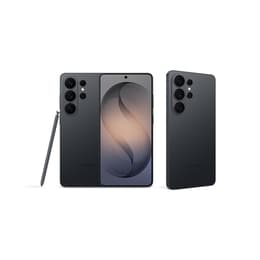
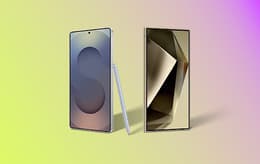
Galaxy S26 Ultra vs Motorola Moto G14
- 1-year warranty
- Free standard shipping
- Free 30-day returns
Differences at a glance
The Samsung Galaxy S26 Ultra (2026) and the Motorola Moto G14 (2023) are smartphones designed for entirely different segments of the mobile market. The Galaxy S26 Ultra functions as a feature-packed flagship device running Android 16, while the Motorola Moto G14 operates as an entry-level smartphone powered by Android 13. While both devices support the Android operating ecosystem, their hardware capabilities, processing tiers, and target use cases sit at opposite ends of the spectrum.
Available Models
Colour
Storage (GB)
Scores
Durability
When examining hardware longevity and software support, the two devices approach lifespan through very different timelines and update schedules.
- Software Support Window: The Galaxy S26 Ultra receives up to seven years of major operating system updates, whereas the Motorola Moto G14 features a more limited software update path typical of entry-level devices.
- Build Integrity: The Galaxy S26 Ultra utilizes advanced scratch-resistant glass and an aluminum frame designed for long-term physical resilience, while the Moto G14 employs an all-plastic construction suited for basic everyday handling.
- Expected Practical Lifespan: The Galaxy S26 Ultra maintains performance headroom for several years of heavy multitasking, whereas the Moto G14 is better suited for straightforward, shorter-term communication tasks.
Release year
2026
2023
Operating system
Android
Android
Foldable
No
No
Performance
System responsiveness and daily multitasking capabilities vary significantly based on internal hardware allocations and memory configurations.
- Processing Capabilities: The Galaxy S26 Ultra handles demanding 3D games and complex professional applications effortlessly, while the Moto G14 manages basic daily tasks like web browsing and messaging smoothly without heavy resource demands.
- Multitasking and Memory: The Galaxy S26 Ultra pairs high RAM capacities with generous storage tiers for seamless background app switching, whereas the Moto G14 relies on lighter memory allocations suited for single-task usage.
- Battery Behavior: Both devices include large 5000mAh batteries, but the Galaxy S26 Ultra features high-speed wired charging capabilities, while the Moto G14 supports standard charging speeds that require longer replenishment times.
Screen quality
Visual output and display technologies reflect distinct design choices aimed at different viewing experiences and outdoor environments.
- Display Technology: The Galaxy S26 Ultra features a vibrant dynamic OLED panel with deep contrast levels, whereas the Moto G14 utilizes a standard IPS LCD screen for everyday viewing.
- Outdoor Visibility: The Galaxy S26 Ultra achieves exceptionally high peak brightness levels and specialized anti-reflective glass coatings for direct sunlight legibility, while the Moto G14 offers adequate brightness for indoor or shaded outdoor use.
- Refresh Rate and Motion: The Galaxy S26 Ultra supports a smooth adaptive 120Hz refresh rate for fluid scrolling, while the Moto G14 employs a standard 60Hz refresh rate for conventional visual navigation.
Resolution
1440x3120
1080 x 2400
Audiovisual
Imaging hardware and media consumption tools cater to varied photography preferences and entertainment requirements.
- Camera Versatility: The Galaxy S26 Ultra incorporates a multi-lens array featuring high-resolution main sensors and dedicated telephoto options for detailed zoom photography, while the Moto G14 provides a simpler dual-lens setup focused on basic snapshot photography.
- Low-Light Performance: The Galaxy S26 Ultra captures sharp, well-lit images in dark environments using advanced sensor technology, whereas the Moto G14 requires stable conditions and adequate lighting for clear photos.
- Audio and Media Output: Both devices include stereo speaker configurations, with the Galaxy S26 Ultra delivering a rich sound profile for media streaming, complemented by the sustainable choice of quality-assured refurbished hardware alternatives available for buyers exploring eco-friendly technology.
Miscellaneous
Practical daily utility features highlight differences in connectivity standards, physical dimensions, and biometric security.
- Connectivity Standards: The Galaxy S26 Ultra supports advanced 5G networks and fast Wi-Fi standards, whereas the Moto G14 focuses primarily on 4G LTE connectivity.
- Physical Dimensions: The Galaxy S26 Ultra presents a large, substantial form factor with an integrated stylus slot, while the Moto G14 offers a lighter, compact body that rests comfortably in one hand.
- Biometric Authentication: The Galaxy S26 Ultra uses an ultrasonic in-screen fingerprint reader and face recognition, whereas the Moto G14 utilizes a side-mounted physical fingerprint sensor embedded within the power button.
Weight
214 oz
177 oz
Screen size (in)
6.9
6.5
Network
5G
4G
SIM card
Physical SIM + eSIM
Dual Physical SIM
Carrier compatibility
Unlocked
Unlocked
What the community thinks
User feedback from online forums highlights distinct patterns of praise and criticism for each smartphone. Owners of the Galaxy S26 Ultra frequently commend its expansive display, long-lasting battery efficiency, and advanced camera flexibility, though some users note its large physical footprint and weight. Conversely, users of the Motorola Moto G14 appreciate its lightweight body, straightforward interface, and inclusion of a traditional headphone jack, while noting limitations in demanding application performance and camera clarity in dim environments.
Users prioritizing high-end productivity, advanced photography, and long-term software support may prefer the Galaxy S26 Ultra, while users seeking a lightweight, straightforward device for essential communication tasks will find the Motorola Moto G14 well-suited to their needs. When evaluating these options, exploring a quality-assured refurbished device provides an eco-friendly alternative that extends product lifecycles without compromising on performance standards. Ultimately, the choice depends entirely on individual daily requirements and device preferences.