
Compare models

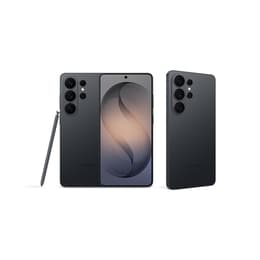
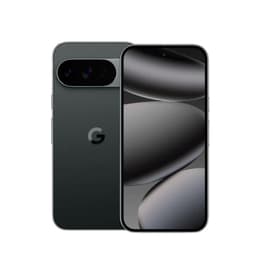
Galaxy S26 Ultra vs Google Pixel 10 Pro XL

  • 1-year warranty
  • Free standard shipping
  • Free 30-day returns
Galaxy S26 Ultra
Starting at

Refurbished price:A$1,516.00

Versus A$2,199.00 new

See options
Google Pixel 10 Pro XL
Starting at

Refurbished price:A$899.00

Versus A$1,434.00 new

See options

Differences at a glance

The Samsung Galaxy S26 Ultra (2026) and Google Pixel 10 Pro XL (2025) represent the pinnacle of large-screen Android smartphone engineering. Both devices deliver top-tier performance, expansive displays, and advanced camera systems, yet they approach software design and daily user experience from distinct perspectives. While the Galaxy S26 Ultra emphasizes integrated productivity tooling and cutting-edge hardware versatility, the Google Pixel 10 Pro XL focuses on software fluidity and streamlined artificial intelligence integration. Both handsets run on the Android operating system, though they utilize separate custom interfaces that shape how users interact with daily notifications and system settings.

Available Models

Colour

Storage (GB)

Scores

Durability

When evaluating long-term utility, both flagship devices offer robust support structures designed to keep software secure and functional for years, though their exact timelines and hardware build resilience differ.

  • Software Support: Both manufacturers provide extensive software update commitments spanning multiple years, ensuring users receive regular security patches and operating system upgrades well into the future.
  • Build Resilience: The Galaxy S26 Ultra utilizes advanced anti-reflective glass protection and an aluminum frame, whereas the Google Pixel 10 Pro XL employs durable glass protection with a structured matte finish, and both carry high dust and water resistance ratings.
  • Expected Lifespan: With robust internal storage configurations and generous baseline memory allocations, both models are well-equipped to handle future software demands comfortably over a multi-year ownership cycle.

Release year

2026

2025

Operating system

Android

Android

Foldable

No

No

Performance

Performance across everyday tasks, multitasking, and heavy workloads is exceptionally smooth on both devices, driven by current-generation processors and substantial memory capacity.

  • Multitasking and App Handling: Generous baseline memory configurations allow both phones to keep dozens of demanding applications open simultaneously without requiring frequent background reloads.
  • System Responsiveness: Navigating the user interface, launching resource-heavy software, and running modern mobile games occur with minimal stutter, supported by advanced thermal cooling systems.
  • Battery Behavior: Both models house large battery capacities capable of lasting through a full day of mixed usage, though heavy media streaming or constant navigation will require an evening charge.

Screen quality

Display technology on both handsets delivers vivid color reproduction, deep contrast levels, and exceptional outdoor visibility under direct sunlight.

  • Panel Technology and Resolution: Both devices feature large, high-resolution organic light-emitting displays that produce sharp text and immersive media viewing experiences.
  • Refresh Rate Smoothness: Adaptive refresh rate technology scales dynamically from very low rates up to high frequencies, ensuring scrolling feels fluid while conserving battery life during static tasks.
  • Outdoor Brightness: High peak brightness capabilities ensure that screens remain easily legible outdoors, minimizing glare even in bright daylight conditions.

Resolution

1440x3120

1344x2992

Audiovisual

Photography and videography suites on these smartphones cater to diverse creative needs, offering versatile lens selections and advanced processing tools.

  • Multi-Lens Versatility: Both setups include ultra-wide and high-resolution telephoto options, allowing users to capture expansive landscapes or distant subjects with clarity.
  • Low-Light Capture: Large primary sensors gather ample light in dim environments, reducing digital noise and retaining fine details without requiring artificial flash.
  • Video and Audio: High-resolution video recording modes benefit from robust stabilization features, while integrated microphone arrays capture clear audio for calls and video creation.

Miscellaneous

Practical daily utility is shaped by physical dimensions, connectivity standards, and supplementary hardware additions integrated into each frame.

  • Physical Handling: The Galaxy S26 Ultra incorporates a built-in stylus for note-taking, while the Google Pixel 10 Pro XL offers rounded corner contours that sit comfortably in the hand during extended one-handed use.
  • Connectivity and Ports: Both models support fast 5G cellular networks, modern wireless local area network standards, and reversible USB-C charging ports.
  • Security Sensors: Responsive under-display fingerprint scanners and secure facial recognition options provide swift, reliable device unlocking.

Weight

214 oz

232 oz

Screen size (in)

6.9

6.8

Network

5G

5G

SIM card

Physical SIM + eSIM

Physical SIM + eSIM

Carrier compatibility

Unlocked

Unlocked

What the community thinks

Choosing between the Samsung Galaxy S26 Ultra and the Google Pixel 10 Pro XL depends primarily on individual user workflows and physical preferences. Users who prioritize integrated productivity accessories and hardware-level privacy features often lean toward the Galaxy S26 Ultra. Conversely, users who value a streamlined software experience and deeply integrated voice assistant capabilities frequently prefer the Google Pixel 10 Pro XL. For buyers seeking a sustainable choice, opting for a quality-assured refurbished option provides an eco-friendly alternative that delivers flagship capabilities while reducing electronic waste. Ultimately, both devices offer powerful processing, exceptional screens, and reliable longevity, ensuring that neither choice compromises on core smartphone performance.